
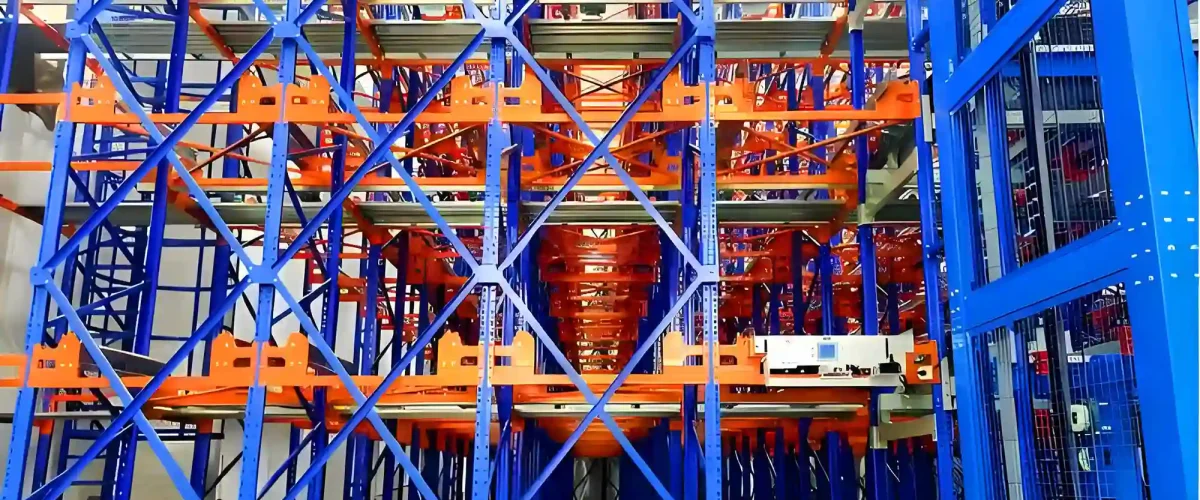
With the modern supply chain environment, space is no longer the sole physical aspect – it turns out to be an integral factor that determines the profitability of the operations. When global industries cope with increasing land prices and a limited labor force, traditional warehouse methods are reaching their dead end. At that moment, an ASRS pallet racking
( Automated Storage and Retrieval System), which is the epitome of industrial engineering, will provide a revolutionary vertical space conversion through a logistic system that is high-speed and absolutely flawless.
The main question to ask is: How is a high-level ASRS pallet racking system distinct from a normal heavy-duty industrial racker? And, in what ways can a warehouse automation work together with structural steel to ensure a smooth return on investment? This guide will help you understand the technical specifications, technology, and business advantages for your organization to switch over to ASRS solutions.
What is ASRS Pallet Racking?
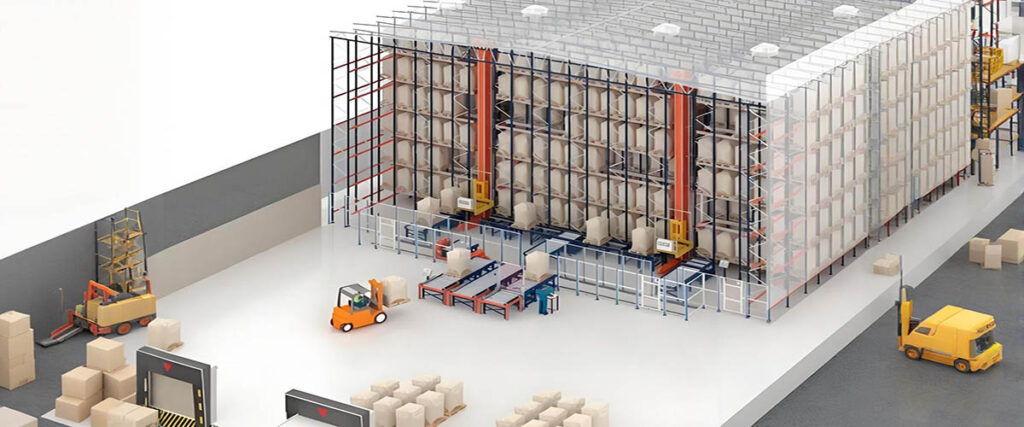
Fundamentally ASRS pallet racking, is a specially designed ultra-accuracy pallet racking framework engineered to be used seamlessly with automated machines like Crane Systems, Shuttle Cars, and Pallet Runners. These are systems that, instead of the usual forklifts, navigate along huge aisles of a selective rack. An ASRS makes a computerized system handle the placement and picking of items so accurately that errors are almost ruled out.
Thanks to the fact that one of the biggest costs of the warehouse i.e. having space in which one can drive in a forklift is reduced significantly with an ASRS, this type of system can go all the way up to a height of 40 meters or even taller, thereby significantly increasing your warehouse’s storage capacity while, at the same time, not making your floor area bigger. Besides, having an arrangement of structural steel with high resistance and a real-time warehouse management software is a recipe for creating a totally hands-off system which can be working non-stop.
Key Technical Specifications of ASRS Racking Systems
To ensure structural integrity under immense vertical loads and high-speed robotic operations, ASRS racking must adhere to strict manufacturing tolerances. Below is the technical breakdown of a standard industrial automated pallet racking configuration:
| Feature / Parameter | Specification Details | Industrial Benefit |
| Maximum Structure Height | Up to 40+ Meters (130+ Feet) | Maximizes vertical cube utilization |
| Load Capacity per Pallet | 500 kg to 3,000 kg (Customizable) | Accommodates heavy industrial manufacturing goods |
| Material Composition | High-tensile Q235B / Q355 structural steel | Ensures minimal deflection under continuous dynamic load |
| Manufacturing Tolerance | $\le \pm 2\text{ mm}$ over total height | Prevents robotic crane misalignment and collision |
| Configuration Options | Single-deep, Double-deep, Multi-deep | Optimizes FIFO (First-In, First-Out) or LIFO flows |
| Automation Compatibility | Stacker Cranes, AGVs, Pallet Runner systems | Seamless integration with major global WMS/WCS platforms |
Core Components of an Automated Pallet Storage System
An effective automated storage and retrieval system is a complex matrix of heavy machinery and precision racking. To understand how it operates, we must break it down into its core structural and mechanical elements:
1. High-Precision Rack Racking Structure
The backbone of the entire system. Unlike standard racks, ASRS racking features specialized guide rails, top-tie beams, and horizontal/vertical bracing designed to counteract the dynamic forces exerted by fast-moving stacker cranes.
2. Storage and Retrieval Machines (SRM / Stacker Cranes)
Running on a floor-mounted rail and stabilized by a top guide rail, these cranes move simultaneously in horizontal and vertical directions. Equipped with telescopic forks, they can access single or double-deep racking configurations within seconds.
3. Pallet Runner and Shuttle Technology
For deep-lane storage, a pallet runner (or radio shuttle) is deployed. The stacker crane delivers the shuttle to the edge of a channel, and the autonomous runner carries the pallet deep into the racking matrix. This drastically increases density while minimizing the number of expensive cranes required.
4. WMS & WCS Software Integration
The brain of the operation. The Warehouse Management System (WMS) tracks inventory data, while the Warehouse Control System (WCS) translates those data points into physical movements, directing the cranes and shuttles along the most efficient paths.
Strategic Advantages of Upgrading to ASRS Pallet Racking
Implementing an ASRS pallet racking system is a significant capital investment, but one that drastically alters the trajectory of facility operational costs.
Unparalleled Space Optimization: By shrinking aisles to the exact width of a robotic crane and utilizing the full vertical clearance of your building, ASRS can reduce your required warehouse footprint by up to 60% compared to traditional bulk storage.
24/7 Operational Capability & Lower Labor Costs: Automated systems do not require shift breaks, lighting, or heating to operate efficiently. This dramatically reduces reliance on manual forklift operators and mitigates the impact of labor shortages.
Elimination of Product and Rack Damage: Human error in forklift operation is the leading cause of warehouse rack damage and inventory loss. Because ASRS machinery is guided by laser positioning and sensors, pallet placement is flawless every time.
Enhanced Inventory Accuracy and Traceability: With real-time WMS tracking, every single SKU is logged the exact millisecond it enters or leaves the rack matrix. This eliminates lost inventory and streamlines auditing processes.
Choosing the Right Configuration: FIFO vs. LIFO in Automation
Depending on your industry—whether it is cold chain logistics, food and beverage, pharmaceuticals, or automotive manufacturing—the internal flow of your automated storage and retrieval system needs to match your product lifecycle.
Single-Deep ASRS (Best for High SKU Diversity)
Provides 100% accessibility to every single pallet. Ideal for operations with a vast number of unique SKUs and fast-moving inventory that requires immediate access.
Double-Deep / Multi-Deep ASRS (Best for High Volume, Low SKU)
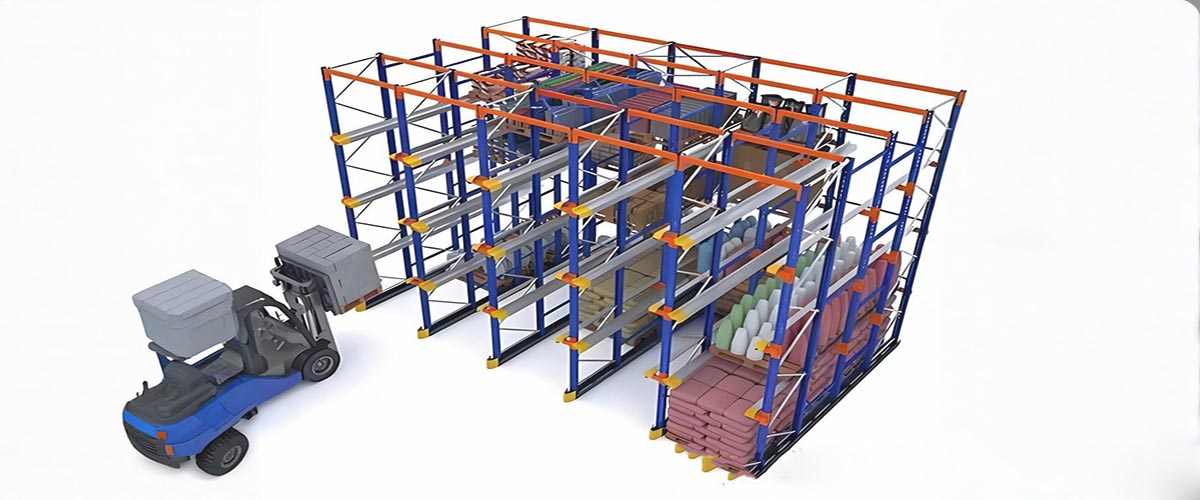
Utilizes telescopic forks or pallet runner shuttles to store pallets two or more deep per channel. This configuration maximizes storage density to its absolute limit, making it the premier choice for cold storage facilities where maintaining temperature-controlled volume is exceptionally costly.
Future-Proof Your Logistics with Custom ASRS Engineering
Investing in ASRS pallet racking is not merely about buying steel beams; it is about engineering a customized logistical solution tailored to your exact operational throughput. A minor calculation error in deflection tolerances or rail alignment can halt an entire supply chain.
As a premier manufacturer of heavy-duty warehouse automation racking, we provide end-to-end consulting, precision structural engineering, and seamless integration support for global automated systems. Whether you are retrofitting an existing facility or designing a greenfield automated distribution center, our team ensures your racking is built to survive decades of high-speed, high-density demand.
Contact our automated racking specialists today to request a structural FEA analysis and customized layout design for your next ASRS project.