# Customized Rack
-
-
-
Customized shelving
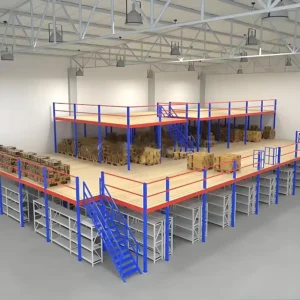
Mezzanine Racking System
-
-
Customized shelving
Custom Double Deep Rack Solutions: High-Density Deep-Lane Pallet Storage
-
-
Customized shelving
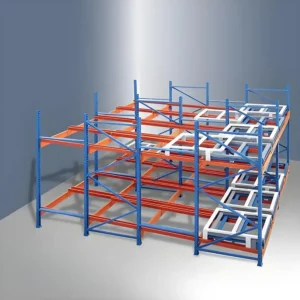
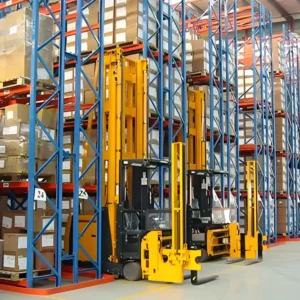
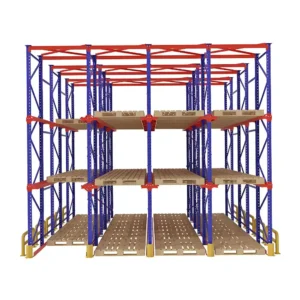
High-Efficiency Drive-Through Racking Systems for Seamless FIFO Storage
-
Customized shelving
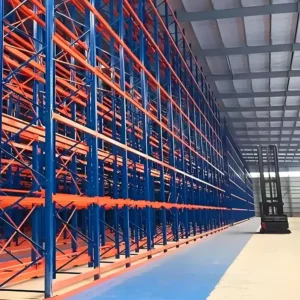
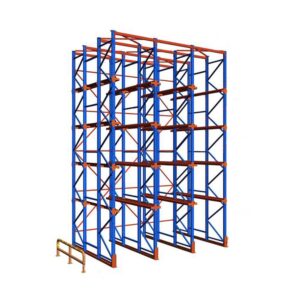
Maximize Storage Density with High-Performance Drive-In Racking Systems
-
Customized shelving
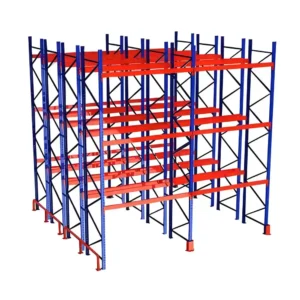
Maximize Warehouse Efficiency with Premium Selective Pallet Racking Systems
Custom Storage Racks Designed Around Your Products
Not every product can be stored efficiently on a standard rack.
Long pipes, rolls of rubber, textile materials, glass products, fabric, and other industrial materials often have very different dimensions, shapes, weights, and handling requirements. Using a standard rack for these products can result in wasted space, difficult loading, poor accessibility, or unnecessary handling work.
Customized Racks are designed around the products being stored rather than forcing different products into the same standard rack configuration.
JULI® manufactures custom storage racks for industrial materials, manufacturing operations, logistics warehouses, automotive applications, textile production, glass storage, pipe storage, and other specialized requirements.
From rack dimensions and support structures to load capacity, spacing, surface treatment, and handling configuration, the design can be developed around your actual application.
What Is a Customized Rack?
A Customized Rack is a storage rack designed or modified according to the specific requirements of a product, warehouse, or material handling process.
A standard rack normally follows predetermined dimensions and configurations.
A customized rack starts with the application.
The design process can consider:
- Product
- Weight
- Shape
- Dimensions
- Handling
- Environment
- Storage Method
This allows the rack structure to be changed according to the characteristics of the materials being stored.
For example:
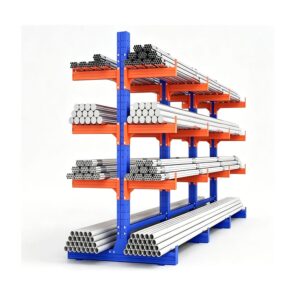
Long PVC pipes may require different support spacing from standard products.
Glass products may require specialized support surfaces and protection.
Rubber rolls may require specific cradles or support arrangements.
Textile materials may require larger storage openings and easier access.
Heavy industrial materials may require reinforced load-bearing structures.
The purpose of customization is not simply to make a rack look different.
The purpose is to make the rack work better for the actual product and operating process.
Why Do You Need a Customized Rack?
Products may be unusually long, wide, high, cylindrical, flexible, fragile, or irregularly shaped.
A standard rack may leave too much unused space or fail to provide appropriate support.
A customized structure can be designed around the actual product dimensions.
Different materials place different loads on the rack.
A rack for lightweight textile materials does not need the same structure as one for heavy rubber products or glass.
Customized load capacity and structural reinforcement can therefore provide more appropriate performance.
Some products should not simply rest on a flat shelf.
Cylindrical products may need cradles.
Long products may need multiple support points.
Fragile products may need protective contact surfaces.
The support structure can be customized accordingly.
A standard rack may not make the best use of your warehouse dimensions.
Custom rack dimensions can be designed around available floor space, ceiling height, aisle width, and handling equipment.
Forklift access, crane handling, manual loading, production-line transfer, and other processes can require different rack structures.
Customization allows the rack to become part of the material handling process rather than an obstacle to it.
What Can Be Customized?
Length, width, height, storage opening, and spacing can all be adjusted according to the products and warehouse.
The structure can be engineered according to required static and dynamic loads.
Shelves, tubes, beams, arms, brackets, cradles, posts, panels, and other support components can be configured according to the products being stored.
The number and spacing of storage levels can be customized to improve available vertical space.
The structure can be designed around forklift access, manual handling, crane operation, or production-line movement.
Depending on the application, surface treatment can be selected according to indoor, outdoor, humid, refrigerated, or other operating conditions.
Where necessary, contact surfaces can be adapted to reduce the risk of product damage during storage and handling.
How to Order a Customized Rack
Provide the product type and photos when available.
Give us the approximate length, width, height, diameter, or roll size and the weight of each load.
Tell us whether products are loaded manually or handled by forklift, crane, pallet truck, or another system.
Provide available floor space, aisle requirements, ceiling height, and storage quantity when known.
Tell us whether the racks will be used indoors, outdoors, in a cold room, in a humid environment, or in another specialized condition.
Our engineering team can use this information to recommend the appropriate rack configuration, dimensions, load capacity, and structural details.
Customized storage equipment is often the better choice when standard racks leave excessive unused space, provide insufficient product support, or do not integrate well with the handling process.
JULI® manufactures custom storage racks for products with different dimensions, weights, shapes, and material characteristics.
From natural rubber and synthetic materials to cotton yarn, fabric, glass, PVC pipes, automotive components, and other industrial products, the rack can be designed according to the actual application.
The result is not simply a rack with custom dimensions.
It is a storage structure designed around the way your products are stored, moved, and managed.