Description
In the hyper-competitive landscape of modern warehousing, maximizing storage capacity within a fixed building footprint is a constant financial and operational challenge. Standard selective pallet racking, while offering direct access to every pallet, inevitably sacrifices huge amounts of valuable floor space to multiple access aisles. When real estate costs rise or cold-storage energy bills climb, expanding horizontally is rarely the smartest option.
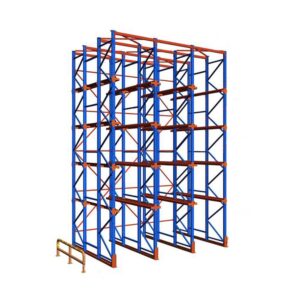
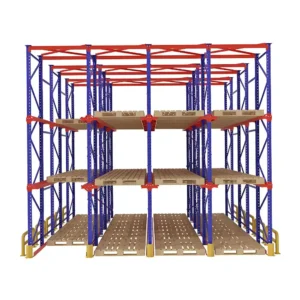
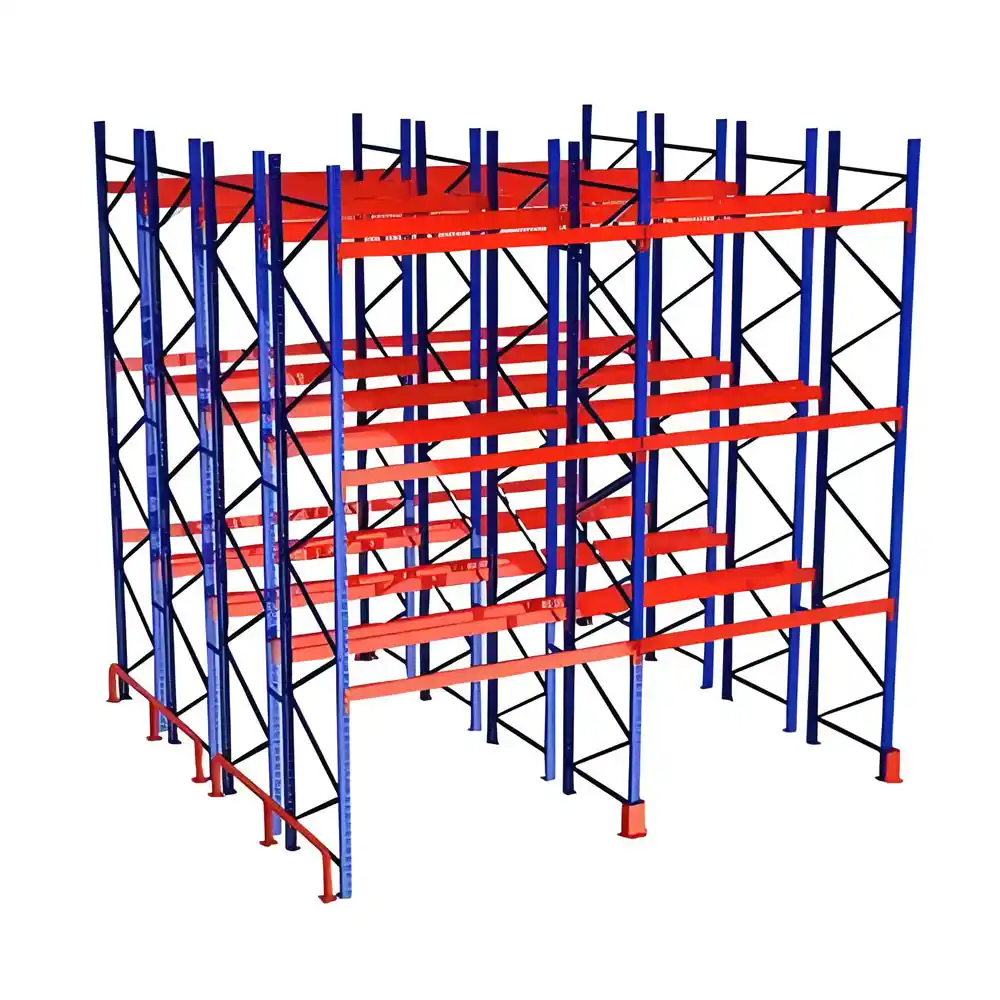
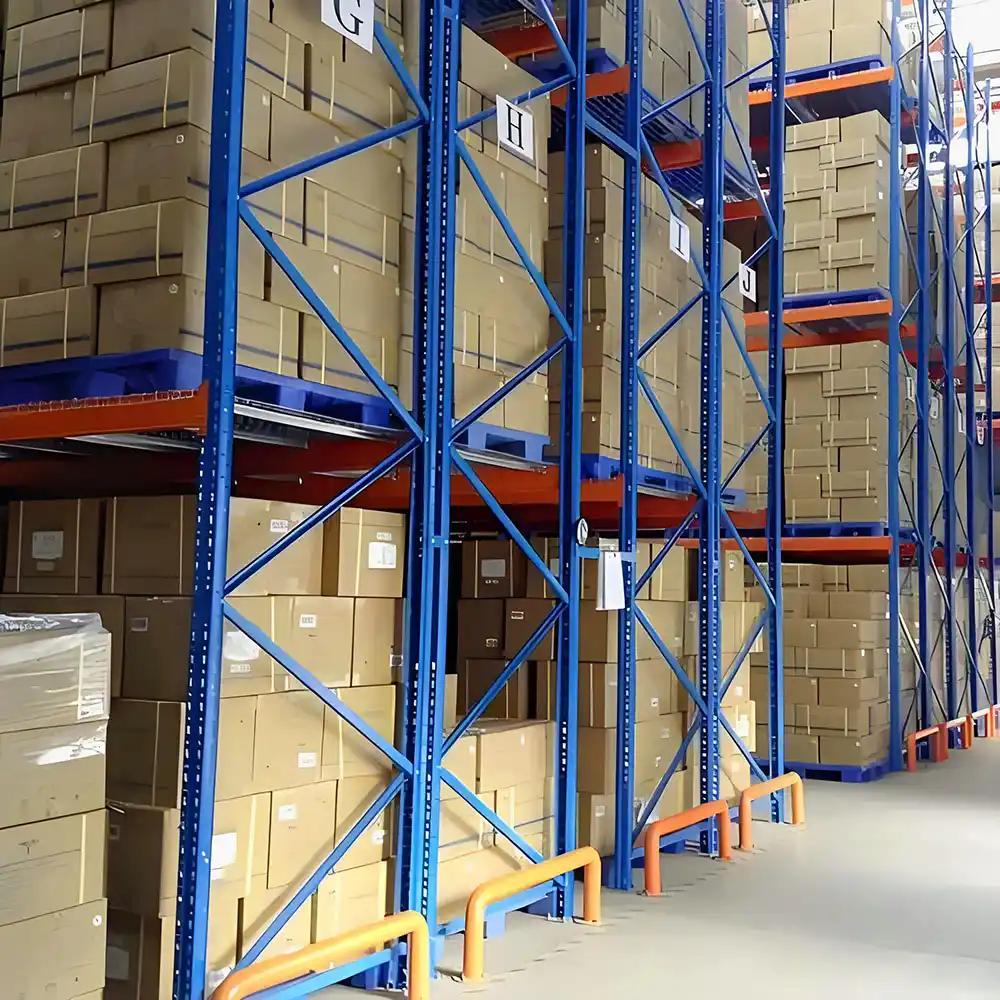
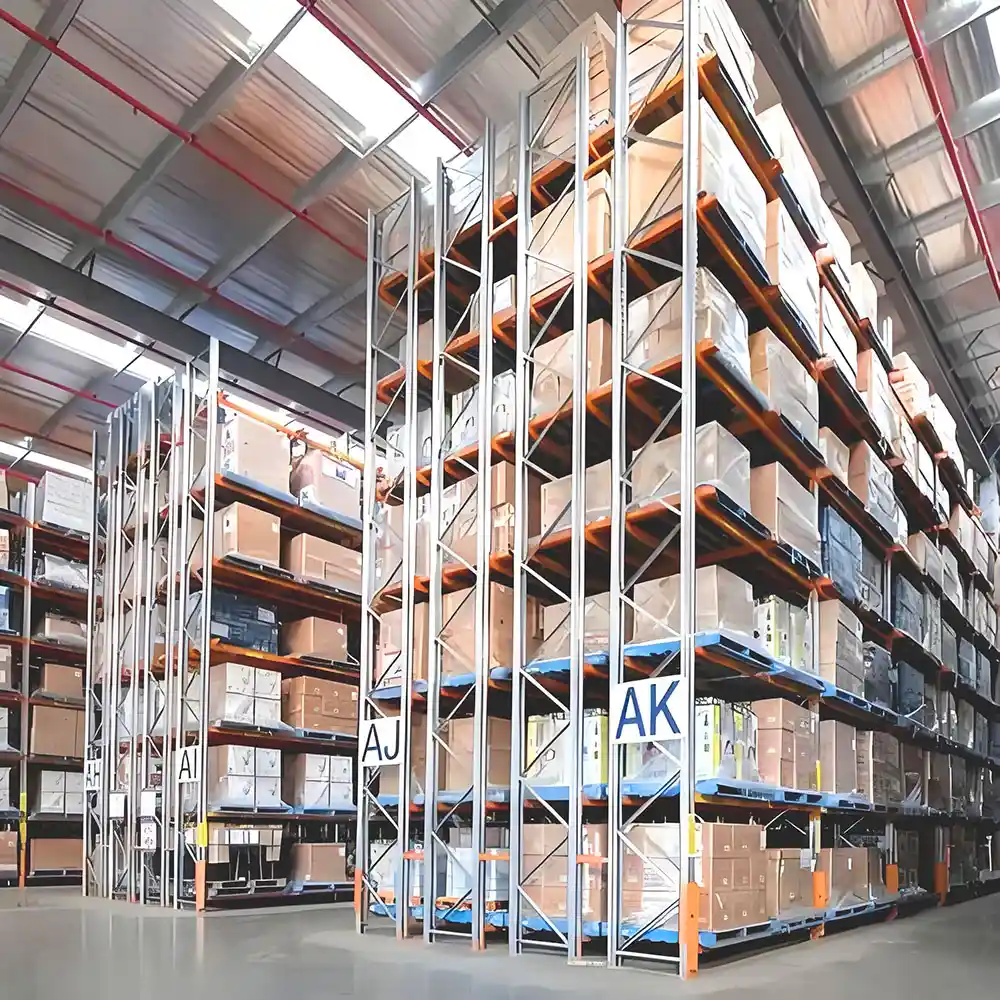
Our custom Double Deep Rack—also recognized across global logistics networks as Double Deep Pallet Racking—presents an exceptionally cost-effective alternative that perfectly balances high-density storage with reliable throughput. By placing one pallet row directly behind another, this advanced deep-lane racking system eliminates every second forklift access aisle. This architectural shift immediately unlocks massive amounts of floor space, allowing you to compress your storage footprint and increase your overall warehouse storage capacity by up to 30% to 40% compared to standard configurations, all without needing to invest in complex automated retrieval systems.
Technical Specifications & Engineering Framework
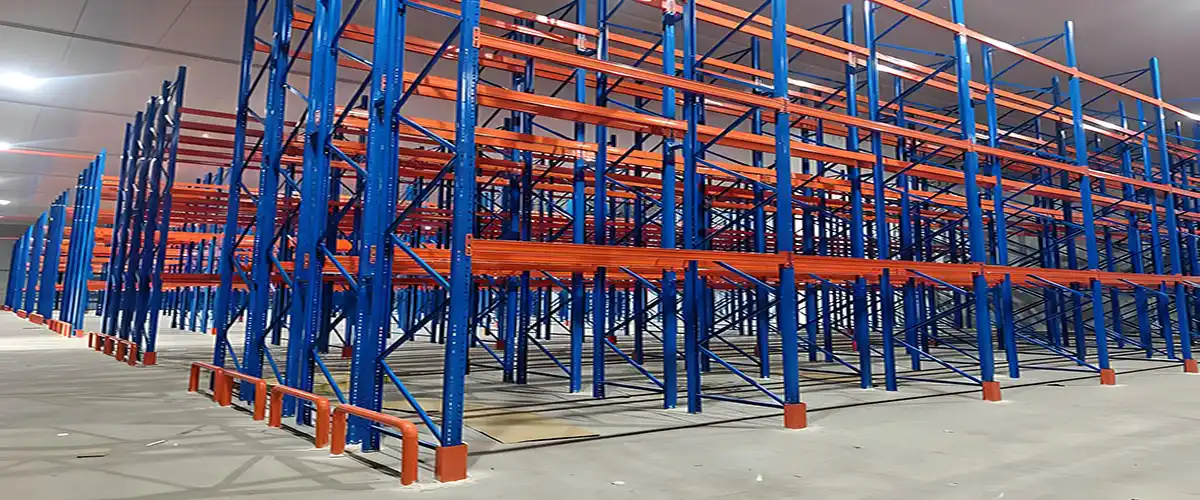
To assist your procurement managers, structural engineers, and facility planners in integrating our high-density pallet storage systems into your existing or brand-new warehouse setup, we have outlined our standard manufacturing capabilities and structural load-bearing tolerances in the technical matrix below.
| Structural System Attribute | Heavy-Duty Industrial Specifications & Tolerances |
| Maximum Structural Frame Height | Up to 12,000 mm (Formed from ultra-pure, high-tensile cold-rolled steel profiles) |
| Maximum Load Capacity Per Bay | Up to 25,000 kg (Engineered explicitly for multi-tiered heavy industrial storage) |
| Beam Level Compartment Capacity | Up to 4,500 kg per uniformly distributed load (UDL) pair |
| Upright Column Gauges & Widths | Available in 80mm, 90mm, 100mm, and 120mm configurations based on seismic and load analysis |
| Beam Profiles & Safety Connections | Interlocking Box Beams and Step Beams featuring 3-hook or 4-hook heavy moment connectors |
| Surface Finish & Corrosion Prevention | Durable thermosetting epoxy powder coating or full Hot-Dip Galvanization (HDG) for cold rooms |
| Safety Certification & Standards | Designed in strict compliance with FEM 10.2.02, RMI standards, SEMA codes, and BS EN 15512 |
| Structural Accessory Compatibility | Integrated Pallet Support Bars, Row Spacers, Mesh Decking, and Fork Entry Guides |
Volumetric Efficiency: Re-Engineering the Warehouse Footprint
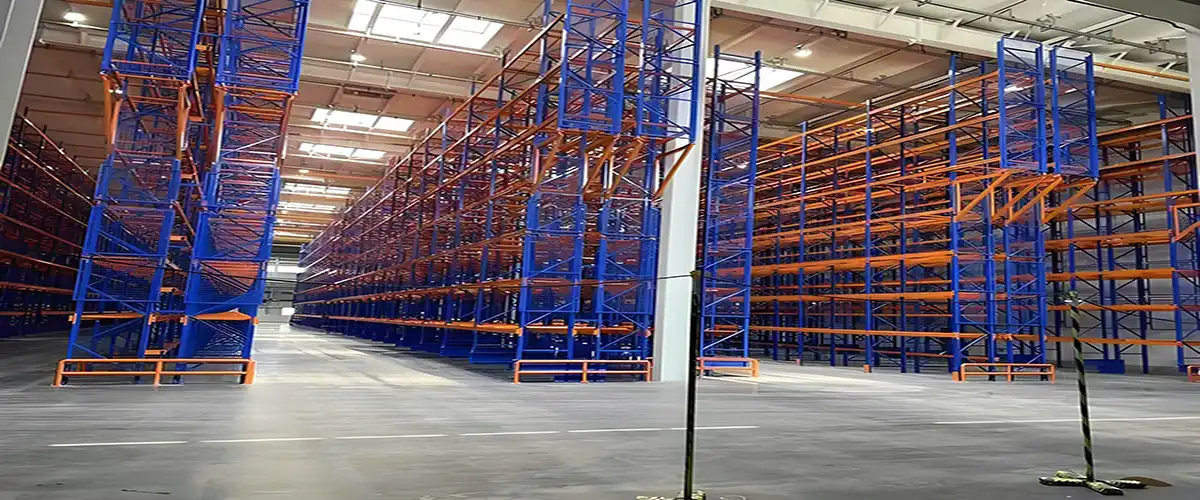
The fundamental engineering brilliance of a double deep rack installation lies in its ability to drastically improve a facility’s volumetric efficiency. In a standard selective layout, a massive portion of the warehouse floor is dedicated purely to forklift transit lanes. By reconfiguring the structural layout so that pairs of pallet racks are installed back-to-back, four rows of pallets can now be serviced from just two aisles instead of four. This optimization allows businesses to store identical products or batch-manufactured goods in a highly condensed matrix.
Because pallets are stored two positions deep, the system operates on a Last-In, First-Out (LIFO) stock rotation principle. While this means the rear pallet cannot be accessed until the front pallet is removed, it represents the absolute peak of storage efficiency for warehouses handling large volumes of homogeneous products, consistent manufacturing batches, or materials with long expiration dates. The initial capital investment for a double-deep structural configuration is practically identical to standard selective racking, yet the return on investment (ROI) is achieved almost instantly through the drastic reduction in required building footprint or rented warehouse space.
Structural Dynamics and Safety Engineering for Deep-Lane Racking
Extending storage capabilities two-pallets deep requires meticulous structural design and uncompromising material quality. Because operators cannot visually inspect the alignment of the rear pallet with the same ease as a front-facing one, our custom industrial racking integrates crucial passive safety mechanisms directly into the steel infrastructure.
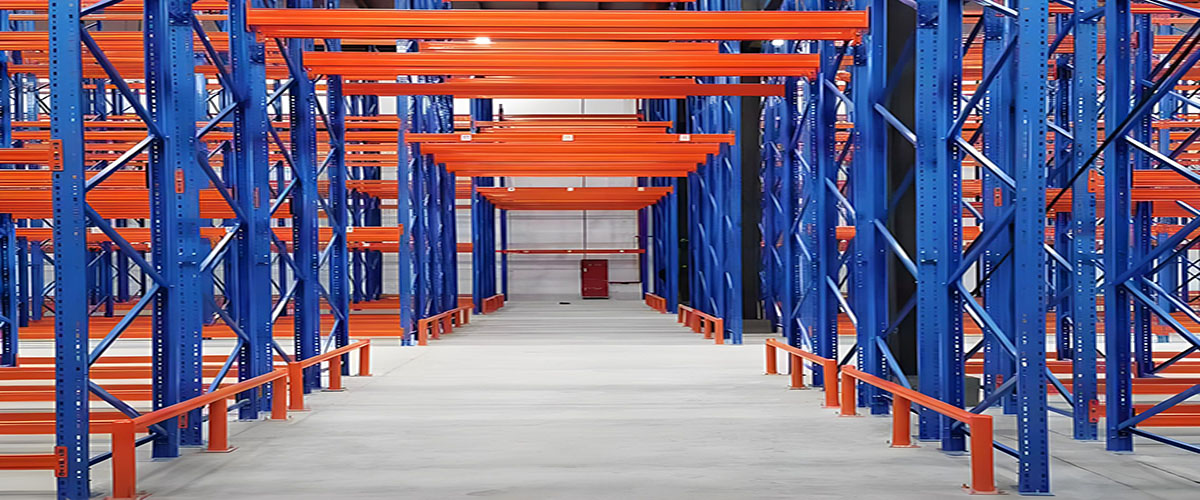
Every level of our double-deep system features heavy-duty structural row spacers that rigidly lock the back-to-back rack frames together, creating a unified, incredibly stable structural block that resists swaying and twisting forces. To assist forklift operators during high-level placement, we can integrate high-visibility mechanical pallet support bars and rear pallet guide rails within the deep bays. These guide rails act as physical stops that prevent the forklift driver from accidentally over-shoving a pallet into the adjacent bay or crushing product packaging, ensuring that every load is perfectly centered on the structural steel beams.
Furthermore, our upright frames are engineered with premium cold-formed steel and feature continuous, tear-drop or box-profile perforations, allowing for flexible vertical beam adjustments in 50mm or 75mm increments to perfectly match your evolving palletized load heights over time.
Operational Equipment: Integrating Pantograph Reach Forklifts
Implementing a successful Double Deep Pallet Racking project requires a clear understanding of the material handling equipment required to service the system. Standard counterbalanced forklifts or traditional reach trucks cannot access the second, deep-lane storage tier because their forks are structurally limited to single-depth engagement. To operate within a double-deep environment, your material handling fleet must be equipped with specialized pantograph reach trucks or forklifts fitted with double-deep telescopic fork extensions.
A pantograph reach truck features a built-in heavy-duty scissor mechanism that allows the fork assembly to extend forward deep into the racking matrix, picking up or depositing the rear pallet smoothly even at extreme vertical heights. Because extending the forks forward shifts the vehicle’s center of gravity, our engineering team works closely with your forklift suppliers during the layout phase.
We precisely calculate the optimal beam clearances and aisle widths needed to accommodate the truck’s extended chassis, turn radius, and residual lifting capacity at maximum height. This comprehensive integration ensures that your material handling team can maneuver safely, quickly, and with absolute confidence, protecting your structural steel investment from impact damage while driving up hourly pallet cycles.
Strategic Value Across Core Industrial Applications
The unique balance of ultra-dense storage, low capital expenditure, and high volumetric performance makes our double deep rack systems highly advantageous across several fast-growing industrial sectors:
Cold Storage & Frozen Food Facilities: Controlled-temperature environments are exceptionally expensive to operate per cubic meter. Compressing the storage layout with deep-lane racking drastically reduces the volume of air that needs to be cooled, lowering monthly energy consumption while packing more inventory into the cold room.
Fast-Moving Consumer Goods (FMCG) Warehousing: For distribution centers handling massive, uniform product batches with high turnover rates, the LIFO restriction becomes irrelevant, allowing logistics managers to exploit massive storage density for identical SKUs.
Manufacturing Raw Materials & Packaging Storage: Production plants that receive bulk shipments of components, steel coils, or packaging materials can utilize double-deep storage to keep vital industrial inputs closely staged next to production lines without wasting prime manufacturing floor space.
Third-Party Logistics (3PL) Hubs: For logistics providers handling large, predictable inventory volumes for specific clients, double-deep layouts provide a low-cost, flexible high-density option that optimizes warehouse utilization and boosts overall profitability.
End-to-End Project Execution: Custom Design to Final Handover
We firmly believe that high-performance storage infrastructure cannot be bought off the shelf. To unlock the full potential of your facility, our team follows a rigorous, data-driven custom engineering process designed to take your storage capabilities to the next level:
Step 1: Data Gathering & Layout Analysis
Our experienced storage layout engineers begin by assessing your current inventory profiles. We evaluate your total SKU counts, batch sizes, pallet dimensions (including overhang), and your current material handling fleet capabilities to determine if a double-deep configuration perfectly matches your workflow.
Step 2: Advanced CAD Engineering & Floor Slab Validation
Using state-of-the-art structural design software, we generate custom 2D and 3D CAD layouts. We calculate the exact point-load pressures that our heavy-duty upright baseplates will exert on your concrete floor slab, ensuring total safety compliance and structural harmony with your building’s architectural engineering limits.
Step 3: Precision Manufacturing & Automated Roll-Forming
Upon approval of the structural blueprints, your system is manufactured using premium, certified structural steel coils. Our automated roll-forming and robotic welding lines ensure flawless dimensional consistency across every beam and upright, which is followed by a multi-stage chemical wash and an industrial powder-coating bake cycle for a scratch-resistant, long-lasting finish.
Step 4: Certified Installation & Safety Commissioning
Our global network of factory-trained, certified installation technicians handles everything on-site. We manage the precise anchoring of frames, perfect plumbing of rows, and installation of safety barriers. The project finishes with a thorough safety inspection and the placement of official, certified load-capacity plaques, giving your business complete operational peace of mind.
Is it possible to increase the capacity of the two-depth system, add some extra features, and reduce it significantly? Our own capital engineering department will provide you with a fixed CAD design plan and a space improvement guide!