Description
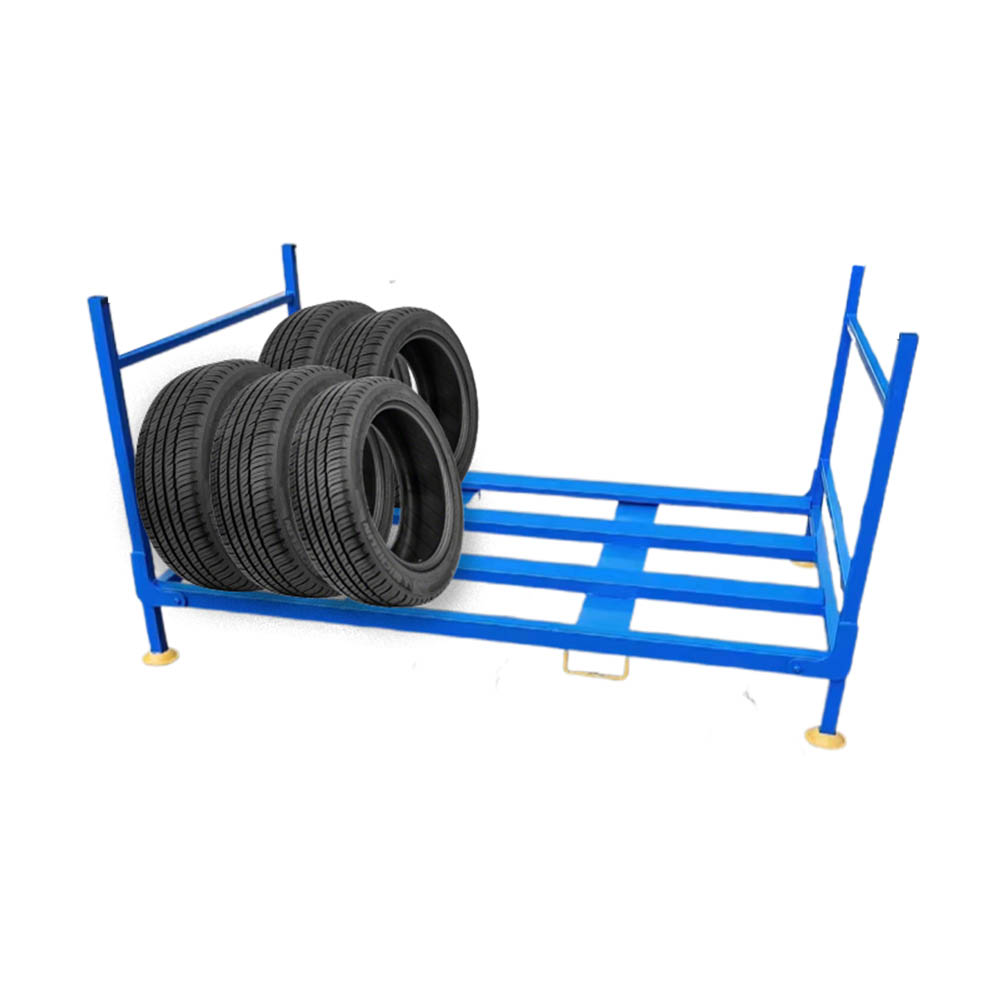
Custom automotive racks for storing, handling, stacking, and transporting automotive parts in manufacturing plants, supplier warehouses, logistics facilities, and distribution centers.
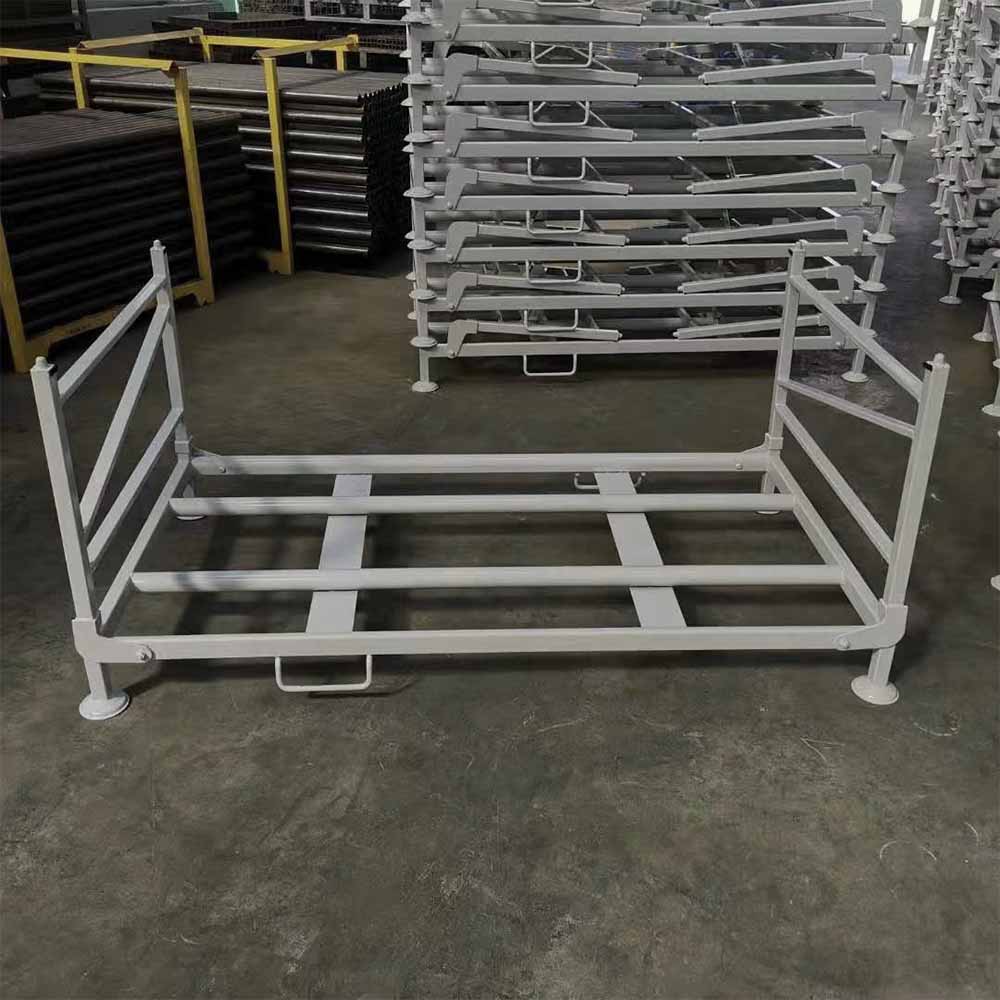
JULI manufactures automotive storage racks according to the dimensions, weight, shape, handling requirements, and protection needs of your automotive parts. Depending on the application, racks can be designed for stacking, folding, storage, line-side material handling, internal transport, and returnable logistics.
Instead of forcing different automotive parts into a standard rack design, we develop the structure around the actual part and handling process.
What Are Automotive Racks?
Automotive racks are steel storage and material-handling structures designed specifically for automotive components and related materials.
Unlike general warehouse racks, automotive racks can be configured around parts with different dimensions, shapes, weights, and handling requirements. The rack may be used for warehouse storage, production-line staging, internal transportation, or shipment between automotive suppliers and manufacturing facilities.
For automotive manufacturers and suppliers, the right rack needs to do more than hold a part. It should also support efficient handling, stable stacking, product protection, and practical use of available storage space.
Automotive Racks for Parts Storage and Material Handling
Automotive parts rarely have the same shape or handling requirements.
Engines, transmissions, bumpers, body panels, windshields, wheels, tires, exhaust components, interior parts, and other assemblies may require different support structures.
JULI designs custom automotive racks around these differences.
Depending on the application, the rack can be designed with:
Custom dimensions
Part-specific support structures
Protective pads or contact surfaces
Dividers or positioning structures
Forklift handling provisions
Stackable configurations
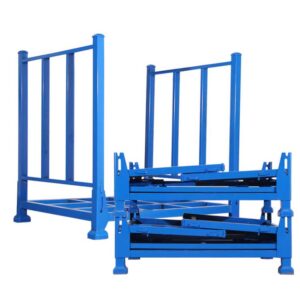
Folding or collapsible configurations where required
Custom surface treatment
OEM specifications and branding
The objective is to create a rack that fits the part, the handling equipment, and the actual workflow rather than simply providing a standard storage frame.
Where Automotive Racks Are Used
Automotive Manufacturing Plants
Automotive racks can be used around production areas for temporary storage, line-side staging, work-in-process materials, and finished components.
Tier 1 and Tier 2 Supplier Warehouses
Automotive suppliers can use custom racks to organize components before shipment to OEM production facilities while maintaining efficient handling and storage.
Automotive Parts Warehouses
For aftermarket and replacement parts operations, automotive racks can help organize components while providing efficient access and material movement.
Logistics and Distribution Centers
Automotive racks can support the movement and storage of components between suppliers, warehouses, distribution centers, and production facilities.
Returnable Automotive Packaging
When racks are used as reusable handling equipment, the design can be developed around repeated loading, unloading, transport, and storage requirements.
Types of Automotive Racks
The appropriate automotive rack depends on the component being stored and how the rack will be handled.
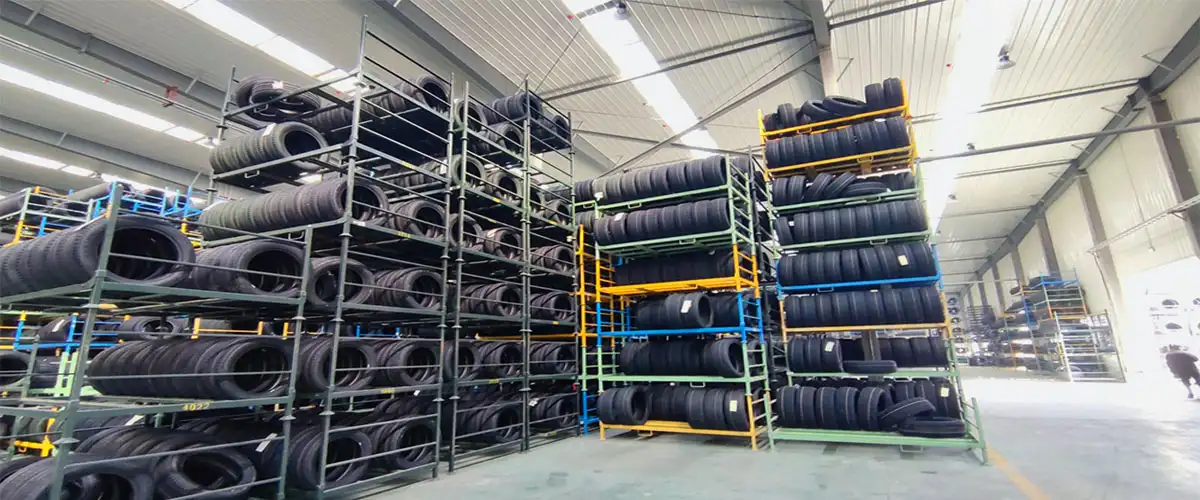
Stackable Automotive Racks
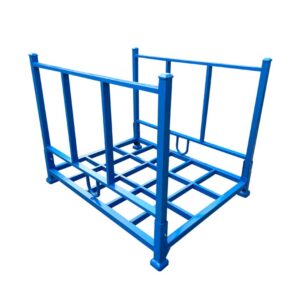
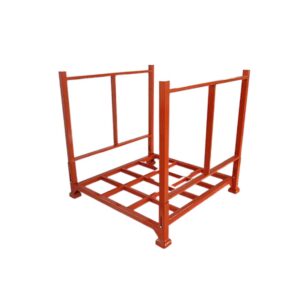
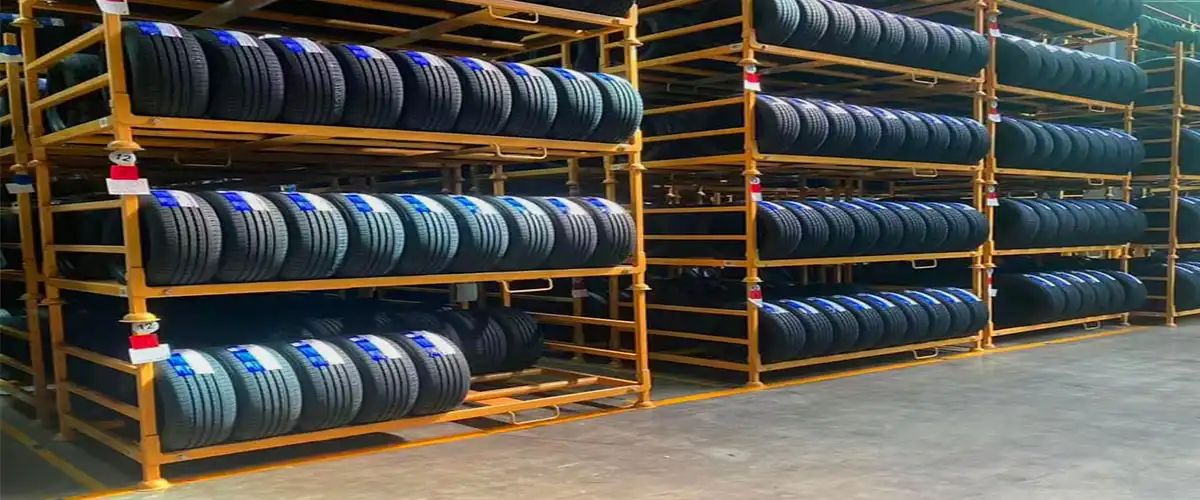
Stackable automotive racks allow compatible loads to be stored vertically, helping make better use of available warehouse or production space.
Folding Automotive Racks
Folding configurations can reduce the space occupied by empty racks when they need to be returned, transported, or stored after the load has been removed.
Custom Automotive Parts Racks
For automotive components with irregular shapes or special handling requirements, the rack can be designed around the geometry and support points of the part.
Heavy-Duty Automotive Racks
For heavier automotive components or industrial handling requirements, the frame structure can be developed according to the required working load and handling conditions.
Not every automotive application requires a heavy-duty design. The structure should be selected according to the actual product weight, handling method, and operating environment.
Automotive Parts That Can Be Stored or Handled
Custom automotive racks can be designed for different automotive components, including:
Engine components
Transmissions and powertrain components
Bumpers and fascias
Body panels
Doors and structural components
Exhaust components
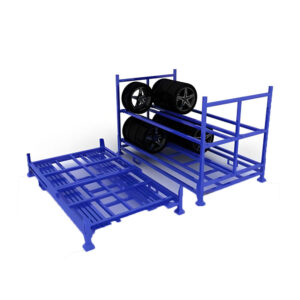
Wheels and tires
Windshields and glass components
Interior components
Battery-related components
Other custom automotive parts
The exact rack structure should be determined by the dimensions, weight, surface condition, protection requirements, and handling method of the part.
Automotive Rack Specifications
| Specification | Custom Options |
| Product | Automotive Racks / Automotive Storage Racks |
| Material | Steel / Structural Steel according to application |
| Rack Type | Stackable, Folding, Custom, or application-specific |
| Dimensions | Customized |
| Load Capacity | Customized according to application |
| Part Support | Custom supports, dividers, pads, or positioning features |
| Forklift Handling | Customized according to handling requirements |
| Surface Treatment | Powder coating, painting, galvanizing, or specified finish |
| Stacking Configuration | Customized |
| Branding | OEM / ODM available |
Actual material grade, load capacity, stacking height, and structural configuration should be determined according to the final product requirements and engineering design.
Custom Automotive Racks Designed Around Your Parts
Standard racks may work for standardized products, but automotive components often require a different approach.
JULI can develop custom automotive racks based on:
Part dimensions
Part weight
Part geometry
Contact and support points
Required load capacity
Number of parts per rack
Stacking requirements
Forklift or handling equipment
Warehouse or production-line space
Transportation requirements
Product protection requirements
Surface treatment
OEM specifications
For parts with sensitive surfaces or irregular shapes, additional support structures or protective contact materials can be incorporated into the design where required.
Automotive Racks for Storage, Shipping and Production
An automotive rack may serve more than one function.
Storage
Organize automotive parts in warehouses while making better use of available floor and vertical space.
Production
Provide staging and temporary storage for components moving through manufacturing processes.
Material Handling
Allow components to be moved between storage, production, and loading areas using appropriate handling equipment.
Shipping
Support the movement of components between suppliers, warehouses, and automotive manufacturing facilities.
For returnable logistics applications, the rack can also be developed around the requirements of repeated handling and transportation.
Why Use Automotive Racks Instead of General Storage Racks?
Automotive components often require more than a standard pallet or general-purpose storage rack.
The right automotive rack can be designed around:
Part protection
The structure can provide appropriate support and positioning for irregular or sensitive components.
Efficient material handling
Rack dimensions and access points can be designed around the equipment used to move the parts.
Stackable storage
Where appropriate, vertical stacking can increase storage density.
Flexible applications
A custom rack can be developed for a particular component, production process, or logistics requirement.
Reusable handling
Steel automotive racks can serve repeated handling and logistics cycles instead of relying solely on single-use packaging.
How to Choose the Right Automotive Rack
Before selecting an automotive rack, the following factors should be considered:
| Requirement | Why It Matters |
| Part dimensions | Determines the required rack footprint |
| Part weight | Determines structural requirements |
| Part geometry | Determines support and positioning design |
| Surface sensitivity | May require protective contact materials |
| Storage method | Determines stacking and access configuration |
| Handling equipment | Influences forklift or handling provisions |
| Warehouse space | Determines rack dimensions and layout |
| Shipping requirements | May affect collapsible or returnable design |
| Required quantity | Influences rack capacity and project planning |
Providing this information to the manufacturer allows the rack to be designed around the actual operation rather than a generic standard configuration.
Automotive Rack Manufacturing by JULI
JULI operates its own production facility dedicated to warehouse storage equipment, steel pallets, storage containers, and custom material handling equipment.
For automotive rack projects, our manufacturing process can cover:
Engineering and Custom Design
Rack dimensions and structural features can be developed according to your automotive part and operating requirements.
Steel Processing and Welding
Steel components are processed and welded according to the approved product specifications.
Surface Treatment
Surface treatment can be selected according to the intended operating environment and customer requirements.
Inspection
Finished products can be inspected for dimensions, appearance, welding quality, and other specified requirements before shipment.
OEM / ODM Manufacturing
Custom dimensions, structures, colors, branding, and project specifications can be supported for B2B orders.
Frequently Asked Questions About Automotive Racks
What are automotive racks used for?
Automotive racks are used for storing, handling, staging, transporting, and shipping automotive components in manufacturing plants, supplier warehouses, logistics facilities, and distribution centers.
Can automotive racks be customized?
Yes. Automotive racks can be customized according to part dimensions, weight, shape, support requirements, stacking configuration, handling equipment, and other project requirements.
Can automotive racks be stackable?
Yes. Stackable configurations can be developed when vertical storage is suitable for the product and operating requirements.
Can automotive racks be folded or collapsed?
Folding or collapsible configurations can be developed for applications where reducing the space occupied by empty racks is important, such as returnable logistics and transportation.
What automotive parts can be stored in automotive racks?
Depending on the design, automotive racks can be used for components such as engine parts, transmissions, bumpers, body panels, windshields, wheels, tires, exhaust components, interior components, and other automotive parts.
What information is needed for a custom automotive rack?
Useful information includes the part dimensions, part weight, quantity per rack, required stacking height, handling equipment, storage environment, and shipping or production requirements. Drawings or product photos can also help with the initial design review.
Request a Custom Automotive Rack
Every automotive component has different dimensions, weight, handling requirements, and protection needs.
Send us your part drawings, dimensions, weight, pallet requirements, handling method, and required quantity. Our engineering team can review the application and develop a suitable custom automotive rack solution.
Request a Quote for Automotive Racks
Contact us with your project requirements to discuss rack dimensions, structure, stacking configuration, material handling, surface treatment, and customization options.