
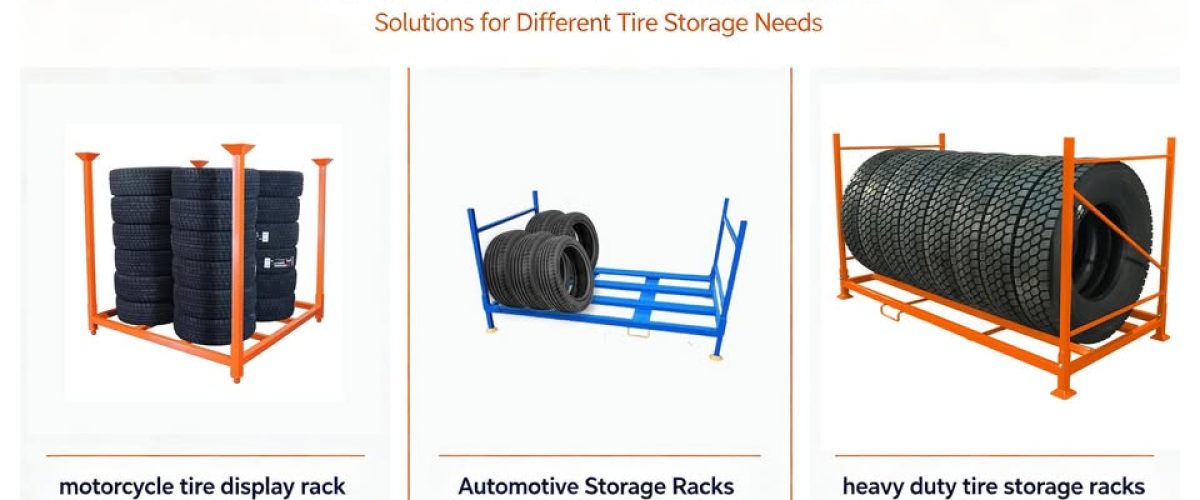
Heavy duty tire racks offer a very good means of storage, handling and transportation of tires in various business locations. For companies dealing with a lot of tires, a proper storage rack can be a game-changer in warehouse organization, space utilization and simplifying material handling.
JULI is an expert tire rack supplier, able to provide heavy duty tire racks for various types of tires, storage environments, and specific industrial requirements. We have an extensive product range including rack for automotive tires, motorcycles, truck, insert-pipe, stack, and foldable.
Instead of relying on a one-size-fits-all design, we take into consideration factors like tire specifics, handling and storage, forklift access and operations inside the warehouse before customizing the rack dimensions and configuration.
When selecting tire storage solutions, it is necessary to consider the types of tires, the number of tires kept per rack and the movement of racks in and out of the storage area.
This can apply even if you need a few racks for a tire production plant, many racks for a wholesale warehouse or lots of racks in seasonal logistics centers. JULI’s team will be involved in a project to design steel tire racks that will perfectly align with the customer’s products and real-life operating conditions.
Getting Heavy Duty Tire Rack for Different Tires
Diameters, widths, weights and storage needs of tires vary a lot and that means a rack that is appropriate for use in tires for passenger automobiles will not be a good fit at all for commercial vehicle tires that can have large dimensions, whereas motorcycle tires could still necessitate some support and storage arrangement distinct from those being employed for the bigger tyres.
It is therefore advisable to select tire storage equipment considering the kind of products you are dealing with at the same time as it should help how storage is managed in the area and the rack’s movement within the warehouse.
Automotive Tire Rack
Automotive tire racks, for instance. Tire storage, inventory management, etc. are done via them. This method helps in keeping the products in order with the use of various sizes, models or destination while eliminating unorganized floor stacking. Automotive tire storage can require different solutions that can either handle the storage of bulk or regular movement of tires. So, if bulk storage and forklift lifting are your requirements then stackable solutions might be better. On the other hand, if you would like to minimize the floor space occupied by the racks then folding solutions could be the best pick.
Certainly, the rack that is most suitable should depend on a combination of the tire’s dimensions, the number of tires per rack, the warehouse layout and the customer’s handling process. If a customer needs to be able to disassemble one rack, then insert-pipe type of a rack would be the right solution.
JULI is the company that can make customized automotive tire storage rack to suit your needs. Customers can give us tire dimensions and photos or the layout of an existing rack. We just need the most necessary information to decide the rack configuration for customer needs.
Rack for Motorcycle Tires
Tire racks specialized for storage and handling motorcycle and scooter tires are the focus point when it is about this category of tires. Being normally smaller than car or truck tires, warehouses are nevertheless capable of handling various different sizes of tires from the same product line at the same time.
If properly designed to hold motorcycle tires, the storage rack will not only provide inventory space but also make it easier to see how tires are grouped according to features, product lines, or even shipping destinations.
In the case of stock replenishment or stock movement for example, a rack system will help the process be smooth and efficient in a warehouse.
With the help of different rack structures like insert-pipe, stackable, or folding designs that can be adapted for the application purpose, the user can benefit from versatile ways of storing a wide variety of tires that do not necessarily have a consistent dimension or product category.
Tirerack dimensions and the way supports are set up should be chosen based on the actual sizes of the tires and storage capacity required rather than simply assuming that one and the only design can fit all products.
For operations with fluctuating inventory levels, folding motorcycle tire racks may also serve the purpose of saving space through the compact storage of empty rack.
As far as large-scale storage is concerned, stackable configurations can be assessed according to load demands and how the stacking of the containers is to be permitted.Rack for Truck TireRack for Truck TireTruck tires are used in tire factory, truck tire distribution, heavy vehicle service workshop, and industrial tire warehouse. As truck tires can be both bigger and heavier, rack construction, support points, loading capacity, and the way of stacking have to be considered properly.Heavy Truck Tire Racks Truck tires are the main product line of Truck tire racks and Heavy truck tire racks are designed and manufactured to accommodate the size and weight characteristics of each of the different truck tire models available through the customer.The truck tire rack system offers a flexible storage solution that can be stackable to maximize space in the warehouse and/or folding to allow return transport or detachable (insert-pipe) to meet diverse handling methods.After receiving the customer’s technical parameters, the manufacturer should clarify the specifications of the truck tire rack. In the case where it has to be stacked or moved multiple times under load, it would be important to fix the final design details with the client before production.JULI will examine the customer’s needs, provide a suitable truck tire rack solution together with other large tire products. It is recommended to finalize the design details before the start of production especially for the racks that will go through repeated stacking or movement under the load.
Types of Heavy Duty Tire Racks
Different warehouse operations place different demands on tire storage equipment. Some businesses prioritize compact storage when racks are empty, while others need stackable units for bulk inventory or detachable structures for flexible handling.
JULI offers several tire rack configurations to address these requirements.
Insert-Pipe Tire Racks
Insert-pipe tire racks use pipe components that fit into designated connection points to form the rack structure. Depending on the design, the components can be removed or separated when the rack needs to be dismantled or reconfigured.
This type of industrial tire rack can be considered for warehouses that need reusable storage equipment and a structure suited to their tire dimensions and handling process. The insert-pipe arrangement, support layout, and overall dimensions should be designed around the intended application.
For tire manufacturers and distributors, insert-pipe tire racks can help establish a consistent storage unit for moving tires between work areas, warehouse zones, and dispatch operations.
When evaluating an insert-pipe tire rack, buyers should confirm how the components connect, how the loaded rack is handled, and whether the design is intended for stacking. Detachable construction alone does not automatically mean a rack is suitable for loaded stacking; this capability must be verified for the specific model.
Stackable Tire Racks
Stackable tire racks are designed to allow loaded racks to be placed on top of one another in a defined configuration. This can help tire warehouses use available vertical space and organize bulk inventory without depending entirely on permanent shelving.
Stackable tire storage racks are often considered by tire manufacturers, wholesalers, automotive parts warehouses, and logistics centers that handle large quantities of tires. A consistent rack footprint can also support more organized warehouse layouts and material movement.
For businesses with fluctuating stock levels, stackable racks can provide a flexible storage arrangement. The number of levels that can be used depends on the rack design, total loaded weight, floor conditions, handling method, and approved operating limits.
JULI can customize the rack dimensions and support structure to match the intended tire type and storage arrangement. Before placing an order, customers should specify the required working load and stacking configuration so that these requirements can be reviewed during design.
Folding Tire Racks
Folding tire racks are designed to reduce the space occupied by empty racks. Once the tires have been removed, designated rack components can be folded into a more compact arrangement, depending on the model.
For tire distributors and logistics companies, empty racks may need to be stored between orders or returned from delivery locations. Folding tire storage racks can help reduce the space used for this empty equipment and may improve the efficiency of return transport.
Folding tire racks can be considered for automotive tires, motorcycle tires, and selected truck tire applications, provided the structure is designed for the relevant tire dimensions and load requirements.
The folding mechanism, rack footprint, and loaded configuration should be confirmed before production. If a customer also requires loaded stacking, that capability must be explicitly included in the design rather than assumed from the folding feature.
Customized Industrial Tire Racks
Not every tire storage operation can be served by an off-the-shelf rack. Tire dimensions, warehouse layouts, forklift types, storage quantities, and transport requirements vary from one business to another.
Custom industrial tire racks can be developed around the customer’s actual products and workflow. Customization may include overall length, width and height, tire support arrangement, loading capacity, forklift entry, structural connections, surface finish, and the intended storage configuration.
For companies handling multiple tire categories, a customized rack program can help establish more suitable storage units for different product groups. The final design should be based on verified dimensions and operating requirements.
How Heavy-Duty Tire Racks Boost Warehouse Efficiency
Managing tire inventory can be highly challenging when stock levels rise, product specifications vary, and warehouse space is limited. Selecting the right storage equipment is an effective way to resolve many common operational difficulties.
Optimizing Warehouse Space Utilization
Storing tires loosely on the floor consumes a vast amount of space. Where warehouse design and layout permit, using stackable tire racks is an ideal solution for vertical storage.
This approach not only handles large volumes of finished tires effectively but also significantly increases storage capacity for tire manufacturers, distribution centers, and wholesalers. The actual space savings depend on factors such as tire size, rack footprint, aisle width requirements, and permissible stacking methods.
Leveraging Efficient Storage Systems
Well-designed racks facilitate the categorization and zoning of tires by size, type, product line, or destination. This optimizes warehouse workflows, including receiving, picking, replenishment, and shipping.
Businesses handling tires for cars, motorcycles, and trucks simultaneously can adopt rack configurations tailored to specific product categories. Furthermore, classifying inventory by rack type and storage location helps standardize and systematize daily warehouse operations.
Facilitating Forklift Operations
Industrial-grade tire racks can be customized to suit the material handling equipment used by the client. Factors such as forklift entry direction, fork spacing, rack dimensions, and load-bearing capacity are crucial when designing racks that meet specific operational needs.
Customized rack configurations streamline the transfer of goods from storage areas to shipping zones. Before purchasing racks, it is essential to clarify the forklift type and specific handling procedures.
Minimizing Space Occupied by Empty Racks
In warehousing or transport scenarios involving off-site circulation, idle empty racks often consume valuable space. Foldable tire racks effectively address this issue by occupying minimal space once unloaded. This offers significant value to tire distribution networks, logistics operators, and suppliers who need to frequently move racks between warehouses, manufacturing plants, and customers.
Facilitating Reuse in Industrial Applications
Well-designed, properly operated, and well-maintained steel tire racks are fully capable of being reused. Furthermore, the steel structure and surface treatment of the racks can be customized based on specific application scenarios, operating conditions, and customer requirements.
When purchasing, buyers should not focus solely on the generic classification of “heavy-duty racks”; instead, they should carefully verify the load-bearing capacity, storage layout, surface treatment, and suitability for specific operating conditions.
Heavy duty tire racks have different uses throughout the tire industry.
These are for various stages of the tire industry; they are able to facilitate production stage to temporary storage to wholesale distribution and logistics as it were. Here are the major tire businesses that can make use of these racks and what are the specific requirements.
Tire Manufacturing Plants:
Tire manufacturers have to handle the internal movement of tires from the different areas of their plant, i.e., from production, inspection to storage and dispatch areas. In general, it is necessary to keep finished tires under organized conditions and facilitate the efficient moving of items within the plant. Therefore, the dimensions and capabilities of racks should be aligned with the types and handling method of products that the manufacturer will have. In fact, if the manufacturer’s line includes different sizes of tires, they may have to adopt and implement various layouts and rack designs for different categories of tires.
Tire Wholesalers and Distributors:
This type of tire business usually operates on a large inventories basis and offers products in different sizes and styles. If they are looking for ways to store tires in bulk for sale, stackable tire racks is definitely something to consider. At the same time, folding racks can come in handy particularly to return or store empty equipment in a much more compact fashion. The configuration that best suits the business will depend on factors such as stock level, warehouse setup, order cycle, and how the tires are moved into and out of the various parts of the business including receiving area, storage, and dispatch etc.
Automotive Parts Warehouses:
Auto parts warehouses often have to store different kinds of parts for vehicles which includes tires. A good and appropriate tire storage rack will not only help keep the tire stock in good shape but will also keep the tire lot well separated from other parts and materials that have nothing to do with the tire. For passenger car tires, design of the rack should be in keeping with size of tire, storage requirements, and availability of handling machinery. A well designed tire storage rack will help the business to make the maximum use of available space and also will help make the tire inventory very visible and easily accessible to the customers.
Motorcycle Tire Distribution:
Such distributors that specialize in selling motorcycle tires will have to manage different specifications of tires, usually a lot of work to be carried out in a relatively small area at product levels. If a distributor uses exclusive motorcycle tire racks, the sizes can be easily categorized and separated while allowing better accessibility for picking and order preparation operations.Customizing an arrangement will be an idea if standard dimensions of the racks will not allow the distributor or the warehouse layout to be in full agreement with it.
Truck Tire Warehouses:
Large truck tire warehouses usually require storage facilities that can withstand the big size of tires as well as the weight capacity of the tires. Hence, truck tire racks must be heavy duty ones that fit the actual product measurements of truck tires and the required loading arrangements of the facility.The stacking height, support structure design, and forklift accessibility are aspects that should be considered before the heavy duty truck tire racks are installed on the warehouse floor.
Logistics and Distribution Centers: These kind of facilities might be handling tires on behalf of different customers, manufacturers, or retail networks. Reusable steel tire racks can be the best support that keeps the storage organized and facilitates transfers among different warehouse zones.In the scenario that the racks come back empty, they could be folded to make even more space. While making decisions about the physical structure of the racks, one must also keep the transport or handling scenario to be expected at the stage of selection of the design as a point of reference.
Seasonal Tire Storage:
During different periods of the year, businesses of selling tires may undergo considerable fluctuations due to changes in customers’ demand for a particular size of tire. This situation is the one that calls for an arrangement to be able to handle changes in storage capacity flexibly as well as making empty equipment management efficient.A suitable stackable rack should not only help a lot in loading the inventory but also permit the inventory to be stacked depending on the product. At the same time, folding racks will help reduce space occupied by empty racks during periods when these units are not needed.
What to Consider When Choosing Heavy Duty Tire Racks
Before purchasing heavy duty tire racks, businesses should assess the tire specifications, working load, warehouse layout, and intended handling method. These details help establish a suitable design and avoid selecting a rack that does not fit the actual operation.
Tire dimensions: Confirm tire diameter, width, and any differences between the tire types to be stored.
Quantity per rack: Specify how many tires need to be stored in each rack and how they will be arranged.
Working load: Estimate the total loaded weight and confirm the required capacity with the manufacturer.
Rack dimensions: Consider the available floor space, aisle width, storage height, and access requirements.
Stacking requirements: If loaded racks need to be stacked, confirm the intended number of levels and the approved configuration.
Forklift handling: Provide the forklift type, fork entry direction, and any clearance requirements.
Rack structure: Determine whether an insert-pipe, stackable, folding, or another customized configuration best fits the operation.
Surface finish: Select a finish based on the intended indoor or outdoor use and the relevant environmental conditions.
Order quantity: Provide the expected quantity and any plans for repeat orders or multiple rack sizes.
Clear specifications help the manufacturer assess the rack design and prepare a more accurate quotation.
Why Work with JULI for Custom Tire Storage Racks?
JULI manufactures steel storage equipment for industrial storage and material handling applications. We work with customer requirements to develop rack configurations suited to different products and operating environments.
Custom Design Based on Your Application
A suitable tire rack should reflect the actual tire dimensions, load, storage method, and warehouse workflow. JULI can review the information provided by the customer and discuss the required configuration before production.
Multiple Rack Structures
Our product range covers insert-pipe, stackable, and folding tire rack configurations. The appropriate option depends on the intended application, and any combination of features must be confirmed in the final design.
Product-Specific Requirements
Automotive tires, motorcycle tires, and truck tires have different dimensions and handling needs. A product-specific approach helps establish suitable rack measurements and storage arrangements rather than relying on a single universal design.
Manufacturing and Quality Requirements
Production can be based on confirmed specifications and approved drawings. Relevant checks may include dimensions, structural components, welding, surface finish, and other requirements agreed for the order.
Specific inspection procedures and compliance requirements should be confirmed for the product and project.
Support for Industrial and Wholesale Orders
For tire manufacturers, wholesalers, distributors, and logistics businesses, the rack quantity and configuration should match the intended operation. Sharing the expected order volume and application details helps establish the scope of the project.
Request a Quote for Heavy Duty Tire Racks
If you are looking for heavy duty tire racks for automotive tires, motorcycle tires, or truck tires, JULI can discuss a configuration based on your products and warehouse requirements.
Tell us what types of tires you store, how many tires each rack needs to hold, whether you require insert-pipe, stackable, or folding structures, and how the racks will be handled. With these details, we can better understand your application and evaluate the appropriate design.
Contact JULI to discuss your custom tire storage racks and request a quotation for your project.