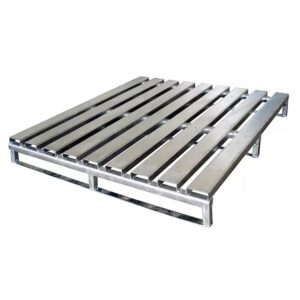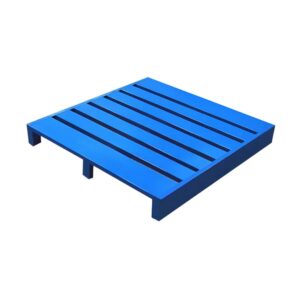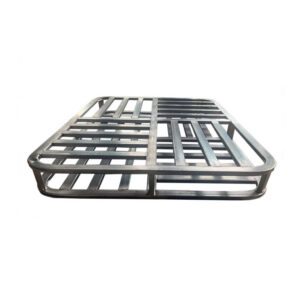
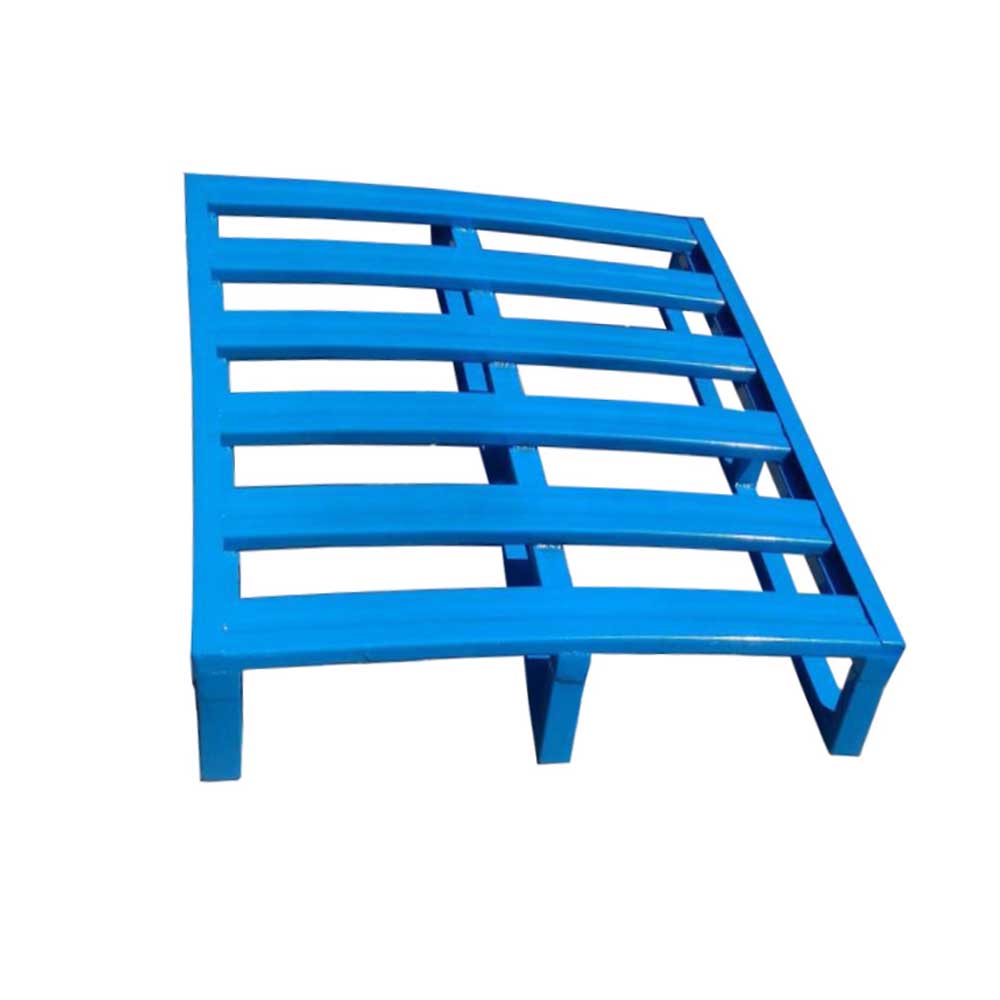
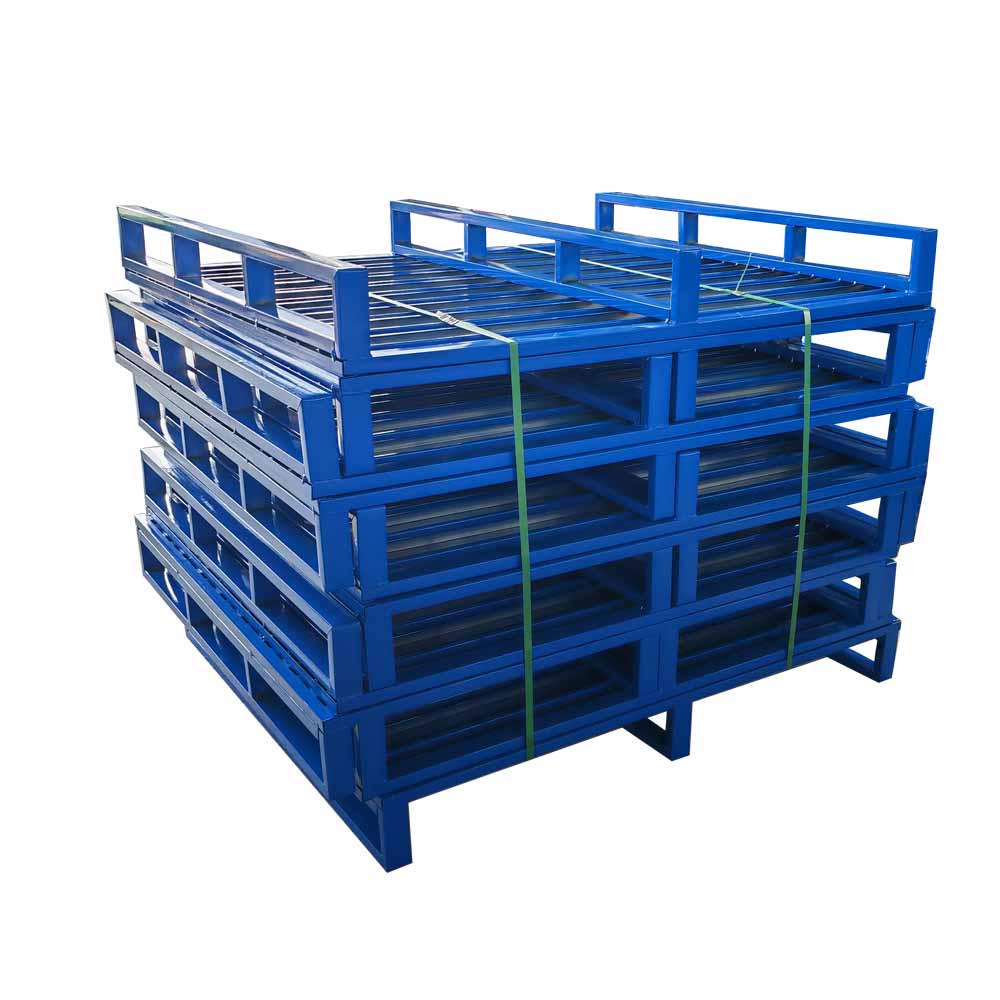
Description
Executive Summary: The Strategic Shift from Commodity Pallets to Engineered Metal Infrastructure
In the landscape of modern global supply chains, warehousing, and heavy manufacturing, the humble pallet is often treated as a commodity. For decades, wood and standard plastics have dominated material handling. However, as supply chains grow leaner, automated, and more demanding—driven by Industry 4.0 initiatives, stringent fire codes, and the need for absolute operational uptime—traditional pallets increasingly represent a hidden liability. Splintering wood, structural sagging under high-tier racking, susceptibility to pests, and short lifecycles inflate Total Cost of Ownership (TCO) and introduce critical safety hazards.
Custom metal pallets (frequently searched as custom steel pallets, heavy-duty metal skids, and bespoke industrial steel platforms) represent the definitive engineering antidote to these vulnerabilities. By engineering metal pallets specifically to match your exact load requirements, dimensional tolerances, material handling equipment, and environmental exposures, businesses unlock unprecedented throughput, safety, and sustainability.
As an industry-leading manufacturer and technical consultancy with decades of combined metallurgic and logistical experience, this comprehensive guide explores every facet of custom metal pallets—from material science and structural customization parameters to compliance, economic ROI modeling, and industry-specific deployment strategies.
Part 1: Why Standard Pallets Fail – The Material Science & Structural Limitations
To understand the necessity of custom metal solutions, one must first analyze the fundamental performance ceilings of legacy materials:
1. Wooden Pallets: The Hidden Costs of Variability
Structural Inconsistency: Wood is a natural, anisotropic material. Knots, moisture content variations, and grain irregularities mean two “identical” wood pallets can have vastly different load capacities.
Compliance and Pest Vectors: Under ISPM 15, cross-border shipments using wood require heat treatment or chemical fumigation. Even then, wood absorbs moisture, harbors mold, bacteria, and insects, and poses severe contamination risks in food, pharmaceutical, and cleanroom environments.
Lifespan and Failure Modes: Wood splinters, nails back out, and structural integrity degrades rapidly after just 3 to 5 multi-trip rotations, leading to sudden failures on high racks.
2. Standard Plastic Pallets: Limitations in Extreme Environments
Creep and Deformation: Virgin or recycled plastics (HDPE/PP) are prone to “creep”—gradual, permanent deformation under sustained static or racking loads, especially in warm environments.
Temperature Vulnerabilities: Standard plastics become brittle and shatter in sub-zero cold-storage facilities, or soften and warp when exposed to high ambient heat or welding sparks.
Fire Hazard: Plastic pallets are highly combustible, often burning with intense heat and dripping flaming plastic, which can trigger catastrophic warehouse insurance penalties or code violations.
3. The Custom Metal Advantage
Metal—specifically engineered carbon steel, stainless steel, and aluminum—eliminates these variables entirely. With predictable yield strengths, isotropic structural behavior, absolute fire safety, and indefinite repairability, custom metal pallets provide a permanent structural foundation for modern intra-logistics.
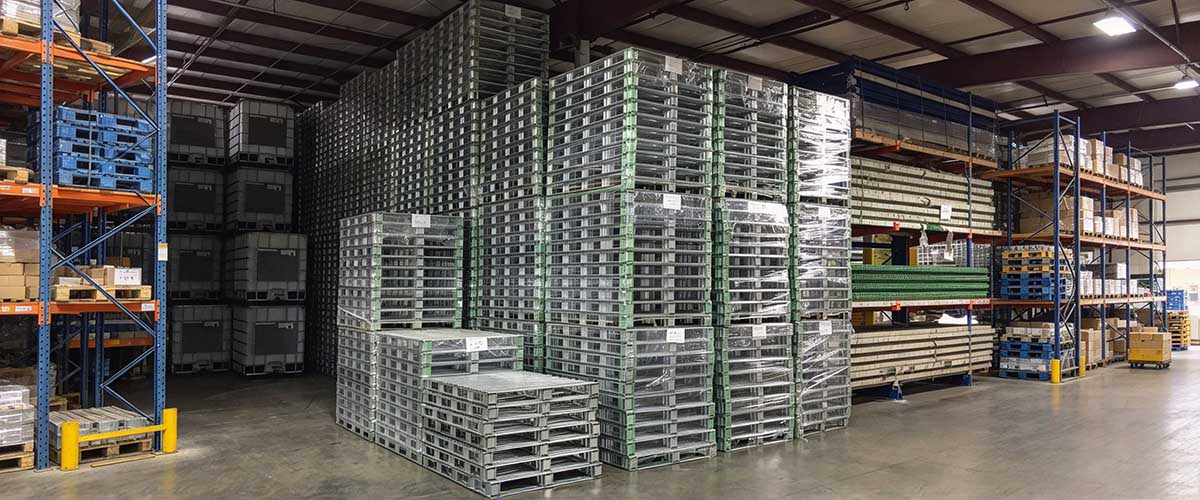
Part 2: Core Engineering Parameters of Custom Metal Pallets
When designing a custom metal pallet, our engineering team does not rely on guesswork. We analyze four distinct load and operational vectors to ensure absolute structural safety and efficiency:
1. Load Capacity Vectors
Static Load Capacity: The maximum weight the pallet can support while resting on a flat, even floor. Custom metal pallets routinely handle static loads exceeding 10,000 lbs to 30,000 lbs, allowing massive vertical staging.
Dynamic Load Capacity: The maximum weight the pallet can safely support while being moved by a forklift, pallet jack, or automated guided vehicle (AGV). Dynamic capacities for heavy-duty steel variants typically range from 4,000 lbs to 8,000 lbs.
Racking / Beam Load Capacity: The critical rating for high-bay storage where the pallet is supported only by its edges on pallet racks. Undersized pallets sag, creating tip hazards. Our custom designs utilize structural channels and gusseted reinforcements to achieve high-tier racking safety without dangerous deflection.
Stacked Load Capacity: The weight exerted on the bottom pallet when multiple fully loaded pallets are stacked vertically in transit or storage.
2. Dimensional Tolerances & AS/RS Compatibility
Automated Storage and Retrieval Systems (AS/RS) and modern conveyor systems demand absolute dimensional precision. While wood warps and plastic stretches, custom metal pallets are manufactured using laser-cutting, CNC bending, and robotic welding jigs to maintain strict dimensional tolerances down to $\pm 1/16$ inch. This eliminates conveyor jams, sensor misreads, and robotic gripping errors.
3. Ergonomic & Handling Access
2-Way vs. 4-Way Entry: Engineered stringer layouts or pressed-steel pockets that allow full, unobstructed entry for forklifts, reach trucks, and hand pallet jacks from all four sides.
Tapered Lead-In Edges: Beveled entry points that guide forklift tines smoothly, reducing operator strain and preventing impact damage during high-speed loading cycles.
Part 3: Material Science & Surface Finishes
The longevity and performance of a custom metal pallet depend heavily on the base alloy and the protective coating applied to combat operational environments.
Material Options
Hot-Rolled Carbon Steel (A36 / Q235): The cost-effective workhorse for general manufacturing, automotive assembly, and heavy warehousing. Offers high tensile strength and excellent weldability.
Stainless Steel (Grade 304 / 316): Essential for cleanrooms, pharmaceutical processing, chemical plants, and food-grade applications where washdown with harsh sanitizers or exposure to corrosive acids is daily routine.
Aluminum Alloys (e.g., 6061-T6): Selected when extreme weight reduction is required without sacrificing corrosion resistance, commonly used in aerospace logistics and specialized mobile applications.
Protective Surface Finishes
Hot-Dip Galvanizing (HDG): Molten zinc coating that metallurgical bonds with the steel. Provides unmatched corrosion resistance, making HDG pallets ideal for outdoor yards, humid ports, and maritime shipping.
Electrostatic Powder Coating: Available in custom corporate colors. Provides a smooth, durable, impact-resistant finish that resists chipping and chemical degradation.
Anti-Slip Treatments: Textured powder coats, grit-infused epoxy layers, or rubberized contact pads welded onto deck surfaces to prevent expensive parts from shifting during transit.
Part 4: Specialized Design Configurations & Customization Features
No two industrial applications are identical. Below are the primary custom deck and structural configurations engineered to solve complex material handling challenges:
Deck Variations
Solid Sheet Deck: Ideal for small parts, granular materials, or environments where liquid spillage must be contained or prevented from dropping to lower tiers.
Perforated / Mesh Decking: Engineered with expanded metal or punched hole patterns to allow fluid drainage, airflow in drying chambers, and visibility for optical scanners.
Corrugated & Ribbed Decks: Pressed channels that maximize rigidity and bending resistance while minimizing overall pallet tare weight.
Specialized Structural Attachments
Spill Containment Sumps: Integrated lower basins designed beneath the deck to capture hazardous liquid leaks from drums or chemical containers.
Stacking Posts & Locating Cones: Fixed or removable corner posts that allow pallets to lock securely when stacked, creating a stable column that protects delicate goods from crushing.
Custom Fixture Pins & Dunnage Cradles: Precision-machined brackets welded directly onto the pallet deck to cradle specific automotive stampings, turbine blades, or glass panes, eliminating the need for single-use packaging foam or wooden blocking.
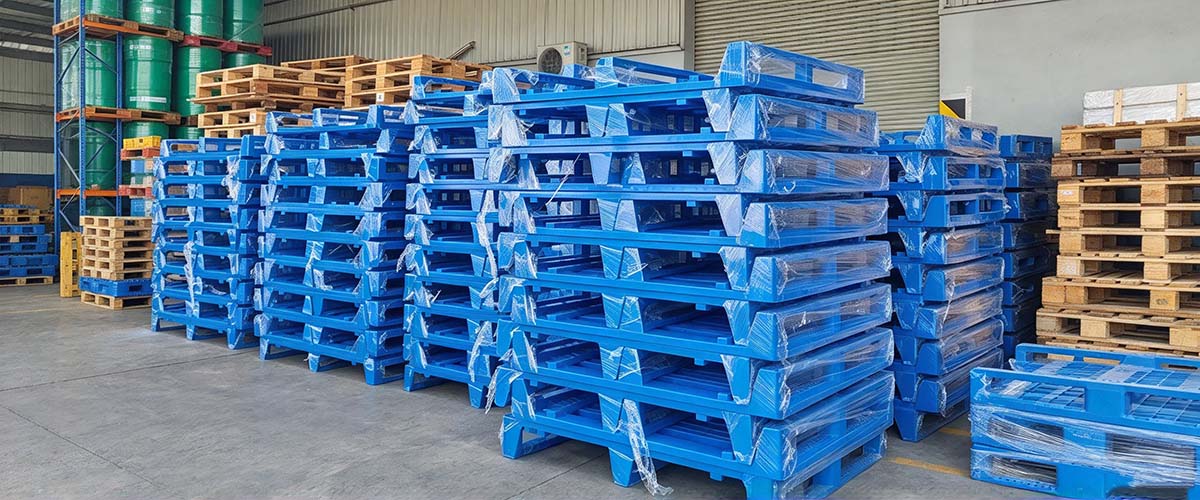
Part 5: Industry-Specific Applications & Case Studies
1. Automotive Manufacturing & Heavy Tier-1 Suppliers
The Challenge: Transporting heavy, irregular transmission housings, stamped body panels, and engine blocks safely through stamping, welding, and final assembly lines.
The Custom Metal Solution: Heavy-duty steel skids equipped with custom UHMW (Ultra-High-Molecular-Weight) polyethylene dunnage blocks and locating pins. These pallets move seamlessly from automated press lines to assembly robots without shifting.
Operational Outcome: Zero product scratching, elimination of wooden splinter debris on shop floors, and a 40% reduction in packaging scrap.
2. Cold Chain Storage & Deep-Freeze Warehousing
The Challenge: Sub-zero temperatures ($(-20^\circ\text{C}$ to $-40^\circ\text{C}$) in commercial food and vaccine freezers cause standard plastics to fracture and wood to absorb moisture and swell.
The Custom Metal Solution: Hot-dip galvanized open-mesh steel pallets that maintain structural ductility at sub-zero temperatures and allow unimpeded cold-air circulation around stored goods.
Operational Outcome: Extended equipment lifecycle exceeding 15 years with zero cold-temperature structural failures.
3. Pharmaceuticals & Cleanroom Environments
The Challenge: Strict regulatory compliance (FDA/GMP) requiring non-porous surfaces that withstand aggressive daily sanitization with hydrogen peroxide vapor or bleach solutions.
The Custom Metal Solution: Electropolished Grade 316 stainless steel pallets with completely sealed continuous welds, preventing any bacterial harboring pockets.
Operational Outcome: 100% compliance with sanitation audits and zero risk of biological cross-contamination.
4. Automated High-Bay Warehousing & Robotics (AGVs/AMRs)
The Challenge: High-speed Autonomous Mobile Robots (AMRs) and AS/RS cranes require precise weight distribution, low tare weight, and exact dimensional interfaces to prevent operational faults.
The Custom Metal Solution: Lightweight, high-strength tubular steel pallets engineered with bottom-deck cutouts specifically designed for magnetic-stripe tracking sensors and robotic fork insertion.
Operational Outcome: Increased automated warehouse pick-and-pack speeds by 25% and eliminated system downtime caused by warped legacy pallets.
Part 6: Total Cost of Ownership (TCO) & Economic ROI Analysis
While the initial procurement cost of custom metal pallets is higher than wood or cheap injection-molded plastic, a professional TCO financial analysis reveals why forward-thinking enterprises make the transition:
| Cost Component | Wooden Pallets | Cheap Plastic Pallets | Custom Metal Pallets |
| Initial Cost per Unit | Very Low ($\$15 – \$30$) | Moderate ($\$50 – \$120$) | Premium ($\$150 – \$400+$) |
| Average Lifecycle | 3 to 10 trips | 1 to 3 years | 10 to 20+ years |
| Maintenance Need | Constant nailing/repair | None (replace upon failure) | Minimal (occasional touch-up/re-galvanizing) |
| End-of-Life Value | Zero (landfill/chipping) | Low (regrind value varies) | High (100% recyclable scrap steel value) |
| Safety & Insurance Risk | High (splinters, fire, collapse) | Moderate (combustion, creep) | Lowest (non-combustible, certified strength) |
Over a 5-year operational window, custom metal pallets eliminate frequent replacement cycles, prevent expensive product-loss accidents in high racks, and retain substantial scrap value at the end of their multi-decade service life.
Part 7: Frequently Asked Questions (FAQ) for Procurement & Engineering Teams
Q1: What is the typical lead time for designing and manufacturing custom metal pallets?
A: Standard custom projects typically require 3 to 5 business days for initial CAD engineering validation and load simulation, followed by 3 to 5 weeks for prototype fabrication, testing, and volume production. We also offer rapid prototyping for urgent plant integrations.
Q2: Do custom metal pallets require ISPM 15 heat treatment certification for export?
A: No. Unlike wooden packaging, metal pallets are completely exempt from ISPM 15 regulations, streamlining international customs clearance and eliminating border quarantine delays.
Q3: How do we initiate a custom design project with your engineering team?
A: To start, provide us with your basic operational criteria:
Maximum static, dynamic, and racking load weights.
Dimensions and entry requirements (forklift, pallet jack, AGV).
Environmental conditions (temperature, moisture, chemical exposure).
Any specialized product fixtures or CAD models of the goods being transported. Our senior engineering consultants will review your parameters and return a comprehensive proposal and structural analysis.
Conclusion: Partnering for Long-Term Supply Chain Resilience
Investing in custom metal pallets is more than a simple procurement decision—it is a strategic infrastructure upgrade that protects your inventory, accelerates automation, ensures worker safety, and dramatically reduces long-term operational waste.
Ready to eliminate pallet failures from your supply chain? [Contact Our Engineering Department Today] to request your custom design consultation, structural load simulation, and quotation.