Description
Spaceutilization and product safety have become the two fundamental factors of operational efficiency in the fields of modern industrial warehousing, logistics, and heavy manufacturing. However, the rapid development of electric mobility, renewable energy storage, and industrial automation presents completely new challenges for the facilities dealing with heavy industrial batteries and automotive component storage.
In such a complex work environment, the problem with conventional floor storage and static shelving remains: they are not able to save space effectively and often result in damage because the products are in close contact or get compressed by heavier products. Moreover, these facilities cannot handle flexible operational requirements as their layouts are inflexible.
Shandong Juli Storage Equipment Co., Ltd. offers cutting-edge material handling engineering to solve these demanding industrial problems. This technical and product description details Juli Battery Stacking Racking System, a sturdy welded and fully modular steel storage system, which is developed for vertical space maximization, protection of heavyweight products, and making forklift-driven warehouse activities smooth and safe.
Executive Summary & Product Architecture
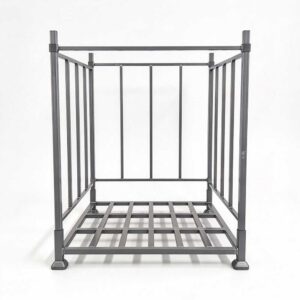
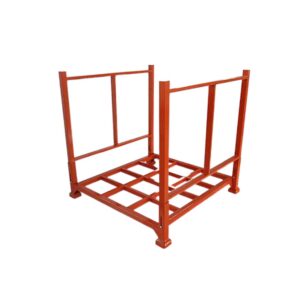
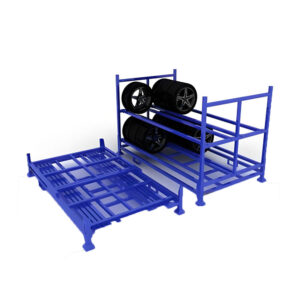
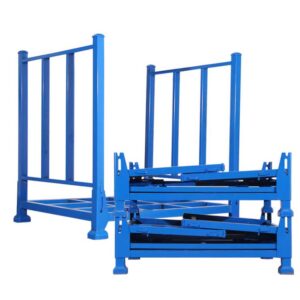
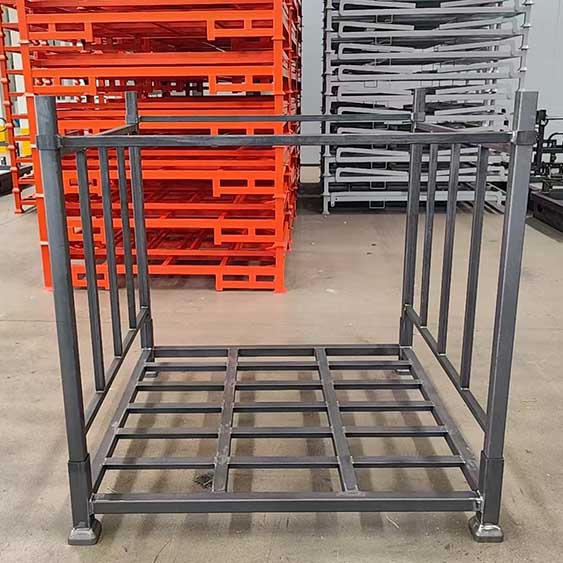
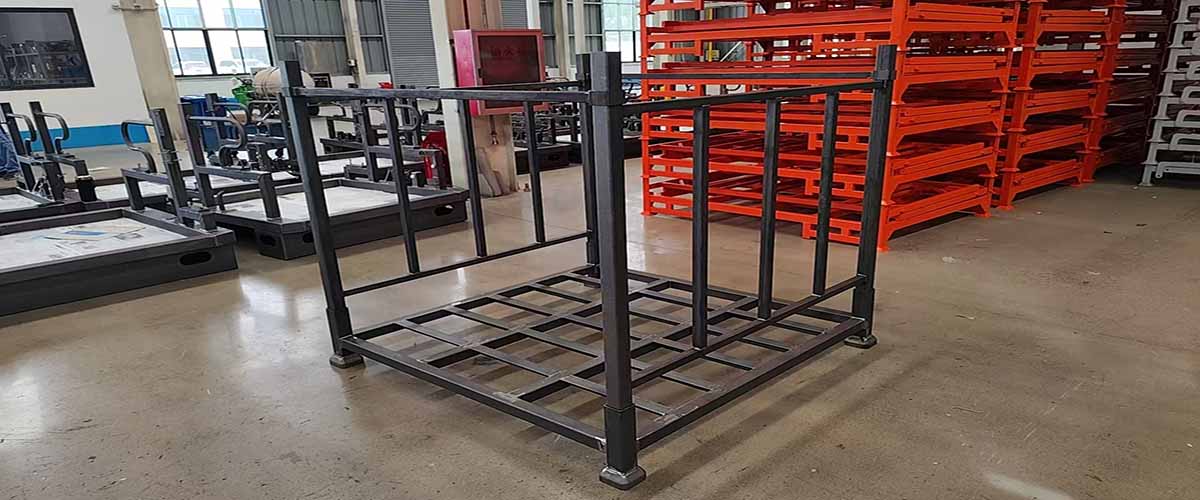
The Battery Stacking Rack is a purpose-built, heavy-duty modular storage system engineered primarily for the safe containment, vertical stacking, and seamless transport of industrial batteries, battery packs, and dense mechanical components.
Core Product Specifications
Product Nomenclature: Battery Stacking Rack / Heavy-Duty Modular Stacking Frame
Structural Design: Monolithic, fully welded steel stacking structure
Standard Internal Dimensions: 1300 mm (Length) × 1300 mm (Width) × 1300 mm (Height)
Upright Column Specifications: 50 × 50 × 3.0 mm square steel tubing
Base Frame Specifications: 50 × 50 × 2.0 mm square steel tubing
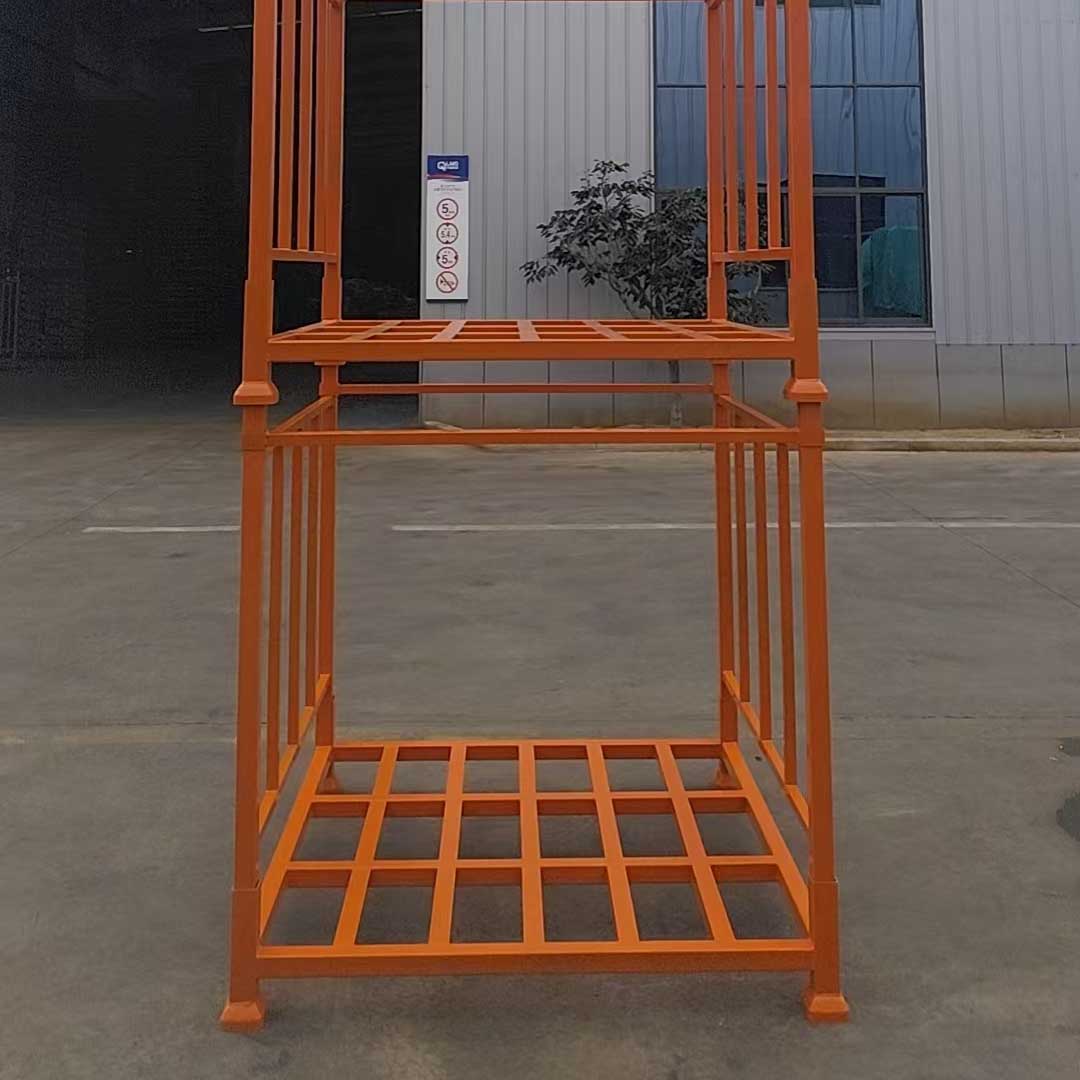
Surface Protection & Aesthetics: High-durability industrial powder coating in vibrant safety orange
Material Handling Compatibility: Fully optimized for forklift and pallet truck transport
Load-Bearing Capacity & Stacking Thresholds: Engineered on a per-project basis, subject to final certified technical blueprints, total cargo weight, and structural engineering analysis.
Target Industries and Applicable Operational Scenarios
Heavy-duty stacking racks are specialized equipment. Understanding their exact operational fit ensures maximum return on investment and compliance with facility safety standards.
Primary Industries Served
Battery Manufacturing & Energy Storage Systems (ESS): Facilities producing, testing, or storing large-format lithium-ion, lead-acid, or specialized industrial battery packs.
Automotive & EV Supply Chains: Plants handling heavy automotive sub-assemblies, motors, drivetrains, and replacement parts.
Heavy Industrial Manufacturing: Engineering works and machining facilities requiring organized storage for heavy, irregular metal parts.
Third-Party Logistics (3PL) & Warehousing: Operations managing high-density, high-turnover industrial goods that demand flexible spatial reconfiguration.
Suitable Cargo Profiles
Packaged industrial and commercial batteries.
Sealed battery modules, housing boxes, and heavy-duty casing units.
Metallic industrial components, dense castings, and mechanical spares.
Note on Compatibility: Actual deployment suitability must always be evaluated against individual cargo dimensions, gross aggregate weight, center of gravity, and localized load distribution profiles.
Typical Warehouse Environments
High-Ceiling Facilities with Floor-Space Constraints: Warehouses where traditional ground-level stacking leaves significant vertical air space unutilized.
Dynamic Storage Zones: Operations that frequently alter zone layouts, inventory footprints, or staging areas without the luxury of permanent structural modifications.
Forklift-Centric Material Handling Hubs: Environments where goods are routinely moved, loaded, and reorganized via mechanical material handling equipment.
Thorough Assessment of Warehouse Storage Problems and Engineering Solutions
Industrial storage is often a problem that causes frustration. Facility managers can learn from the identification of common operational pain points how structural racks stacking can change the way materials are handled through various levels.
Pain Point 1: Ground-Level Floor Space Being Underutilized Inefficiently
The Issue: Large industrial items, stored by the traditional method of groundlevel floor stocking (pallet/stack) block method, can consume tremendous square foot space on the warehouse floor. After increasing their warehouses’ inventories, facility managers will soon find that their horizontal ground areas have become totally occupied but at the same time, the upper, expensive vertical parts of the warehouse remain quite wasted.
Engineered Solution: The idea of battery-stacking racking systems is to place independently designed, vertical load-bearing structures in your building to utilize a much greater number of tiers in one storage location. These stacking systems enable safe multi-level stacking which is verified during the design and calculating phase.
Demonstration: Such stacking racks can multiply storage capacity per square meter thus effectively transforming the previously unusable air space above into a very productive storage space.
Pain Point 2: Crushing Products and Heavy-weight Transfer Damage
The Problem: Heavy goods especially batteries or modules in packaging stored one on another directly without the support of the intermediate layers will result in the bottom layers being compressed by great amounts of weight. Consequently, the goods’ packages collapse, containers’ walls break, goods’ shape gets deformed, and the retrieval process of the goods becomes dangerous to human safety.
Engineering Solution: Steel stackable frame is an exoskeleton that serves the cargo independent support without interfering or affecting the cargo directly. Solid base framework of corner posts and vertical load absorbing parts, which can handle vertical load from top to floor and not towards the cargo above. There is no crushing between layers as the cargo is kept in its own isolated compartment.
PainPoint 3: Rigid Layout ofWarehouses
The Problem: Traditional non-movable pallet rakes and bolted shelving require a large amount of time and planning to be put in. Afterward, to change the dimensions of the aisles, move a storage block bigger or smaller, or reconfigure floor areas, the operation is expensive and also causes a lot of disturbance to warehouse activities.
Engineering Solution: Stackable racks are self-standing, not tied to the floors, and hence, the entire operation takes minutes only. Warehouse can increase or decrease storage levels, rearrangement of the warehouse layout may be completed in a few hours, or even entirely clear off a large area in view of a change in demand from different seasons by just using the forklifts to carry around and arrange the stackable racks.
Pain Point 4: Inefficiency of Heavy Manual Handling and Injuries
The Problem: Industrial batteries and dense machine elements are heavy and unsafe for handling without safety equipment. It is slow and increases the risk of workplace injuries if the manual handling is used for staging or repositioning of the materials.
Engineering Solution: The stacker is designed with mechanical integration in mind so that the unit can be easily handled with a fork. The base part which is used for fork insertion, has a standardized dimension. This allows the smooth operation of stacking of heavy unit load, moving them from one place to another, and even the safe lifting with a forklift.
Advanced Structural Engineering & Design Advantages
The structural integrity of a heavy-duty stacking rack depends entirely on material selection, welding precision, and load distribution geometry.
Monolithic Fully Welded Construction
Unlike bolted or knocked-down racks that rely on numerous hardware fasteners prone to loosening under constant vibration and repeated transit, our stacking racks utilize a fully welded primary framework.
Structural Rigidity: Minimizing mechanical joints significantly increases torsional stiffness and overall structural rigidity.
Repeat Cycle Stability: Fully welded frames endure the rigorous demands of multi-cycle loading, unloading, stacking, and transportation without experiencing joint fatigue or structural drift.
High-Strength Square Steel Tubing
Material dimensions are selected to balance structural payload capacity with handling weight:
Upright Load-Bearing Columns: Manufactured from 50 × 50 × 3.0 mm square steel tubing, these vertical corner columns bear the primary vertical compressive forces during multi-tier stacking. The 3.0 mm wall thickness provides exceptional buckling resistance under heavy load thresholds (exact payload thresholds subject to engineering review).
Rigid Base Support Frames: Built using 50 × 50 × 2.0 mm square steel tubing, the base perimeter and internal cross-members provide a solid platform for cargo placement, ensuring that floor-load distribution aligns precisely with the physical characteristics of the stored items.
Precision Vertical Interlocking & Forklift Ergonomics
Stacking Locators: The upper and lower corners feature precision-engineered mating interfaces that guide and lock units securely into place during vertical alignment, preventing accidental sliding or tier displacement.
Handling Clearance: The under-frame design provides adequate ground and side clearance for standard forklift tines, ensuring smooth, snag-free entry and exit during daily operations.
Surface Protection & Industrial Powder Coating
Finishing Process: Each rack undergoes thorough surface preparation followed by professional electrostatic powder coating finished in a high-visibility industrial orange.
Functional Value: The coating provides robust surface protection against minor impacts, abrasion, and standard warehouse wear-and-tear. Note: For aggressive environments involving extreme humidity, chemical exposure, or corrosive atmospheres, specialized alternative coatings or material grades must be evaluated.
Summary of Core Product Value Propositions
Vertical Space Maximization: Converts vertical warehouse air space into high-density storage, drastically reducing ground-footprint requirements.
Complete Load Isolation: Protects heavy bottom-tier goods from crushing forces by transferring stack weight through a rigid steel frame.
High-Rigidity Welding: Monolithic welded architecture ensures long-term durability and structural stability across countless handling cycles.
Dynamic Layout Flexibility: Unanchored, modular design enables instant rearrangement via forklift to match evolving operational workflows.
Custom Engineering Adaptability: Dimensions, structural gauges, and loading parameters can be tailored precisely to match unique client cargo profiles and facility requirements.
Global Project Execution and Quality Assurance
Shandong Juli Storage Equipment Co., Ltd. maintains rigorous manufacturing standards from raw material sourcing to final export logistics.
International Project Delivery Case Study Example
Demonstrating our capability to execute large-scale international industrial supply contracts, our operations team successfully completed a major project involving custom-engineered storage solutions for overseas deployment:
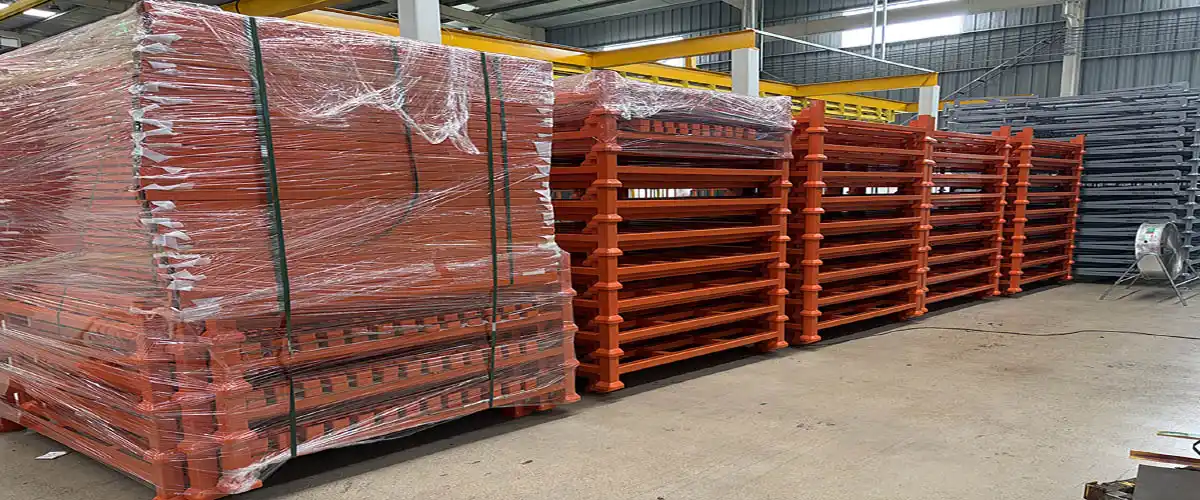
Project Scope & Volume: Delivery of 120 sets of custom, battery-specific, fully welded steel stacking racks.
Product Dimensions: Internal clearing dimensions standardized at 1300 × 1300 × 1300 mm.
Execution Timeline: Designed, manufactured, rigorously inspected, and packed for containerized export, successfully completing factory dispatch and shipping execution.
Operational Transparency: In adherence to strict quality protocols and professional integrity, manufacturing and delivery records reflect verified production milestones. Real-world performance outcomes following commissioning remain subject to on-site operational variables, and standard technical guarantees apply strictly in accordance with approved engineering drawings and signed project agreements.
Summary and Consulting
Choosing the best storage technology is essential for today’s industrial enterprises dealing with large, expensive parts. Shandong Juli Storage Equipment Co., Ltd.’s Battery Stacking Rack delivers the best combination of stability, durability, and limitless flexibility in how we use vertical space.
You can rely on the help of our technical experts whether you are:1) expanding storage of e-motor batteries2) rearranging stock of spare parts3) making an international supply plan etc.The engineering group of our company can provide expert opinions about how to organize a particular storage operation.
Contact technical sales and project department at Shandong Juli Storage Equipment Co., Ltd. for free consultation, technical drawings, calculation of bearing capacity, and pricing according to the configuration of the building you want to get storage system installed in.