Description
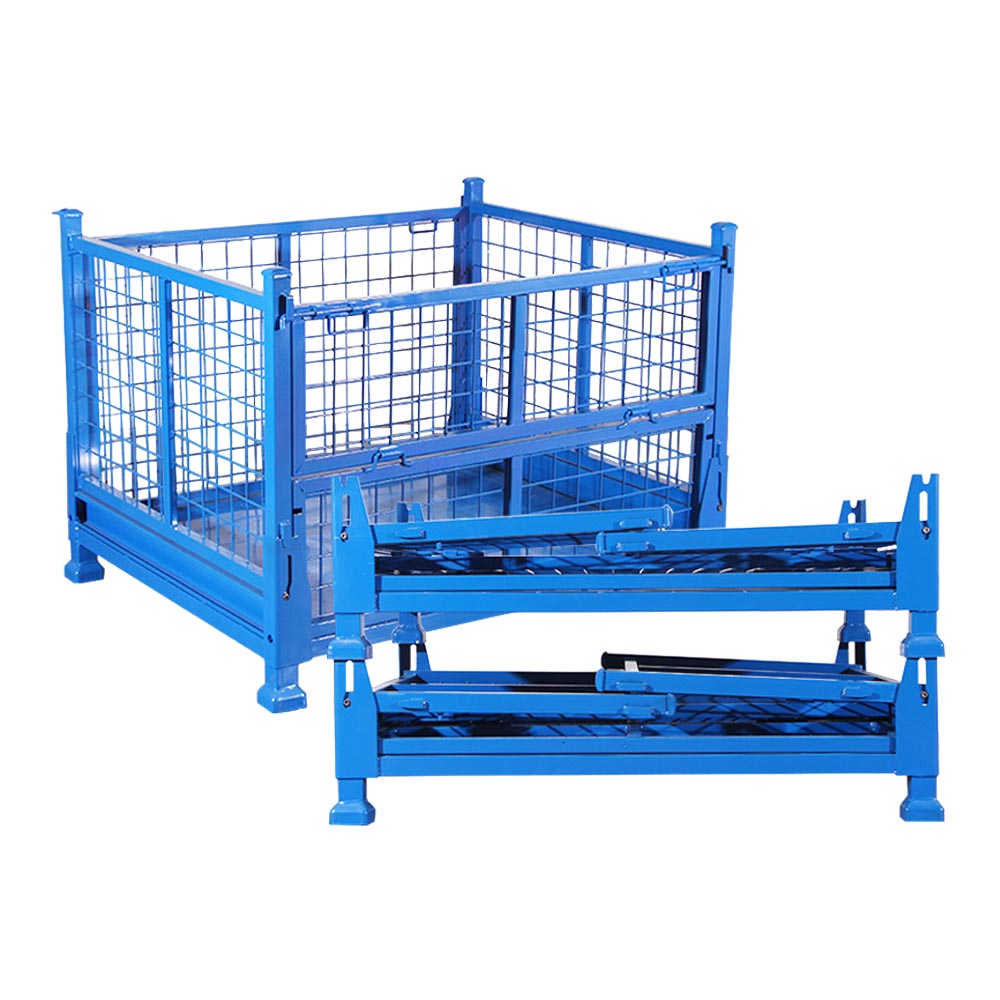
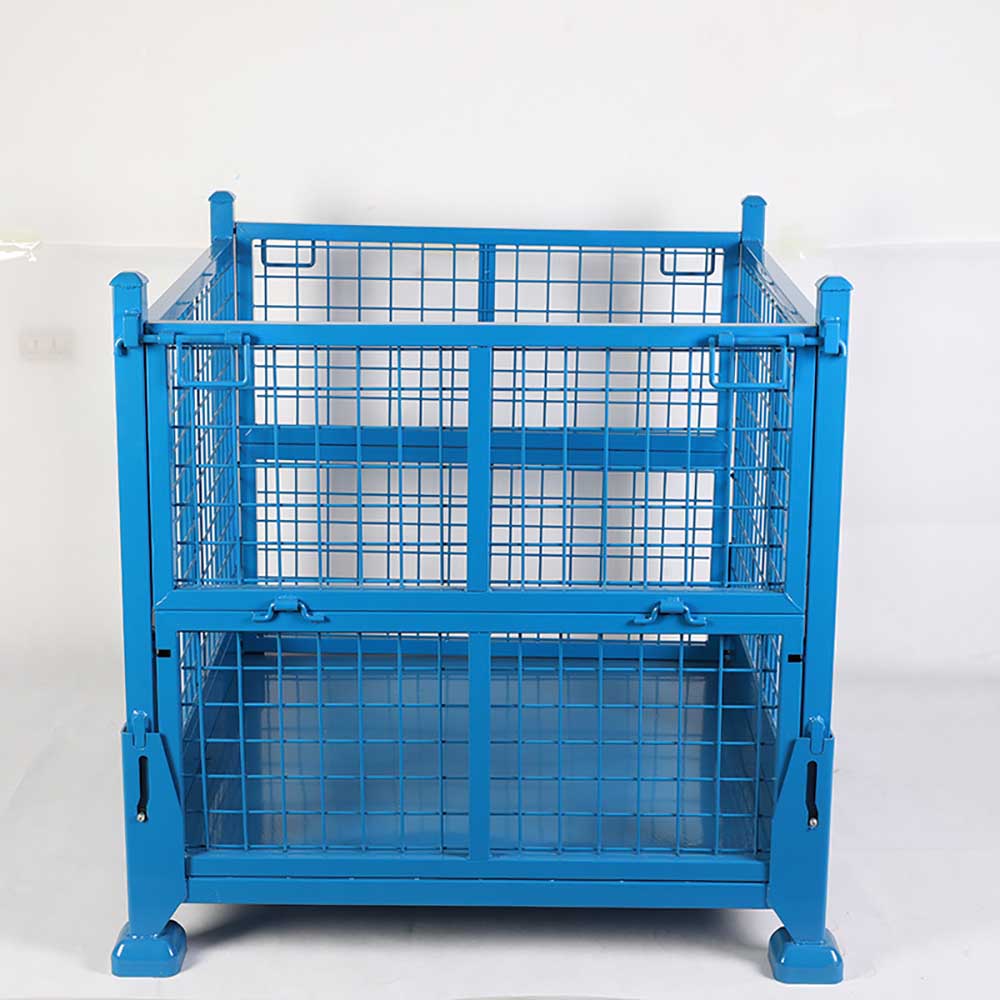
Metal Storage Cages are durable steel storage containers designed to organize, store, handle, and transport goods in warehouses, factories, logistics centers, and production facilities. Unlike ordinary shelves, a storage cage creates a defined enclosed or semi-enclosed space for products, helping keep loads together during storage and internal movement.
Our steel storage cages are manufactured for industrial use and can be configured with welded mesh panels, steel sheet panels, or a combination of both according to the stored goods. The structure can also be designed for stacking and forklift handling, making the cage suitable for businesses that need reusable storage equipment rather than disposable cartons or temporary containers.
These cages are used for bulk goods, production materials, packaged products, agricultural products, warehouse inventory, and other items that need to remain organized during storage and material handling.
JULI® provides custom metal storage cages in different dimensions, load capacities, panel configurations, and surface treatments to match the customer’s products and warehouse operation.
Steel Storage Cage Structure
The basic construction consists of a reinforced steel base and steel side panels that form a dedicated storage area.
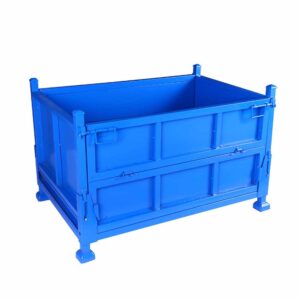
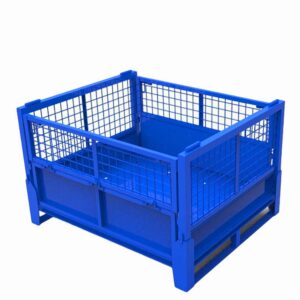
Depending on the model and application, the side panels can use welded wire mesh, steel sheet, or a mixed configuration. A mesh structure provides visibility of the contents, while sheet panels provide a more enclosed storage area for applications requiring greater separation or containment.
The base is designed to support the stored load and allow mechanical handling. Structural members can be reinforced according to the required working capacity.
The result is a reusable industrial storage cage that can serve as a storage container, handling unit, and warehouse organization tool.
Mesh or Steel Sheet Configuration
Different products require different levels of visibility and containment.
Wire Mesh Storage Cages
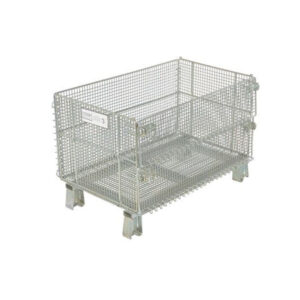
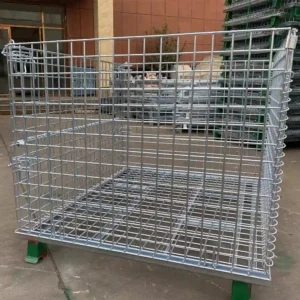
A wire mesh storage cage uses welded steel mesh panels around the storage area. The open structure allows operators to see the contents without opening the cage, which can be useful for inventory identification and warehouse sorting.
Mesh openings can be selected according to the size of the stored products. Smaller openings can help contain smaller packaged goods, while larger openings can be used for larger materials.
Steel Sheet Storage Cages
A sheet-panel configuration provides more enclosed sides and is suitable when the stored goods need greater separation from surrounding materials.
Steel sheet panels can also help contain products that may not be suitable for an open mesh structure.
For customers handling different products, JULI® can develop the cage structure around the actual load rather than applying one panel style to every application.
How to Use Metal Storage Cages
A storage cage is normally loaded at the receiving or production area and then moved to the designated warehouse position.
Goods can be placed directly inside the cage when their dimensions and weight are suitable for the structure. For products that require pallets, bins, or other load carriers, the cage can instead be designed around that unitized load.
Once loaded, the complete cage can be moved by forklift through its designated handling points.
In the warehouse, compatible cages can be arranged or stacked according to the product design and load requirements. When inventory changes, the cages can be moved to another area without dismantling a fixed shelving system.
This makes the cage practical for storage, sorting, internal transfer, and warehouse turnover.
Why Use Metal Storage Cages?
The main value of a steel storage cage is that it combines containment with material handling.
Keeps Goods Organized
Loose products can quickly become difficult to manage when stored directly on the warehouse floor.
A dedicated cage provides a defined storage unit, allowing similar products or batches to remain together.
This is useful for bulk materials, production supplies, packaged goods, and inventory that needs to be separated by type or batch.
Improves Product Visibility
The open mesh versions allow operators to identify stored goods without removing them from the cage.
This can simplify stock checking and make it easier to locate materials in busy warehouse environments.
Supports Forklift Handling
The cage is designed to be moved as a complete unit using suitable handling equipment.
Instead of manually transferring individual products, operators can relocate an entire load from receiving to storage, production, staging, or dispatch.
Reusable for Repeated Turnover
The steel construction is suitable for repeated warehouse use.
Once one load has been removed, the same cage can be used for another compatible product, making it suitable for returnable storage systems and long-term industrial material handling.
More Durable Than Temporary Packaging
Steel cages provide a stronger and more durable storage structure than cartons or other short-term packaging solutions.
For applications involving repeated handling, heavy products, or long warehouse cycles, a reusable cage can be better suited to the operating environment.
Heavy Duty Storage Cage Performance
For industrial customers, load capacity is one of the most important product specifications.
The working capacity of a heavy duty storage cage depends on the steel material, base construction, panel configuration, dimensions, load distribution, and handling method.
The cage can be reinforced for heavier loads or concentrated weight.
The maximum load should be based on the actual product and storage method rather than selecting a nominal capacity without considering the load distribution.
Load-Bearing Base
The base carries most of the stored weight and transfers the load into the supporting structure.
For heavier applications, the frame and base can be reinforced to provide the required working capacity.
Stable Storage Structure
The side panels help keep products within the designated storage area during normal handling.
If stacking is required, the contact structure between units can be designed according to the required load and number of levels.
The warehouse floor should also be suitable for the combined weight of the cages and stored goods.
Repeated Handling
Industrial storage cages may be moved many times during their service life.
The steel frame and welded construction are designed for repeated loading, unloading, forklift handling, and relocation.
Stackable Storage Cages
Where vertical storage is required, the cage can be designed as a stackable storage cage.
Loaded units can be placed one above another according to the specified stacking configuration, allowing the warehouse to make better use of available vertical space.
This can be particularly useful when storing bulk goods or repeated product batches in a limited warehouse footprint.
Stacking capacity depends on the cage structure, load weight, dimensions, floor conditions, and required safety margin.
The approved stacking level should always be followed during operation.
Warehouse Applications
Warehouse Inventory Storage
Metal cages can be used to separate inventory into defined storage units.
Different cages can hold different product categories, batches, packaging materials, or bulk goods. This can simplify warehouse organization and reduce the amount of material spread across open floor space.
Manufacturing Facilities
Manufacturing plants can use warehouse storage cages for raw materials, production materials, work-in-process loads, and finished goods that are suitable for cage storage.
A loaded cage can move between receiving, production, temporary storage, and finished-goods areas, helping maintain an organized material flow.
Logistics and Distribution
In logistics operations, goods are frequently moved between receiving, sorting, temporary storage, and dispatch.
A reusable cage can consolidate products into one handling unit, allowing the complete load to be moved by forklift or other suitable equipment.
This is particularly useful for repeated internal turnover and distribution-center storage.
Agricultural Storage
Agricultural products and packaged produce may require durable storage equipment during seasonal inventory periods.
Depending on the product, a mesh or sheet-panel configuration can be selected according to the required containment and ventilation characteristics.
The cage dimensions and load capacity can be adjusted to match the actual packaged product.
Bulk Material Storage
For goods that are handled in batches rather than individually, bulk storage cages provide a defined space for each load.
They can be used for packaged materials, industrial supplies, reusable components, and other products that require organized bulk storage.
Metal Storage Cages for Different Goods
The cage structure should be selected according to the characteristics of the goods.
For products that need visual identification, such as warehouse inventory or packaged components, wire mesh sides provide direct visibility.
For products that require stronger separation or containment, sheet-panel construction can provide a more enclosed storage environment.
For larger or heavier loads, the base and frame can be reinforced according to the working capacity.
This product flexibility allows the same basic metal storage cage concept to be adapted for different warehouse applications without turning it into a completely different storage system.
Specifications
| Item | Specification |
| Product Name | Metal Storage Cages |
| Product Type | Steel Storage Cage / Warehouse Cage |
| Main Material | Structural Steel |
| Side Structure | Wire Mesh / Steel Sheet / Combined |
| Base | Reinforced Steel Base |
| Length | Customized |
| Width | Customized |
| Height | Customized |
| Working Load | Customized |
| Stackable | According to Design |
| Forklift Handling | Available |
| Mesh Opening | Customized |
| Steel Thickness | Customized |
| Surface Treatment | Powder Coating / Galvanizing |
| Color | Customized |
| Logo / Marking | Available |
| OEM / ODM | Available |
| Application | Warehouse / Manufacturing / Logistics / Agriculture |
| Packaging | Export Packaging Available |
The final dimensions, panel structure, load capacity, and handling configuration should be determined according to the stored goods and warehouse requirements.
Custom Metal Storage Cages
A storage cage should fit the product rather than forcing the product into an unsuitable standard size.
JULI® can customize the overall dimensions, base structure, panel type, mesh opening, steel thickness, working load, stacking arrangement, forklift access, and surface treatment.
For customers handling different materials, the side structure can be selected according to whether the priority is visibility, containment, ventilation, or additional protection.
The design can also be adapted to existing pallets, warehouse layouts, handling equipment, and transportation requirements.
For a customized quotation, the most useful information includes:
Product dimensions + maximum load + loading method + required cage size + forklift type + stacking requirement + quantity
Surface Treatment
The storage environment determines the appropriate steel finish.
For general indoor warehouses and manufacturing facilities, powder coating provides a durable protective finish and allows different colors to be used for warehouse identification or customer branding.
For humid environments, agricultural storage, or applications involving greater exposure to moisture, galvanizing can provide additional corrosion protection.
The final surface treatment should be selected according to temperature, humidity, cleaning procedures, and expected service conditions.
Metal Storage Cages vs. Temporary Packaging
Storage cages are intended for repeated industrial use rather than short-term disposable packaging.
| Feature | Metal Storage Cage | Carton / Temporary Packaging |
| Material | Steel | Paper / Wood / Plastic |
| Reusability | High | Usually lower |
| Load Capacity | High | Application dependent |
| Product Visibility | High with mesh design | Limited |
| Forklift Handling | Designed for handling | Usually requires pallet |
| Long-Term Warehouse Use | Suitable | Less suitable |
| Bulk Storage | Suitable | Limited |
| Custom Structural Design | Available | Limited |
For companies that move the same types of products repeatedly, a reusable steel cage can function as part of the warehouse’s long-term material-handling system rather than simply as packaging.
Manufacturing and Quality Control
JULI® manufactures metal storage cages through steel preparation, cutting, forming, mesh or sheet fabrication, welding, structural inspection, surface treatment, dimensional checking, and final packaging.
Quality control focuses on the parts that directly affect daily use:
Overall dimensions
Base structure
Weld quality
Panel alignment
Load-bearing components
Forklift access
Stacking interfaces
Surface treatment
For larger B2B orders, approved drawings and specifications can be used as the production reference to maintain consistency throughout the batch.
Why Choose JULI® for Metal Storage Cages?
JULI® is a warehouse storage equipment manufacturer with a focus on customized industrial storage and material-handling products.
For customers purchasing storage cages in commercial quantities, the advantage of working directly with the manufacturer is the ability to develop the cage around the actual products, warehouse process, and handling equipment.
JULI® supports custom dimensions, structural configurations, surface treatments, colors, identification, packaging, OEM, and ODM production.
For project orders, the product specification can be confirmed before production so that the finished cages match the required load and storage process.
Frequently Asked Questions
What are metal storage cages used for?
They are used for organized storage, handling, sorting, and transportation of goods in warehouses, factories, logistics centers, and other industrial facilities.
What is the difference between a metal storage cage and a wire mesh storage cage?
A metal storage cage is the broader product category. A wire mesh storage cage uses welded mesh panels for the sides, while other models can use steel sheet panels or mixed structures.
Can goods be placed directly inside the cage?
Yes, when the product dimensions and weight are suitable for the cage design. For goods that require a pallet, container, or other load carrier, the cage can instead be configured around the appropriate handling unit.
Can storage cages be stacked?
Yes, suitable models can be designed for vertical stacking. The maximum stacking level depends on the cage structure, load, dimensions, and floor conditions.
Can a forklift move the entire cage?
Yes. The base can be designed for forklift handling so that the cage and its load can be moved together.
Are these cages suitable for heavy-duty applications?
Yes. The structure and base can be reinforced for higher working loads according to the actual application.
Can the cage use mesh and steel sheet together?
Yes. A combined panel configuration can be developed when the application requires both product visibility and more enclosed containment.
Can the dimensions be customized?
Yes. Overall size, panel configuration, mesh opening, load capacity, stacking arrangement, forklift access, and surface treatment can be customized.
Can metal storage cages be used for agricultural products?
Yes. They can be designed for suitable agricultural products and packaged goods according to product size, weight, handling method, and environmental conditions.
Can the cages be used in humid environments?
Yes. The surface treatment can be selected according to humidity, condensation, cleaning, and corrosion requirements.
Do you provide OEM manufacturing?
Yes. JULI® can manufacture according to customer drawings, samples, dimensions, specifications, or application requirements.
Get a Quote for Metal Storage Cages
JULI® Metal Storage Cages provide a durable way to organize, store, handle, and transport industrial goods as reusable storage units.
With welded steel construction, configurable mesh or sheet panels, forklift handling, and optional stacking capability, the cages can be adapted to different warehouse operations and product requirements.
They are suitable for warehouse inventory, bulk materials, manufacturing, logistics, agricultural products, packaged goods, and other industrial storage applications.
Instead of choosing a generic cage that may not fit your load, send us the product dimensions, maximum weight, loading method, required cage size, forklift type, stacking requirement, and quantity.
JULI® can develop the appropriate steel storage cage configuration and provide factory pricing, technical specifications, OEM/ODM production, and export packaging.
Contact us today for a customized metal storage cage quotation.