
Currently,cold storage warehouses are under pressure to reduce their operating costs while managing increasing volumes of inventory and quicker order fulfillment. Since every cubic meter of refrigerated space consumes energy, storage efficiency becomes crucial. A well-planned Cold Storage Racking System can help companies to utilize their warehouse space to the fullest, enhance pallet access, lessen product damage, and enable efficient application of operations in the long run.
It does not matter if you have a frozen food warehouse, pharmaceutical distribution center, dairy facility, or cold chain logistics center; choosing the right Cold Storage Racking System is more than just setting up racks. It involves taking into account the character of the inventory, warehouse layout, forklift operations, the density of storage, and even business growth in the future.
This publication covers the working of various cold storage racks, how to select the appropriate one, and why collaborating with a seasoned manufacturer can considerably raise your warehouse investment ROI.
The Significance of Selecting the Correct Cold Storage Racking System
Cold storage warehouses, unlike regular warehouses, have to deal with conditions where temperature, humidity, and even condensation have a significant impact on the performance of the equipment. Each storage decision affects energy use, worker efficiency, and inventory management.
With an ideal Cold Storage Racking System, companies can exploit vertical space more extensively, forklift travel distances can be reduced, and pallet capacity can be increased without the need for a larger building. More importantly, the right system will minimize product handling, enhance safety within the warehouse, and also lead to a reduction in operating costs in the long run.
Definition of a Cold Storage Racking System
A Cold Storage Racking System is a warehousing storage method specifically made for chilled and frozen settings. When compared to regular warehouse racking, these systems are designed to operate at very low temperatures and high humidity levels, as well as to withstand heavy pallet loads over time, without compromising their structural integrity and serviceability.
Examples of typical installations include:
Warehouses for frozen food
Meat and fish processing plants
Distribution centers for dairy and beverages
Pharmaceutical cold storage warehouses
Refrigerated warehouses and distribution centers
Based on the needs of the warehouse, different warehouse storage systems come with different trade-offs between storage density, inventory accessibility, and operational efficiency.
Choosing the Right Racking System for Your Warehouse
No single racking system is suitable for every cold warehouse. The best choice depends on inventory turnover, SKU quantity, available floor space, and operational requirements.
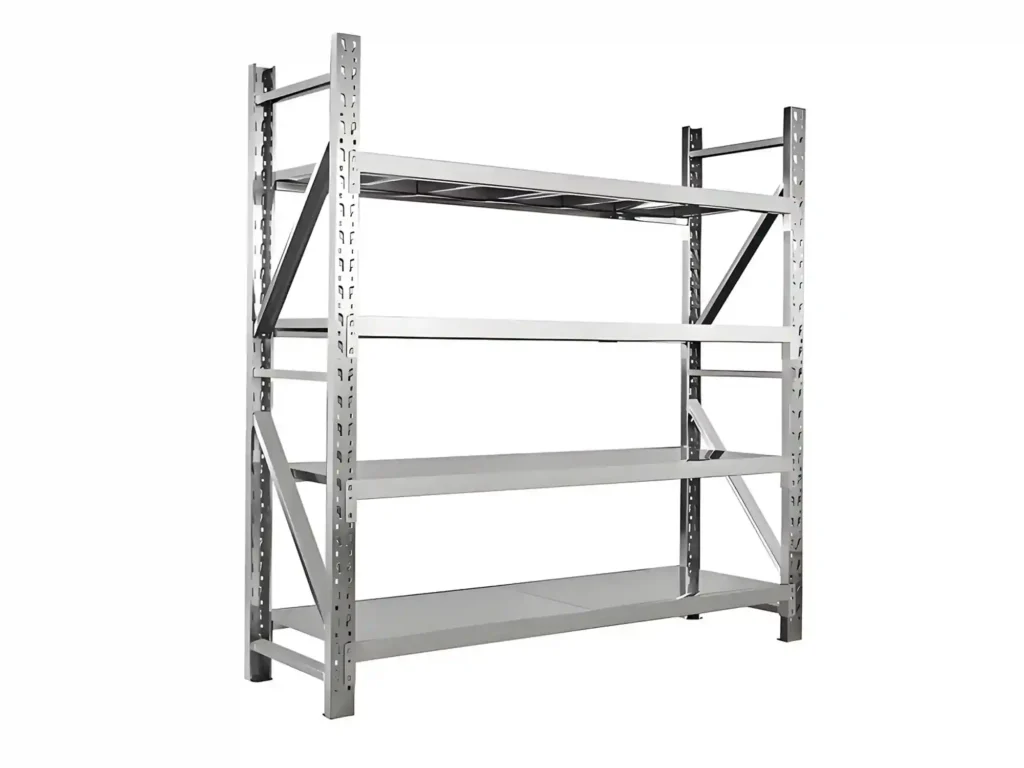
Selective Pallet Racking is ideal for warehouses storing a wide variety of products because every pallet can be accessed directly. It is commonly used in food distribution, pharmaceutical storage, and third-party logistics facilities where fast picking and inventory visibility are essential.
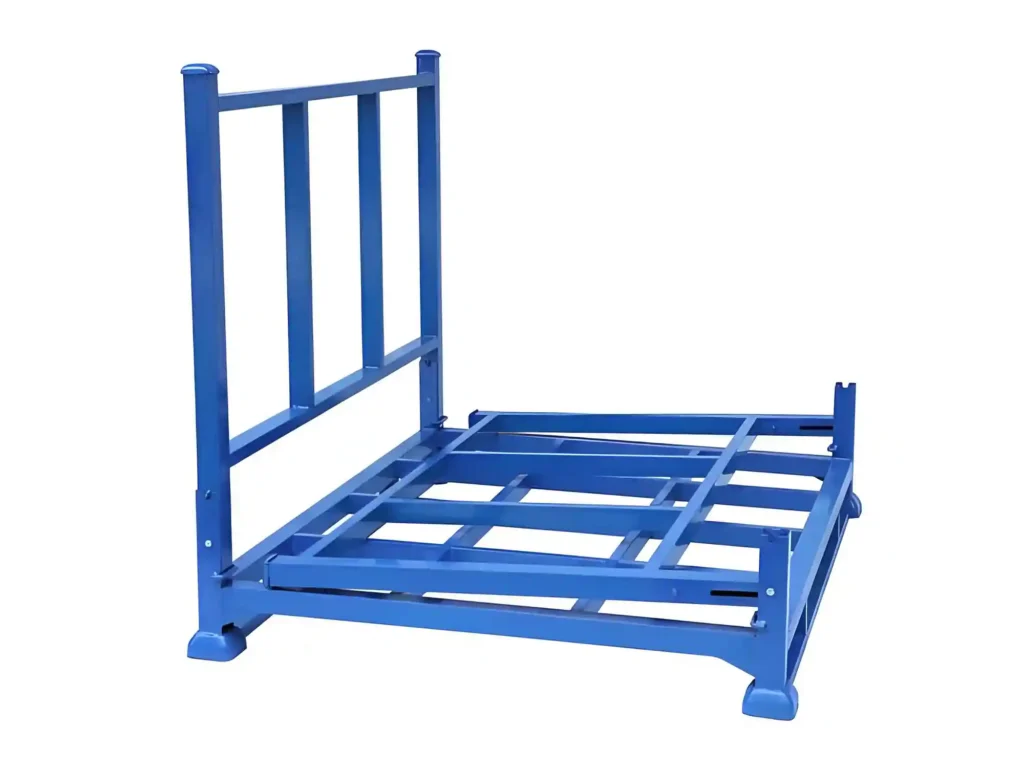
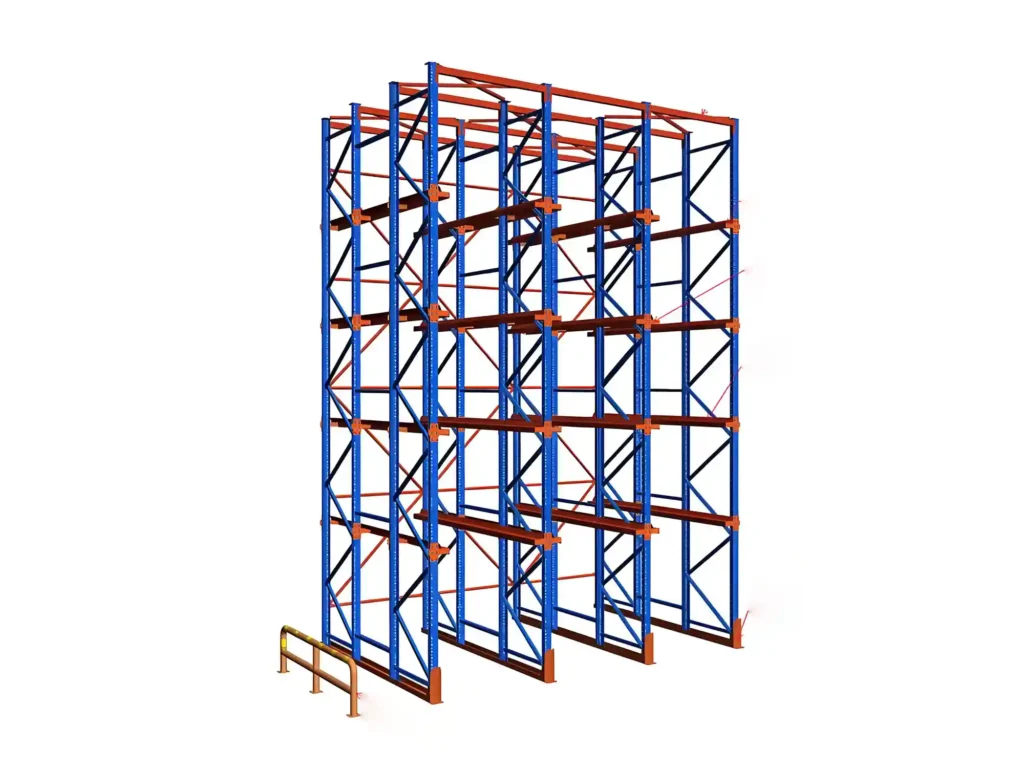
Drive-In Racking is designed for high-density storage of large quantities of similar products operating under a LIFO inventory system. It is widely used for frozen meat, seafood, dairy products, and other bulk pallet storage where maximizing storage capacity is the primary objective.
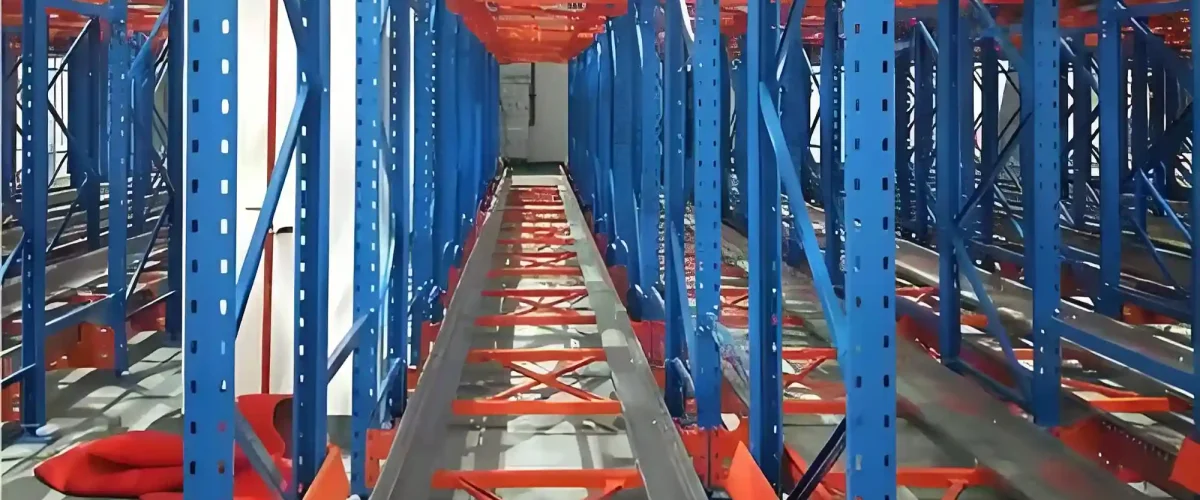
Pallet Shuttle Racking combines high storage density with improved forklift efficiency. A radio shuttle transports pallets inside the storage lanes, reducing forklift travel while increasing warehouse productivity. This solution is particularly suitable for medium and large cold chain warehouses with high pallet volumes.
Mobile Racking Systems maximize storage capacity by eliminating multiple working aisles. The racks move on floor rails, opening only the aisle required for access. They are often selected when warehouse floor area is limited but high storage density is required.
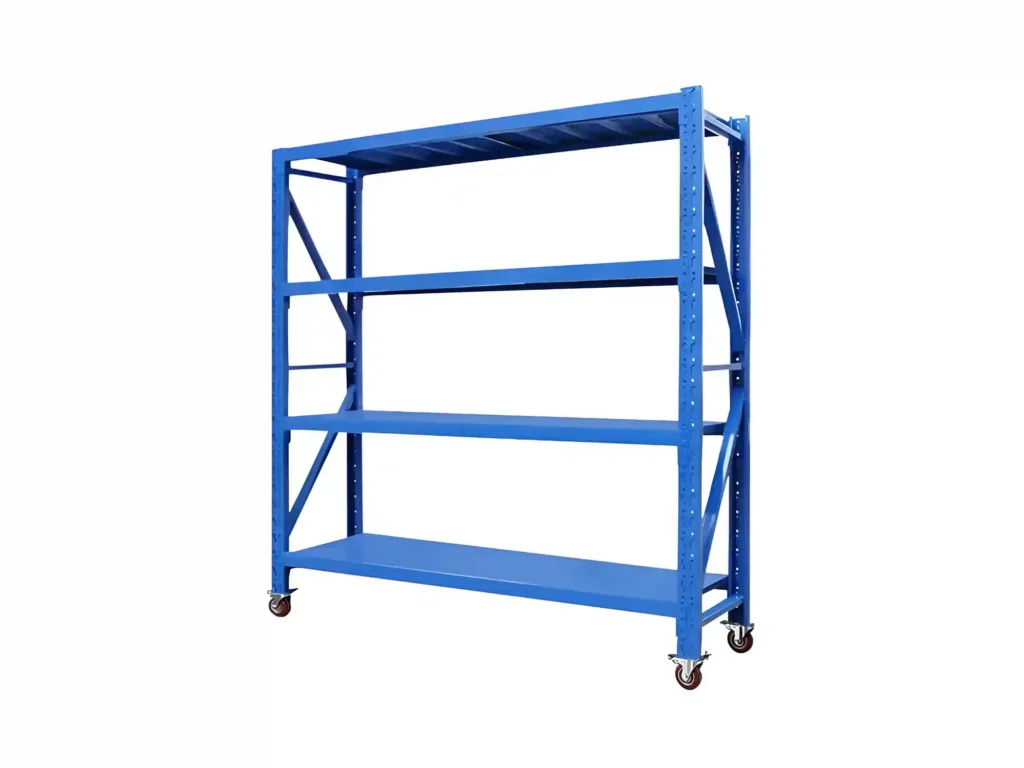
For highly automated operations, AS/RS (Automated Storage and Retrieval Systems) provide maximum efficiency, inventory accuracy, and labor savings. These systems are commonly used in large cold chain distribution centers where automation justifies the higher initial investment.
Key Design Factors You Should Never Ignore
There is a lot more to getting a good Cold Storage Racking System than just rack choice.
Things like warehouse height, pallet size, load capacity, forklift turning radius, inventory rotation, and even expansion plans should be considered before deciding on the final layout.
It is equally important to consider what material to use. For instance, in cold conditions where condensation might be an issue, galvanized steel is usually chosen as it provides excellent corrosion resistance and has a longer service life. Besides this, structural engineering in cold storage can prolong rack system life and keep the entire facility safe and capable of meeting heavy-demand operations.
Instead of buying regular rack sizes, many warehouses benefit widely from tailored solutions specifically designed for their facility dimensions and working process.
Common Mistakes When Planning Cold Storage Warehouses
A lot of warehouse facilities end up giving up quite a large amount of storage space because they install the racking system based on which one is cheapest or most readily available without a good analysis of the operational needs.
Furthermore, some of the warehouses overemphasize the use of very high-density storage while they have thousands of SKUs requiring direct pallet access. On the contrary, there are also warehouses capable of accommodating even more pallets but they leave the aisles so wide that they lose the space for additional racks and the cooling costs are also higher.
Typically, people only look at the price of the purchase and not the true lifecycle cost of the product. Lower-quality cold storage racks
can be a source of headaches as they could demand repeated maintenance, get worn out due to early corrosion, or be unsuitable when the warehouse is expanded in the future.
The benefit of using professionals in warehouse design cannot be overstated as you will find that you save more in the long run in comparison to just going for the cheapest piece of equipment.
Why More Businesses Choose JULI Storage
Without really good manufacturing, one cannot even talk about a trustworthy Cold Storage Racking System
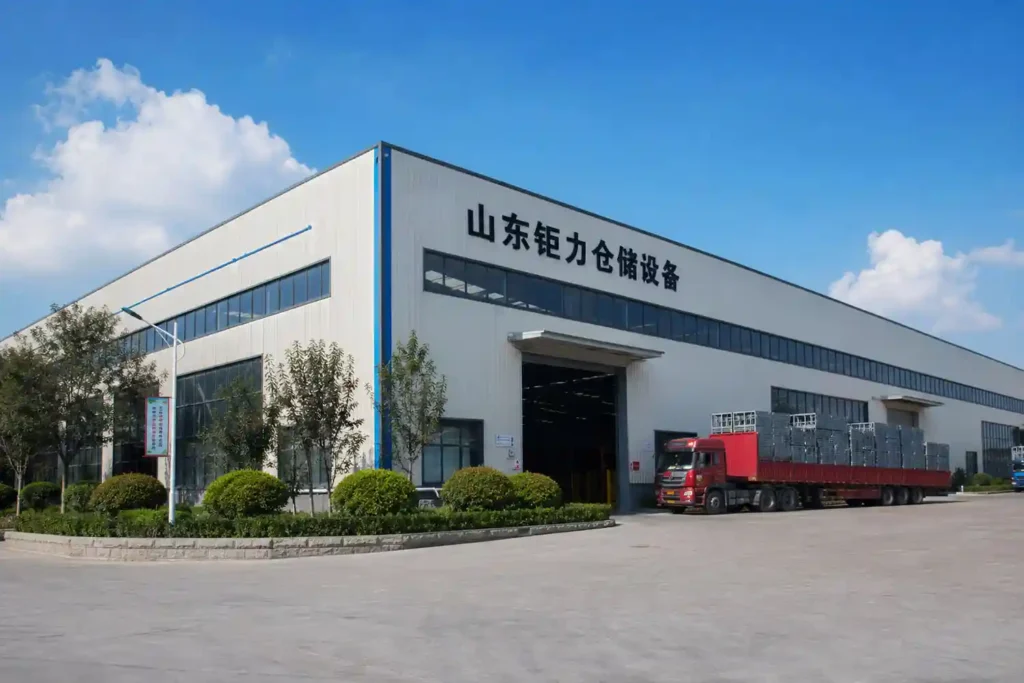
Shandong JULI Storage Equipment Manufacturing Co., Ltd., was founded in 2006. We have almost 20 years of experience designing, manufacturing, installing, and maintaining customized warehouse storage and logistics systems for customers worldwide.
Knowing the layout of the warehouse, pallet size, how the inventory will be moving, and what are the client’s operational goals are the things our experts want to understand so that they can suggest the most effective warehouse solution. The accuracy of the manufacturing, the strictness of the quality control, and the availability of installation instructions are the things that back a project in withstanding the demanding cold-chain environment.
We offer varieties of options from regular pallet racking to the very complex AS/RS systems which come with features. Our patch is to helping enterprises increase their storage capacity, enhance their warehouse efficiency, and create storage systems that will be worthwhile for years to come.
Frequently Asked Questions
How cold can warehouse racking operate?
Most industrial cold storage racks are designed for refrigerated and frozen environments, including temperatures below -30°C, provided that suitable materials and protective finishes are selected.
Is galvanized steel necessary?
Hot-dip galvanized finishes are recommended when moisture or condensation is present because they provide better corrosion protection and reduce long-term maintenance requirements.
Which racking system provides the highest storage density?
For conventional pallet storage, drive-in racking, pallet shuttle racking, and mobile racking systems generally provide higher storage density than selective pallet racking. However, the best solution depends on inventory characteristics and operational requirements.
Ready to Build a More Efficient Cold Storage Warehouse?
Every cold storage project has unique operational requirements. Choosing the right Cold Storage Racking System starts with understanding your warehouse layout, pallet specifications, inventory turnover, and future expansion plans—not simply selecting the highest-density rack.
At JULI Storage, we combine nearly 20 years of manufacturing experience with practical warehouse engineering to deliver storage solutions tailored to your business. From initial warehouse planning and structural design to production, quality inspection, and installation support, our team works with you throughout every stage of the project.
Whether you are building a new cold storage warehouse or upgrading an existing facility, we can help you maximize storage capacity, improve operational efficiency, and reduce long-term operating costs.
What you can expect from us:
Customized warehouse layout recommendations
Professional rack design based on your pallet and warehouse dimensions
Factory-direct manufacturing with strict quality control
Support for Selective, Drive-In, Shuttle, Mobile, and AS/RS storage systems
Global project experience with complete technical support
Ready to discuss your project?
Contact our engineering team today for a free consultation and customized warehouse storage solution.