Description
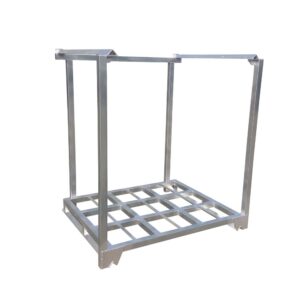
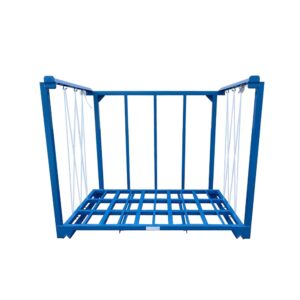
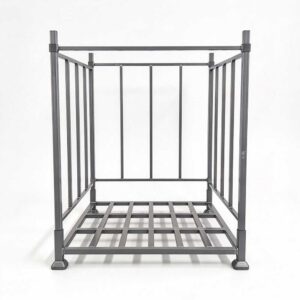
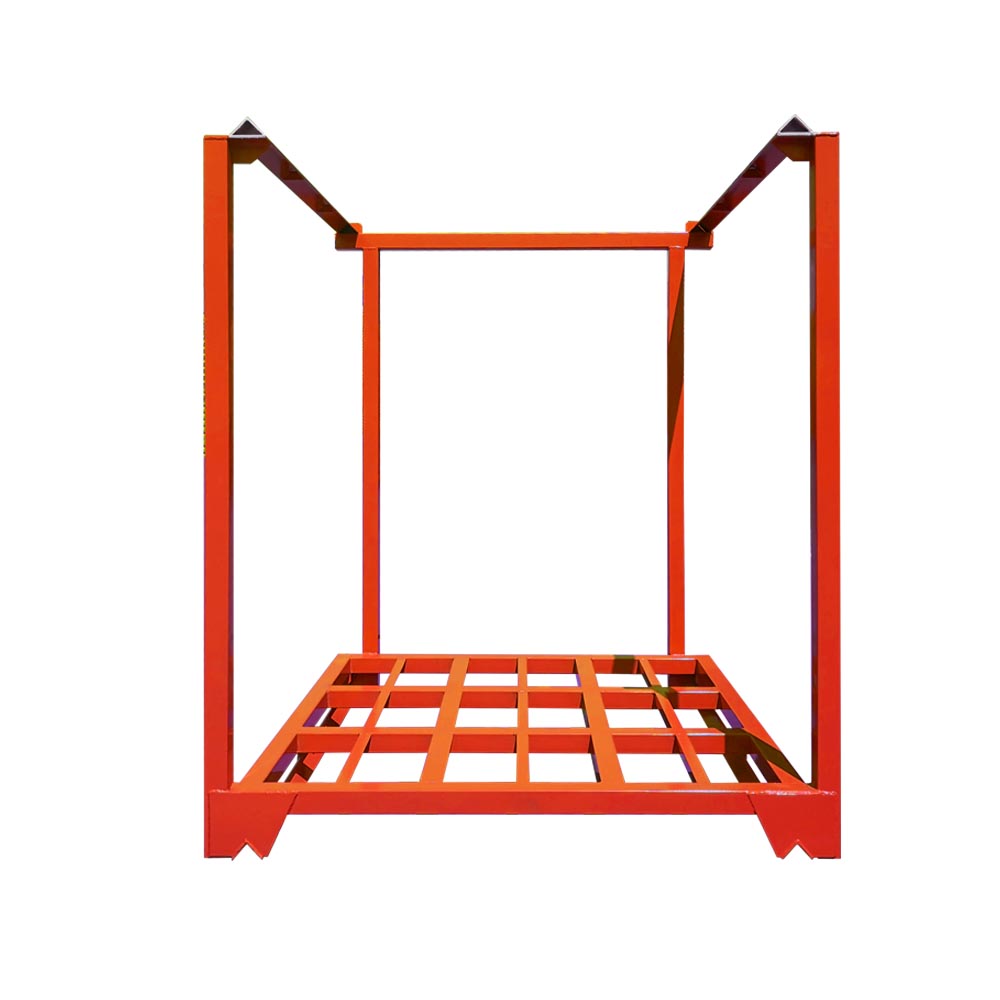
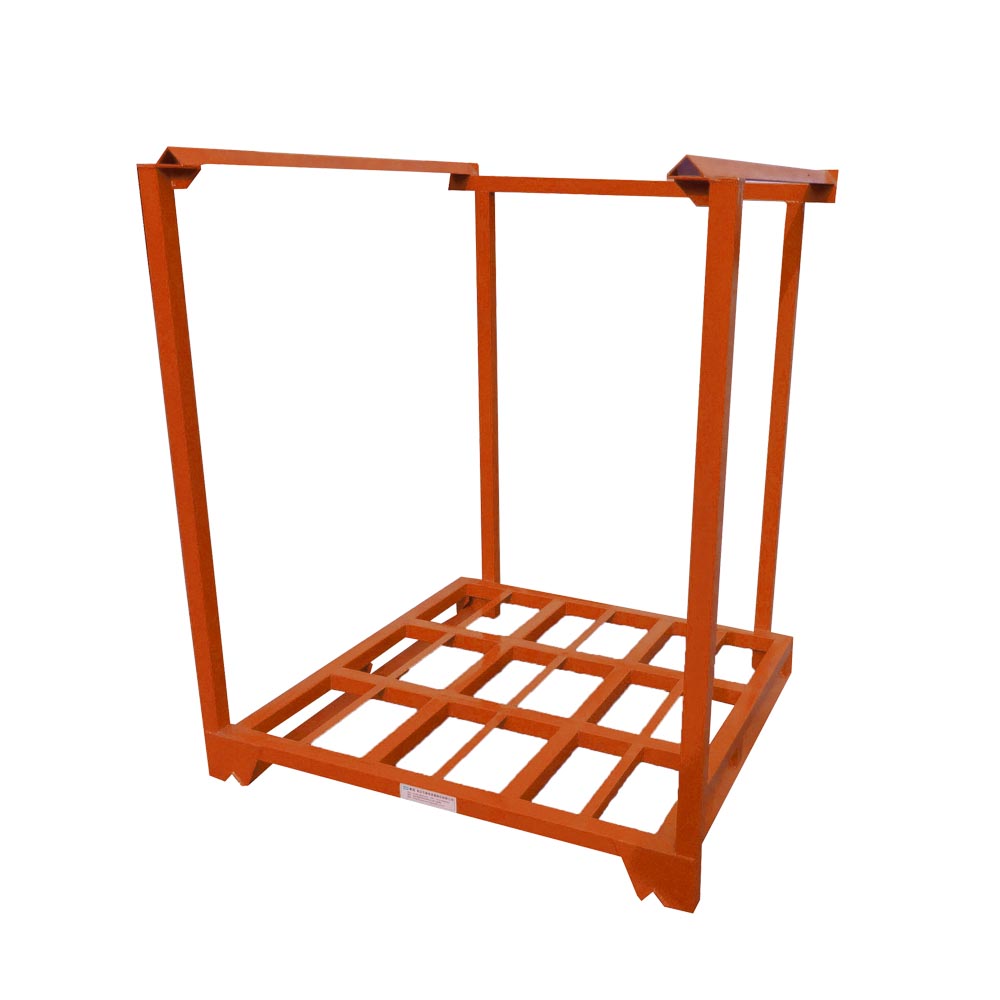
Nestable Racks are heavy-duty steel storage racks designed for warehouses that need strong load support without permanently giving up floor space to empty equipment. The rack provides a stable storage position for heavy or unitized goods during operation, while its nesting structure allows empty units to fit into one another when they are not being used.
This makes the rack particularly valuable in operations where storage demand changes throughout the year. Loaded units can be moved by forklift, arranged vertically where the design permits, and retrieved as complete loads. Once the goods have been removed, empty racks can be nested together and moved to a smaller equipment area.
The structure is designed for demanding industrial storage, with strong load-bearing performance and stability-focused construction. For projects where vibration or seismic movement is a concern, the rack can also be engineered with additional stability considerations according to the required application.
JULI® supplies heavy duty nestable storage racks for warehouse storage, logistics, manufacturing, cold storage, tire storage, agricultural products, rubber materials, and other industrial applications.
A Storage Rack That Saves Space After the Load Is Gone
Many storage systems solve the problem of storing goods but not the problem of storing the equipment itself.
With conventional fixed storage equipment, the structure continues to occupy its full footprint even when inventory drops. This can become a real issue for businesses with seasonal stock, returnable storage equipment, or fluctuating production.
The nesting function solves this problem at the equipment level.
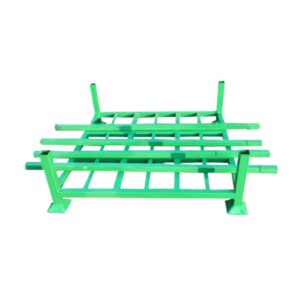
Once a rack is empty, it can be pushed into another empty unit so that several racks occupy much less floor area. The exact nesting depth depends on the rack geometry, but the principle is simple: loaded racks work as storage units; empty racks become a compact group.
This is one of the strongest reasons to choose space-saving nestable racks for warehouses with changing inventory.
How the Rack Fits Into Warehouse Operations
The rack is intended to stay with the load during normal internal handling.
Goods are placed on the rack according to the specified loading method. A forklift then picks up the complete unit and moves it to the storage location, production area, staging zone, or dispatch area.
When used in vertical storage, compatible loaded units can be arranged one above another according to the approved stacking configuration.
When a rack is emptied, it does not need to remain in the same location. It can be removed from the storage area, nested with other empty racks, and kept in a compact equipment zone until the next storage cycle.
For a warehouse manager, this creates a practical operating sequence:
Store the goods → move the complete unit → stack when required → retrieve by forklift → nest empty racks
The rack therefore serves both as a warehouse storage unit and a material handling unit.
Built for Heavy Loads
The structure is designed for applications where load capacity matters.
A heavy-duty steel frame provides the main load path, while reinforced sections can be added according to the actual product weight and loading method. The rack is not limited to lightweight cartons or small warehouse items; its structure can be engineered for substantial unitized loads.
For accurate design, three factors are particularly important:
Load weight determines the required structural capacity.
Load dimensions determine the supporting area and rack size.
Load distribution determines where reinforcement is required.
This is important because two loads with the same total weight can place very different stresses on the rack if one is evenly distributed and the other is concentrated in a small area.
For customers purchasing heavy duty nestable racks, these details should be confirmed before production rather than selecting capacity from appearance alone.
Stability When Carrying Heavy Goods
Your stated product advantage—the heavier the suitable load, the more firmly the rack can seat—can be expressed more accurately as part of the structural design.
When the load is within the rated capacity and correctly positioned, its weight presses the rack into its supporting position and can help reduce unwanted movement during normal storage.
This does not mean that heavier is always safer. Stability still depends on the rack structure, load center, floor condition, stacking height, and correct operation.
The practical objective is therefore to create a rack that remains stable under its intended working load rather than simply maximizing the weight it can carry.
This is particularly important for warehouse applications involving heavy palletized materials, bulk goods, tires, rubber products, and other substantial loads.
Stability and Seismic Design
For customers operating warehouses in areas where vibration or seismic movement is a concern, the storage structure can be developed with additional stability requirements in mind.
A seismic-resistant storage rack may require changes to the frame geometry, load-bearing structure, contact points, stacking arrangement, or other structural details depending on the project.
The required level of seismic performance should be confirmed according to the warehouse location, building conditions, rack dimensions, working load, and applicable local engineering requirements.
Where formal seismic certification is required, the rack should be designed and evaluated against the relevant standard rather than treated as a generic warehouse product.
Where Nestable Racks Make the Most Sense
This product is most valuable when three conditions occur together:
the stored goods are relatively heavy or bulky, the warehouse needs movable storage equipment, and empty racks would otherwise consume significant space.
Tire Warehouses
Tires occupy a large volume while inventory can change significantly with seasonal demand.
A nestable tire storage rack gives tire distributors and manufacturers a structured way to organize loaded tire units while allowing unused equipment to be consolidated after stock levels fall.
The design should be matched to tire diameter, width, load weight, and the customer’s preferred storage orientation.
Cold Storage
Cold storage space is expensive to operate, making efficient use of available volume particularly important.
Suitable nestable racks for cold storage can be used for palletized or otherwise stable loads such as frozen food, seafood, meat, agricultural products, and other temperature-controlled goods.
For humid or low-temperature environments, the surface finish can be selected according to condensation, cleaning, and corrosion requirements.
Agricultural Storage
Agricultural inventory often expands sharply during harvest and decreases later in the season.
A nesting storage system can provide additional equipment during peak periods without requiring all racks to remain spread across the warehouse floor afterward.
The design can be adapted for suitable packaged or unitized agricultural loads.
Industrial and Manufacturing Warehouses
Manufacturers can use the racks for heavy production materials, raw materials, finished goods, and other loads that are moved in batches rather than individually.
A complete unit can move from receiving to storage, then to production or dispatch, reducing unnecessary reloading.
This makes the rack particularly useful as part of an industrial material handling system, rather than only as static warehouse furniture.
Nestable Racks Compared With Conventional Storage Equipment
The main difference is what happens when the storage equipment is empty.
A fixed rack remains attached to its location and continues to occupy the same warehouse area. A nesting rack is designed around changing inventory: it provides storage capacity when needed and reduces its own footprint when the equipment is idle.
| Requirement | Nestable Rack | Fixed Pallet Racking |
| Heavy unitized loads | Suitable | Suitable |
| Forklift movement | Complete rack + load | Pallet/load handled within fixed bays |
| Empty equipment storage | Nests compactly | Remains installed |
| Seasonal inventory | Suitable | Less flexible |
| Warehouse layout changes | Easy to relocate | Requires layout changes |
| Permanent storage positions | Not the main purpose | Main purpose |
| Reusable equipment | Yes | System remains fixed |
The right choice depends on the warehouse process. Nestable equipment is particularly relevant when mobility and compact empty storage are part of the purchasing requirement.
Specifications
| Item | Specification |
| Product Name | Nestable Racks |
| Product Type | Heavy Duty Nestable Storage Rack |
| Main Material | Structural Steel |
| Construction | Reinforced Welded Steel |
| Overall Dimensions | Customized |
| Working Load | Customized |
| Nesting Function | Available |
| Stacking | According to Design |
| Forklift Handling | Available |
| Fork Entry | Customized |
| Seismic Design | Available According to Project |
| Surface Treatment | Powder Coating / Galvanizing |
| Color | Customized |
| Application | Warehouse / Logistics / Manufacturing / Cold Storage |
| OEM / ODM | Available |
The final dimensions and working capacity should be based on the actual load, pallet or load-carrier size, forklift specifications, stacking requirement, warehouse height, and floor conditions.
Custom Nestable Storage Rack Design
Customization is not about adding a long list of options to a standard rack. The purpose is to make the rack work correctly with the customer’s actual load.
JULI® can develop the structure around:
Product or pallet dimensions
Maximum loaded weight
Load distribution
Required stacking height
Forklift entry
Nesting requirement
Floor and warehouse conditions
Surface treatment
Seismic requirements where applicable
For a quotation, the most useful information is the load size, maximum weight, pallet or load-carrier dimensions, forklift type, desired storage height, quantity, and application environment.
That information gives the engineering team a practical basis for determining rack dimensions and structural requirements.
Surface Treatment
The surface treatment should be selected according to where the equipment will operate.
For general indoor warehouse use, powder coating provides a durable protective finish and allows customers to specify a preferred color.
For humid environments, cold storage, or applications exposed to greater moisture, galvanizing may provide additional corrosion protection.
For projects involving frequent washing, condensation, or temperature changes, the coating specification should be confirmed before production.
Why Choose JULI® for Nestable Racks?
For this type of product, the manufacturer matters because rack performance depends heavily on the relationship between steel structure, load, stacking geometry, nesting geometry, and actual handling conditions.
JULI® can support the project from product requirements and structural design through sample evaluation, production, quality inspection, and export delivery.
For B2B buyers, this is particularly relevant when the rack needs to be customized rather than purchased as a standard catalogue item.
The same production capability can also support repeat orders, allowing an approved rack configuration to be reproduced for additional warehouses or future purchasing batches.
Manufacturing and Quality Control
The nesting function requires consistent geometry between individual units. If dimensions vary significantly, empty racks may not nest correctly and loaded units may not align as intended.
Production therefore focuses on the structural details that directly affect use:
Steel material and section specifications
Welded frame dimensions
Load-bearing components
Nesting geometry
Stacking interfaces
Forklift access
Surface treatment
For repeat production, approved drawings and specifications can be used to maintain consistency across batches.
Frequently Asked Questions
What makes a rack nestable?
Its frame geometry allows empty units to fit partially into one another, reducing the floor space required to store unused racks.
Are nestable racks suitable for heavy loads?
Yes. The structure can be engineered for heavy working loads according to the product weight, dimensions, load distribution, and required operating conditions.
Does a heavier load make a nestable rack more stable?
When the load is within the rated capacity and correctly positioned, its weight can help seat the rack more firmly. Stability still depends on the frame design, load position, floor condition, and stacking configuration.
Can the racks be stacked when loaded?
Yes, where the specific rack design is engineered for loaded stacking. The permitted stacking height depends on the rack, load, floor, and warehouse conditions.
Can forklifts move the complete rack?
Yes. The rack can be designed for forklift handling so that the storage unit and its load can be moved together.
Can nestable racks be used for cold storage?
Yes. Suitable steel and surface-treatment specifications can be selected for refrigerated and freezer environments.
Can these racks be used for tire storage?
Yes. The dimensions and load capacity can be developed around the tire size, weight, quantity, and storage method.
Can they be used for agricultural products?
Yes, for suitable packaged or unitized agricultural loads that can be safely supported and handled.
Can the racks be designed for seismic applications?
Yes. Stability-focused structural features can be incorporated according to the project’s requirements. Formal seismic compliance should be confirmed against the applicable local standard.
How do I request a quotation?
Provide the product or pallet dimensions, maximum weight, load type, forklift information, required rack size, stacking requirement, quantity, and storage environment.
Get a Quote for Nestable Racks
If your warehouse needs to handle heavy loads while keeping empty storage equipment out of the way, JULI® Nestable Racks provide a practical solution.
The rack is built around four purchasing priorities:
Heavy-duty load support for demanding industrial storage.
Stable performance under load when the rack is correctly loaded within its rated capacity.
Nesting when empty to reduce the space required for unused equipment.
Forklift handling so the rack can move together with the stored load.
The system can be customized for warehouse storage, logistics, manufacturing, tire storage, cold storage, agricultural products, rubber materials, and other suitable unitized loads.
Send us your load dimensions, maximum weight, pallet or load-carrier size, forklift type, required stacking height, warehouse conditions, and quantity.
JULI® can provide the rack configuration, technical specification, factory quotation, and OEM/ODM production for your project.