Description
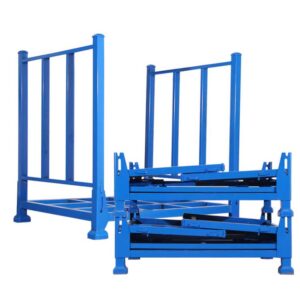
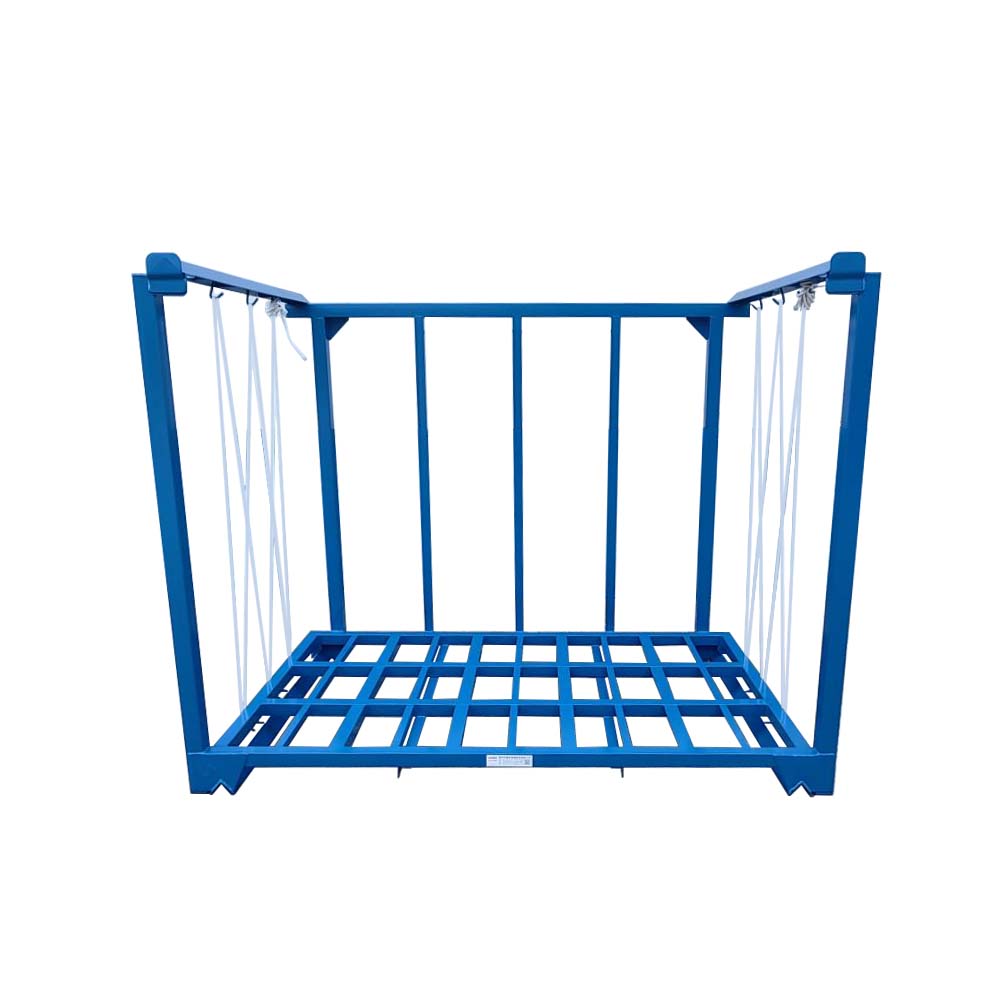
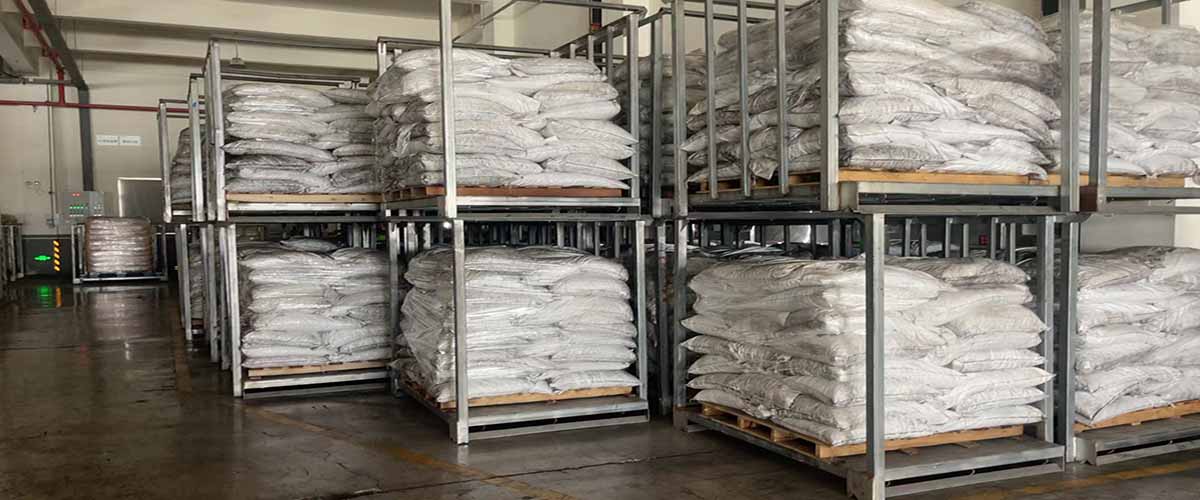
Stacking Racks for Warehouse are reusable steel storage units designed for vertical storage and forklift handling of unitized loads. Each rack provides a stable support structure for goods that have already been consolidated on a pallet, packaged as a load unit, placed in a suitable container, or arranged in another stable handling format.
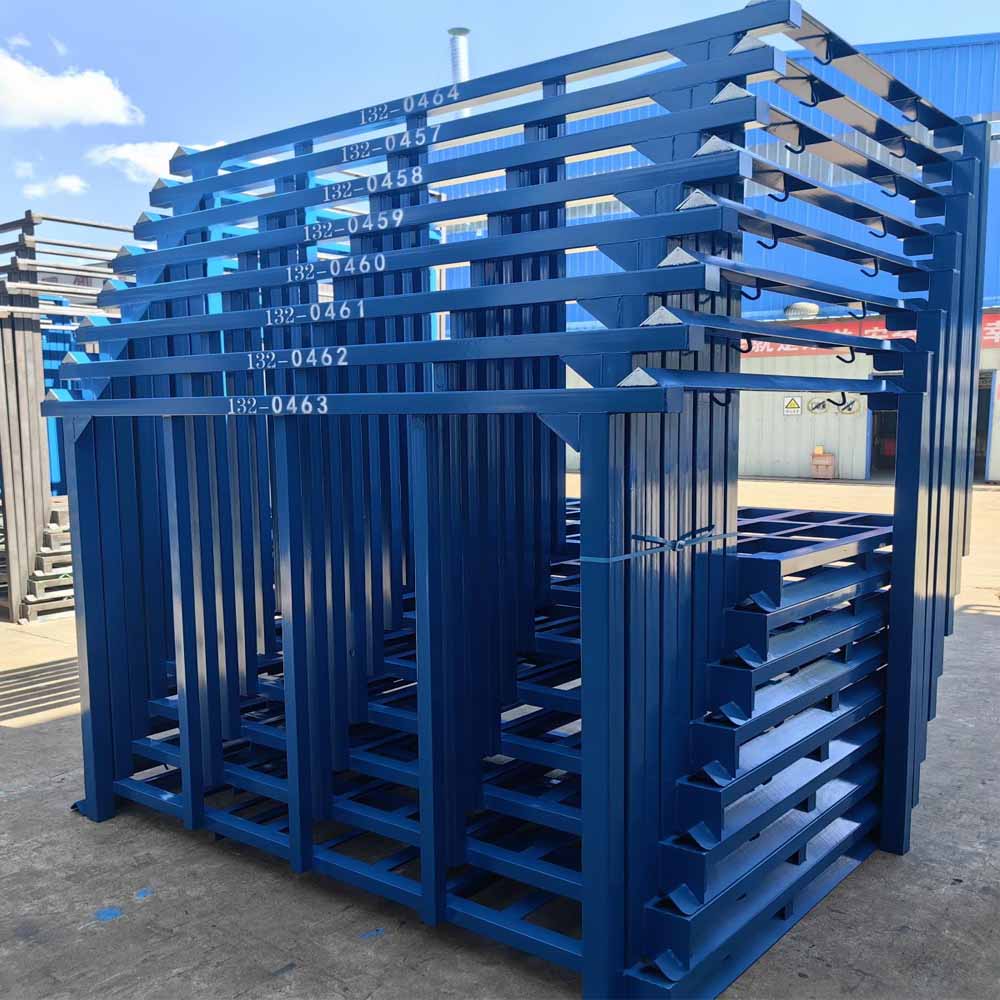
The racks can be stacked vertically when loaded and moved as complete units with a forklift. When the storage layout changes, individual racks can also be relocated without dismantling a fixed racking system.
This type of stackable storage rack is particularly suitable for natural rubber, tires, agricultural products, bulk packaged goods, and other large or irregular loads. It can also be used in cold storage, manufacturing, and logistics operations where reusable and movable storage equipment is required.
JULI® manufactures steel stacking racks in different sizes and load capacities according to the stored product, handling equipment, stacking requirements, and warehouse conditions.
How the Stacking Rack Is Used
The rack is designed to work as a complete storage and handling unit.
Goods are first prepared in a stable load format, such as a palletized load, packaged rubber products, a group of tires, or another suitable unit. The load is then placed on the rack or within its supporting structure.
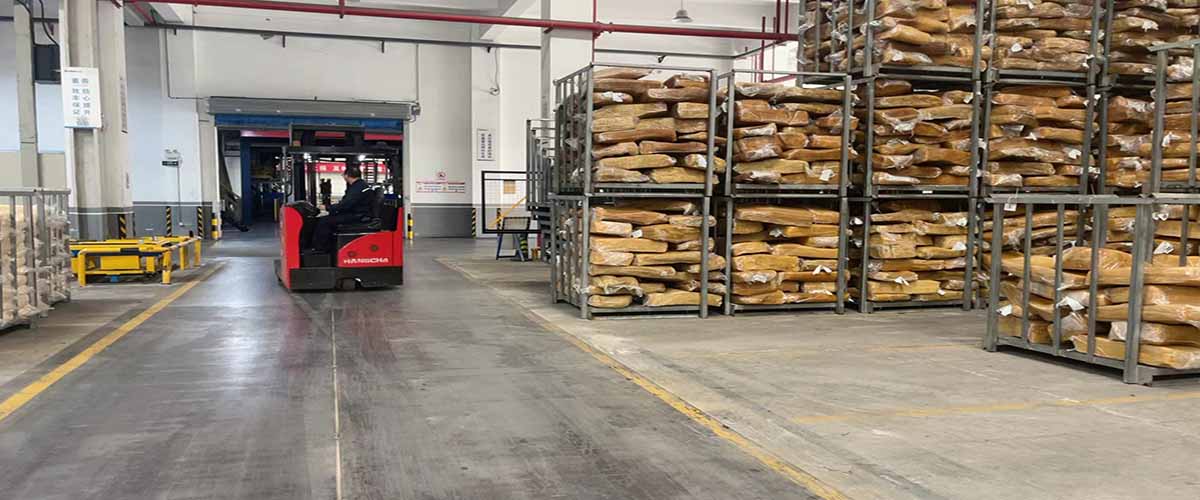
A forklift can pick up the rack from the designated fork-entry position and move the complete unit to the required storage area. Loaded racks can then be stacked vertically according to the approved stacking configuration.
When the goods are needed, the forklift removes the required rack from the stack and transports it to the unloading or working area.
This operating method is particularly useful when the same group of goods needs to be moved several times between production, storage, and dispatch.
Steel Stacking Rack Structure
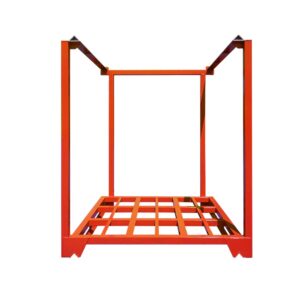
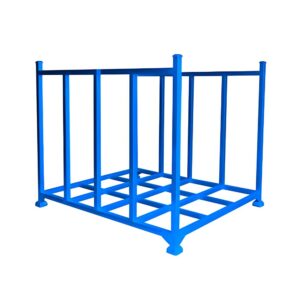
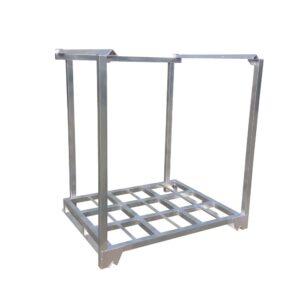
The rack consists of a welded steel frame designed to support the load and maintain its position during storage and handling.
The base provides the main load-bearing support, while the upper structure is designed to accommodate vertical stacking. Depending on the application, the supporting area can be configured with steel panels, bars, mesh, or other structural components.
The exact structure should correspond to the physical characteristics of the load.
For example, a rack used for rubber products may require a different support arrangement from one used for tires. A unit designed for palletized agricultural products may also have different dimensions and loading requirements.
This product is therefore not intended as general-purpose shelving for loose individual items. Its structure is designed around unitized loads and specific material-handling requirements.
Main Product Advantages
Vertical Storage Without Permanent Installation
Multiple loaded units can be stacked vertically to make better use of available warehouse height.
Unlike fixed pallet racking, the storage positions are created by the stacking units themselves. This can be useful where warehouse layouts change frequently or where permanent racking is not practical.
The actual stacking height depends on the rack design, working load, floor conditions, product stability, and available clearance.
Independent Forklift Handling
Each rack can be moved independently.
The forklift handles the rack together with its load, allowing the complete storage unit to move from one location to another.
This is useful for production buffers, warehouse transfers, seasonal inventory, and logistics operations where the same load may need to be relocated several times.
Reusable Steel Construction
The steel structure is designed for repeated use rather than single-trip handling.
After one load is removed, the rack can be returned to service for another compatible load. This makes it suitable for reusable warehouse equipment and closed-loop material-handling operations.
Suitable for Irregular Loads
Not every industrial product fits efficiently on standard pallets or conventional shelving.
A customized support structure can accommodate products such as rubber blocks, tire groups, rolls, or other large loads that require a dedicated storage format.
The rack is designed around the load rather than relying on a single standard shelf arrangement.
Load-Bearing Performance
The structural design is based on the actual working conditions of the rack.
Working Load
The required load capacity should be determined from the maximum weight of the stored unit.
Load distribution is equally important. A uniformly distributed load creates different structural requirements from a concentrated load positioned in a small area.
For this reason, customers should provide both the maximum weight and the dimensions of the load when requesting a design.
Stacking Performance
The rack is engineered to maintain stable alignment when multiple units are stacked.
The permitted number of levels is determined by the rack structure, load, floor conditions, and operating environment.
Stacking should always remain within the approved configuration. Uneven loading or exceeding the specified capacity can affect stability and structural performance.
Forklift Compatibility
Fork-entry dimensions can be designed around the customer’s forklift.
The rack should be picked up only from the designated handling positions, and the load should remain stable during transportation.
This makes forklift compatibility an important part of the initial rack design rather than an afterthought.
Stacking Racks for Natural Rubber
Natural rubber is one of the typical applications for this type of storage equipment.
Rubber products may be stored in blocks, bales, sheets, or other consolidated forms. Their size and weight can make direct floor storage inefficient, especially when large quantities are held in the same warehouse.
A rubber storage rack provides a defined support structure for the prepared load and allows multiple units to be stacked vertically.
Forklift handling allows a complete rubber load to be transferred between production, temporary storage, and warehouse areas without repeatedly separating the products.
The rack dimensions and support configuration can be selected according to the rubber product’s size, weight, packaging method, and required stacking height.
Tire Storage Racks
Tires are another suitable application because they have a large volume relative to their weight and can occupy substantial warehouse floor space.
A tire storage rack can be designed around the tire diameter, width, quantity, and storage method.
Tires can be grouped into suitable load units and placed within the rack structure before being moved by forklift. Multiple units can then be stacked to increase the utilization of warehouse height.
This configuration can be used by tire manufacturers, distributors, automotive warehouses, and businesses handling seasonal tire inventories.
The rack should be designed according to the actual tire dimensions rather than assuming that all tire sizes require the same storage configuration.
Agricultural Product Storage
Agricultural products often generate significant seasonal changes in storage volume.
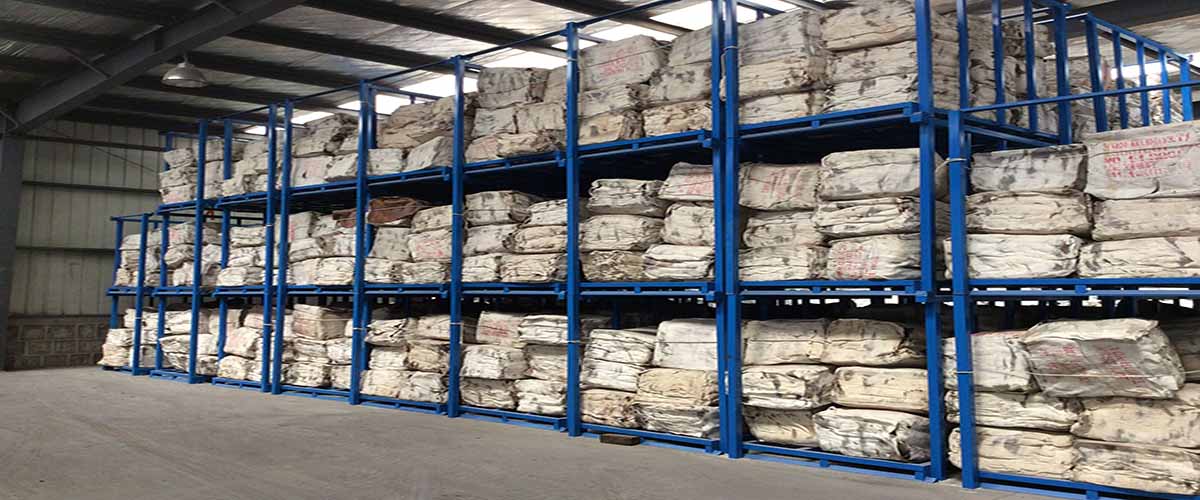
Stackable steel units can provide additional storage capacity during harvest or peak inventory periods without requiring a permanent change to the warehouse structure.
The system is suitable for unitized agricultural products, packaged produce, agricultural materials, and other goods that can be consolidated into stable handling loads.
For products requiring temperature-controlled storage, the same concept can be applied in refrigerated warehouses when the rack finish and materials are selected for the operating environment.
Cold Storage Applications
Cold storage warehouses place a premium on efficient use of available space.
Stacking units can be used to create vertical storage positions for frozen and refrigerated products that are already prepared as stable loads.
Typical applications include packaged meat, seafood, frozen agricultural products, and other palletized or unitized goods.
Steel is also well suited to environments where moisture and condensation may be present. The appropriate powder coating or galvanized finish should be selected according to the temperature, humidity, cleaning method, and corrosion conditions.
Bulk and Packaged Goods
The racks can also be used for products stored as complete load units rather than individual pieces.
Examples include packaged raw materials, bags, consolidated goods, and other bulk products that can be safely placed on a pallet or within a suitable load carrier.
This makes bulk storage racks useful for warehouses that need to store large quantities of similar goods while maintaining forklift accessibility.
The key requirement is that the stored material must form a stable load suitable for the rack’s supporting structure and handling method.
Warehouse Material Handling
A major application of this product is internal material movement.
For example, a production facility may load a batch of rubber products onto the rack, move it to a temporary storage area, stack it with other batches, and later transfer the complete unit to the dispatch area.
The rack therefore serves two functions: it provides a storage position and acts as a reusable handling unit.
This can reduce unnecessary product transfers and make warehouse operations more organized, particularly where goods are moved in batches rather than picked individually.
Specifications
| Item | Specification |
| Product Name | Stacking Racks for Warehouse |
| Product Type | Stackable / Nestable Steel Storage Rack |
| Main Material | Structural Steel |
| Construction | Welded Steel Frame |
| Length | Customized |
| Width | Customized |
| Height | Customized |
| Working Load | Customized |
| Stacking Levels | According to Design |
| Storage Support | Steel Panel / Bars / Mesh / Customized |
| Forklift Handling | Available |
| Fork Entry | Customized |
| Surface Treatment | Powder Coating / Galvanizing |
| Color | Customized |
| Application | Rubber / Tires / Agriculture / Cold Storage / Bulk Goods |
| OEM / ODM | Available |
Actual specifications should be confirmed according to the product dimensions, maximum load, loading method, forklift model, warehouse height, and required stacking configuration.
Custom Stackable Storage Racks
The rack can be manufactured according to the specific load rather than using a universal structure.
Customization can cover the overall rack dimensions, steel thickness, working load, support configuration, fork-entry dimensions, stacking arrangement, and surface treatment.
For specialized applications, customers can provide the product dimensions, weight, photographs, packaging method, or existing drawings. These details allow the rack structure to be matched to the actual storage unit.
For example, a rack for natural rubber may require different internal dimensions from a rack for tires, while a cold storage application may require a different surface treatment from a standard indoor warehouse.
Surface Treatment
The steel surface can be finished according to the operating environment.
Powder coating is suitable for many indoor warehouse and manufacturing applications and provides a durable protective finish.
Galvanizing can be selected when greater resistance to moisture and corrosion is required.
For refrigerated and humid environments, the surface treatment should be selected according to the actual temperature, condensation, cleaning procedures, and expected service conditions.
Manufacturing
JULI® manufactures stacking storage racks through steel preparation, cutting, forming, welding, structural inspection, surface treatment, dimensional checking, and final packaging.
Production is based on approved technical specifications so that rack dimensions, stacking interfaces, forklift openings, and structural components remain consistent.
For repeat orders, the approved design can be retained as the production reference, helping maintain compatibility between racks supplied in different batches.
OEM and ODM Manufacturing
JULI® provides OEM and ODM production for warehouse equipment distributors, logistics companies, rubber manufacturers, tire businesses, agricultural storage operators, and other industrial customers.
The manufacturing process can begin with either an existing drawing or basic application information.
Customers can specify the load, product dimensions, required rack dimensions, stacking height, forklift requirements, quantity, and surface treatment.
The engineering team can then develop the rack structure around those requirements.
Frequently Asked Questions
What are stacking racks for warehouse?
They are independent steel storage units designed to support stable loads and allow multiple units to be stacked vertically. They are commonly used for rubber products, tires, agricultural products, bulk packaged goods, and other suitable unitized loads.
Can loose automotive parts be placed directly on the rack?
This product is not intended for loose individual parts. Small components should first be consolidated in a suitable pallet, container, box, or other load carrier that provides a stable load for the rack.
How does a forklift handle the rack?
The forklift enters the designated fork-access area and lifts the complete rack together with its load. The rack can then be moved to storage, production, loading, or another designated location.
Are stacking racks suitable for natural rubber?
Yes. They are particularly suitable for natural rubber products that are stored as stable blocks, bales, sheets, or other consolidated loads. The rack dimensions should match the actual rubber product.
Can they be used for tires?
Yes. The rack can be designed according to tire diameter, width, weight, quantity, and storage configuration.
Can the racks be used in cold storage?
Yes. They can be manufactured for refrigerated warehouses and cold rooms. Surface treatment should be selected according to the operating conditions.
How many units can be stacked?
The allowable stacking height depends on the structural design, working load, load distribution, floor conditions, and warehouse clearance. It should be confirmed for each specific rack configuration.
Are these racks reusable?
Yes. Their steel construction is designed for repeated storage and handling cycles.
Can the rack dimensions be customized?
Yes. Dimensions, load capacity, support structure, forklift access, stacking configuration, and surface treatment can be customized.
Can you manufacture from our drawing?
Yes. JULI® can manufacture according to customer drawings, samples, product dimensions, or application requirements.
Get a Quote for Stacking Racks for Warehouse
JULI® Stacking Racks for Warehouse are designed for businesses that store goods as stable load units and need a combination of vertical storage and forklift mobility.
The steel construction provides durable support, while the stackable structure allows multiple loads to occupy the same floor footprint. The racks are particularly suitable for natural rubber, tires, agricultural products, cold storage goods, bulk packaged materials, and other large or irregular loads that can be safely consolidated for handling.
If you need stackable steel storage racks, nestable storage racks, bulk storage racks, or custom industrial storage equipment, send us the product dimensions, load weight, loading method, required rack size, and quantity.
Contact JULI® for a suitable rack configuration, factory quotation, and OEM/ODM manufacturing.