
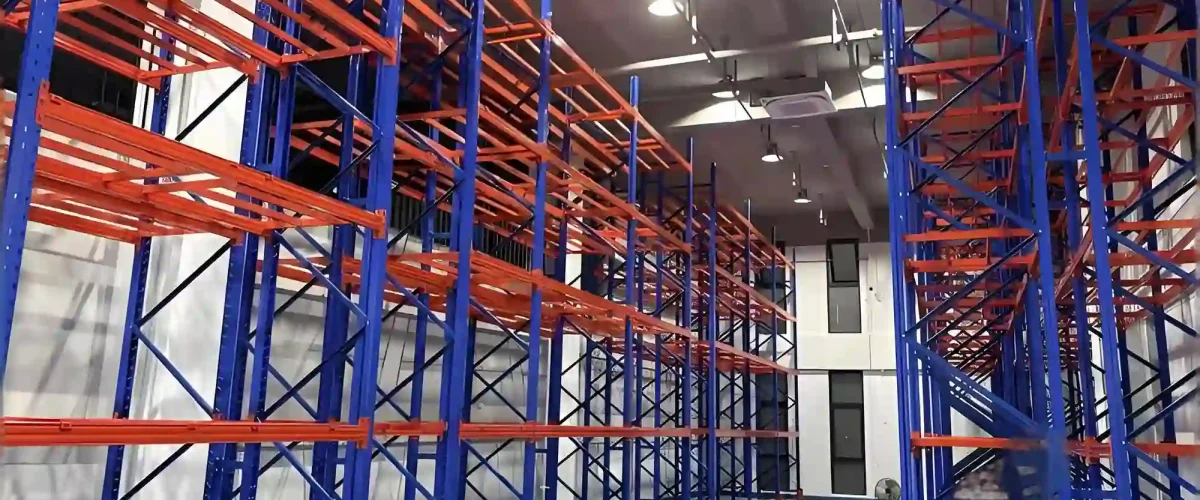
If you are operating a temperature-controlled warehouse, you already know the brutal reality of the cold chain industry: every single cubic meter of frozen air is a direct drain on your bottom line. Cold storage facilities cost up to three times more to build and run than standard ambient warehouses. Between the relentless electricity bills required to maintain sub-zero environments and the skyrocketing costs of industrial land, you cannot afford a single centimeter of wasted space.
Yet, walk into many blast freezers today, and you will see the exact same layout mistakes: wide forklift aisles swallowing premium real estate, rusty beams shedding paint chips onto food packaging, and standard steel structures quietly micro-fracturing under the stress of $-25^\circ\text{C}$ temperatures.
Relying on outdated or ambient-grade warehouse logic for your cold storage pallet racking isn’t just an operational oversight—it is a massive financial leak. If your goal is to transition your facility from a high-maintenance “energy black hole” into a high-density, profit-generating asset, you must fundamentally rethink your racking strategy. Here is the blueprint to doubling your density, slashing your energy consumption, and bulletproofing your cold chain logistics against operational failure.
1. The Invisible Killers: Why Standard Racks Fail inside the Freezer
To protect your upfront capital margins, it is incredibly tempting to opt for standard roll-formed racking or conventional industrial coatings. However, the unique environmental pressures of a deep-freeze or blast-freezing facility act as aggressive, silent destroyers of traditional warehouse equipment.
Before selecting a system, you must understand the three critical vulnerabilities that standard structural setups face behind closed freezer doors:
Low-Temperature Steel Embrittlement
Carbon steel is inherently ductile at ambient temperatures; it bends, flexes, and absorbs structural stress under load. However, when steel is subjected to temperatures dropping below $0^\circ\text{C}$ and pushing down toward $-30^\circ\text{C}$, it undergoes a physical transformation known as the ductile-to-brittle transition.
The steel loses its elasticity. If a heavy forklift misjudges a turn and impacts a standard ambient rack frame in a deep freeze, the upright column will not gracefully deflect—it can snap completely like glass. This creates an immediate, catastrophic risk of localized or total rack collapse, threatening both inventory integrity and human life.
[Ambient Temperature] -> Highly Ductile Steel -> Absorbs Impacts (Bends)
[Sub-Zero Temperature] -> Brittle Transformation -> Succumbs to Impacts (Snaps)
The Destructive Freeze-Thaw Condensation Cycle
Cold storage warehouses are not static environments. Every single time a dock door cycles open to receive a shipment, a massive volume of warm, humid ambient air rushes into the staging area and the main freezer vault. When this moisture-laden air hits the sub-zero steel surfaces of your racking system, it instantly flashes into heavy condensation and frost.
During standard maintenance or automated defrost cycles, this frost melts into liquid water, only to refreeze once the cooling evaporators kick back into high gear. Conventional industrial powder coatings cannot withstand this relentless expansion and contraction. The paint layer micro-fractures, moisture creeps beneath the surface, and deep, structural rust begins to eat away at the core steel. Within 24 months, you face flaking paint (a critical food safety violation) and compromised load-bearing capacities.
Micro-Climates and the “Energy Black Hole” Effect
A poorly engineered cold storage layout ignores basic thermodynamics. Refrigeration units rely on a continuous, uninhibited loop of high-velocity cold air to maintain uniform temperatures across the entire warehouse envelope.
If your racking columns are packed too tightly against the walls, or if the pallet placement completely cuts off the air return paths, you create stagnant air pockets—commonly referred to as warehouse hot spots. To keep these blind spots compliant with strict regulatory standards, your industrial compressors are forced to run continuously at maximum capacity. This inefficiency is the primary culprit behind bloated monthly utility bills.
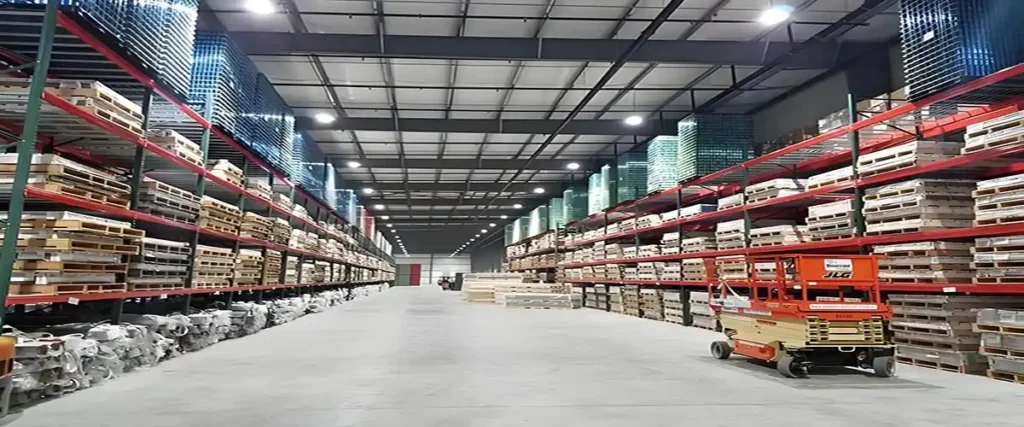
2. The Heavyweight Match: Cold Storage Pallet Racking Systems Compared
Achieving peak profitability in a cold chain facility requires balancing two conflicting metrics: maximum storage density (squeezing as many pallets as possible into the refrigerated cube) and selective throughput efficiency (how fast your team can access individual pallets).
Choosing the wrong configuration can paralyze your supply chain or leave half of your premium cubic space completely empty. The table below outlines the primary industrial options deployed across global cold chain networks:
| Racking System Type | Volumetric Density | Pallet Selectivity (Access) | Operational Flow | Structural Longevity | Ideal Cold Chain Use-Case |
| Selective / VNA Racking | Medium (~45% space yield) | 100% (Instant access to every pallet) | FIFO (First-In, First-Out) | Dependent on steel profile spec | High-SKU distribution, third-party logistics (3PL), pharmaceutical validation |
| Drive-In Racking | High (~70% space yield) | Low (Must clear front pallets first) | LIFO (Last-In, First-Out) | Vulnerable to high forklift impact rates | Single-SKU bulk manufacturing, seasonal agricultural freezing, low-turnover raw materials |
| Radio Shuttle Racking | Extremely High (~85% space yield) | Medium (Optimized by lane and level) | Both FIFO & LIFO adaptable | High (Forklifts remain outside storage channels) | High-turnover fast-moving consumer goods (FMCG), automated dairy facilities, ice cream storage |
| Mobile Pallet Racking | Maximum (~90% space yield) | 100% (Racks move on automated floor tracks) | FIFO (First-In, First-Out) | Excellent (Fewer open aisles reduce impact zones) | Premium urban logistics hubs, ultra-high land cost zones, full-SKU access mandates |
3. Four Non-Negotiable Rules for Designing High-Performance Cold Storage Layouts
To ensure that your capital expenditure yields a reliable asset that performs flawlessly for decades, your engineering and procurement teams must hold fast to these four industrial design pillars:
I. Specify Structural Hot-Rolled Steel Over Roll-Formed Profiles
Do not allow procurement teams to cut corners by purchasing standard roll-formed, thin-walled steel profiles for heavy-duty freezer applications. True, professional-grade cold storage infrastructure demands hot-rolled structural steel profiles.
Structural steel features significantly thicker metal walls, robust bolted connections rather than teardrop hooks, and superior yield strength at extreme sub-zero thresholds. If an operator miscalculates a turn in a dark, foggy freezer lane, a structural column will absorb the kinetic energy via minor deflection, keeping the entire bay stable and giving your maintenance crew ample time to safely offload the inventory and execute repairs.
II. Mandate Full Hot-Dip Galvanizing (HDG) Anti-Corrosion Treatment
Forget standard zinc plating or economy-tier powder coatings. The gold standard for sub-zero survival is Hot-Dip Galvanizing (HDG). In this process, the completely fabricated structural steel components are submerged into a bath of molten zinc at roughly $450^\circ\text{C}$.
This creates a molecular bond, forming a multi-layered, highly durable zinc-iron alloy coating that covers both the exterior surfaces and the hollow interiors of the steel tubing. HDG finishes provide self-healing properties against minor scratches and offer a verified rust-free operational lifespan exceeding 20 years in high-humidity, high-condensation environments.
III. Treat Your Racking Layout as an Airflow Plenum
A premium cold chain design integrates the racking infrastructure seamlessly with the facility’s HVAC/refrigeration system. A baseline rule of thumb is to maintain a 200mm to 300mm air circulation plenum between the rear of the racking rows and the insulated sandwich wall panels.
Additionally, ensure a minimum of 500mm of vertical clearance between the top of your highest pallet load and the bottom of the ceiling-mounted cooling evaporators. This structural breathing room allows cold air to slide smoothly down the perimeter walls and cycle up through the center aisles, enveloping every pallet in a uniform thermal curtain and slashing overall compressor load.
IV. Construct a Zero-Tolerance Physical Defense Perimeter
Because freezer operators must wear thick, thermal suits, heavy gloves, and fog-resistant eyewear, their spatial awareness and reaction times are naturally diminished compared to ambient warehouse workers.
Your cold storage layout must feature aggressive, floor-anchored steel column shrouds, heavy-duty wrap-around row-end protectors, and raised guide rails within the aisles. Furthermore, incorporate heavy-duty pallet back-stop beams at the rear of every bay to prevent operators from inadvertently pushing a pallet too deep into a lane and puncturing the expensive insulated wall panels behind the rack.
4. The Automation Edge: Slashing Cold Room Energy Costs by 30%
The modern cold chain cannot survive on manual labor alone. Navigating a forklift inside a $-25^\circ\text{C}$ environment is hard on personnel, drives up labor turnover rates, and introduces high rates of human error. The strategic integration of automation into your racking matrix is the single most effective way to protect your margins.
Consider the operational impact of a semi-automated Radio Shuttle Racking System. Instead of forcing a forklift driver to meticulously navigate a heavy machine down a long, dark, sub-zero storage tunnel, the operator simply places the pallet on the front staging face of the rack lane. A battery-powered wireless shuttle vehicle takes over, rapidly transporting the pallet deep into the structure and positioning it with millimeter precision.
[Forklift Drops Pallet at Lane Face] -> [Wireless Shuttle Automatically Moves Deep Inside] -> [Zero Forklift Entry into Freezer Lanes]
This simple shift delivers three massive economic victories:
Drastic Labor and Equipment Protection: By keeping forklifts and operators completely outside the internal storage channels, you virtually eliminate rack impact accidents and reduce specialized freezer-rated forklift maintenance costs by up to 40%.
Drastic Compression of Dead Space: Because the wireless shuttle handles deep-lane storage, you can eliminate up to 80% of the access aisles required by standard selective configurations. This enables you to store up to 85% more inventory within the exact same costly refrigerated footprint.
Thermal Mass Energy Optimization: A highly dense block of frozen pallets acts as a massive thermal battery. By packing your inventory tightly together via a shuttle matrix and eliminating large pockets of empty air, your facility retains its cold temperature far more efficiently. When dock doors cycle open, the solid mass resists temperature fluctuations, allowing you to reduce your total refrigeration energy consumption by 20% to 30%.
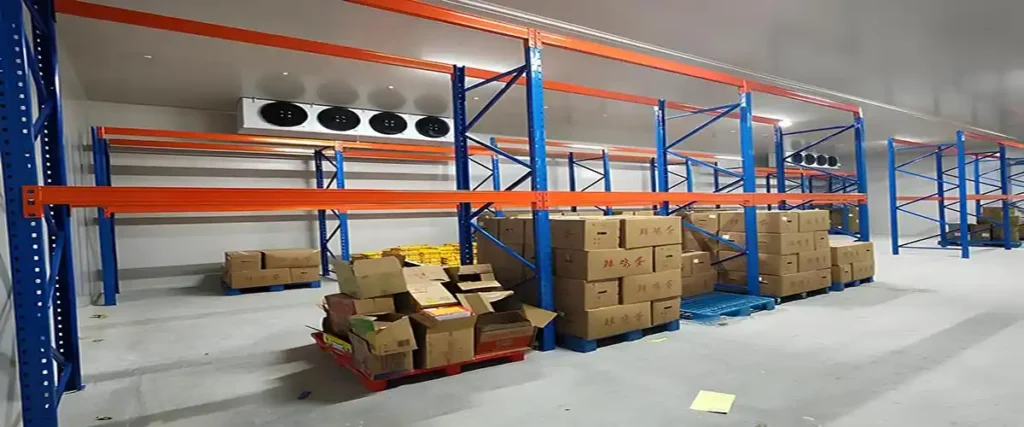
5. Cold Chain Storage Engineering: Frequently Asked Questions (FAQ)
Q: Our cold room runs at a relatively mild 0°C to 4°C for fresh produce. Can we save money by using standard ambient powder-coated racks?
A: This is one of the most common and expensive misconceptions in the industry. The 0°C to 4°C zone is actually the absolute highest risk environment for extreme condensation and moisture pooling. Racks operating in this range experience constant, heavy sweating. Standard ambient powder coatings will trap this moisture against the raw carbon steel, leading to blistering, bubbling, and structural rust flaking within 12 to 18 months. This introduces heavy rust particles into your facility, creating an immediate compliance failure under strict food safety or pharmaceutical quality audits.
Q: How do we calculate the true Return on Investment (ROI) when upgrading to a high-density automated racking system?
A: When evaluating the upfront capital expenditure of a high-density system like Radio Shuttle or Mobile Racking, look at three core metrics: capacity gain, energy reduction, and labor optimization. On average, our clients experience a 60% to 80% increase in pallet capacity within their existing walls, eliminating the need to lease secondary overflow facilities. Combined with a 25% reduction in per-pallet electricity overhead and a sharp decline in forklift damage claims, the typical payback period ranges between 24 and 36 months.
Q: What exact technical documents and specifications do we need to provide to initiate a custom layout design?
A: To build a highly accurate, code-compliant structural model, our engineering team requires your master architectural building plans (clearly marking concrete floor thicknesses, column grids, and clear building heights under the trusses), your exact pallet dimensions (width, depth, total height including the product, and maximum gross weight), your minimum required daily throughput targets (inbound and outbound pallet volumes), and the specifications of your existing forklift fleet.
�� Stop Letting Sub-Zero Inefficiencies Freeze Your Profit Margins
An optimized warehouse layout is not a static piece of industrial equipment—it is an active engine for operational profitability. Whether you are breaking ground on a brand-new, multi-temperature logistics hub or looking to retrofit an existing, low-yielding blast freezer to maximize its current capacity, our global engineering team delivers tailored structural solutions designed to perform under pressure.
We specialize in end-to-end cold chain engineering, providing comprehensive services across structural steel stress calculations, advanced hot-dip galvanized anti-corrosion applications, seismic-compliant engineering, and fluid dynamics airflow optimization.
Do not let valuable space slip away. Click the link below or call our senior cold chain engineering desk today to schedule a technical consultation, secure your complimentary 3D warehouse space utilization design, and receive a transparent, high-ROI project quotation. Let’s transform your cold storage density and slash your utility overhead today!
[Contact a Cold Chain Engineering Expert / Request Your Free 3D Layout Design]