
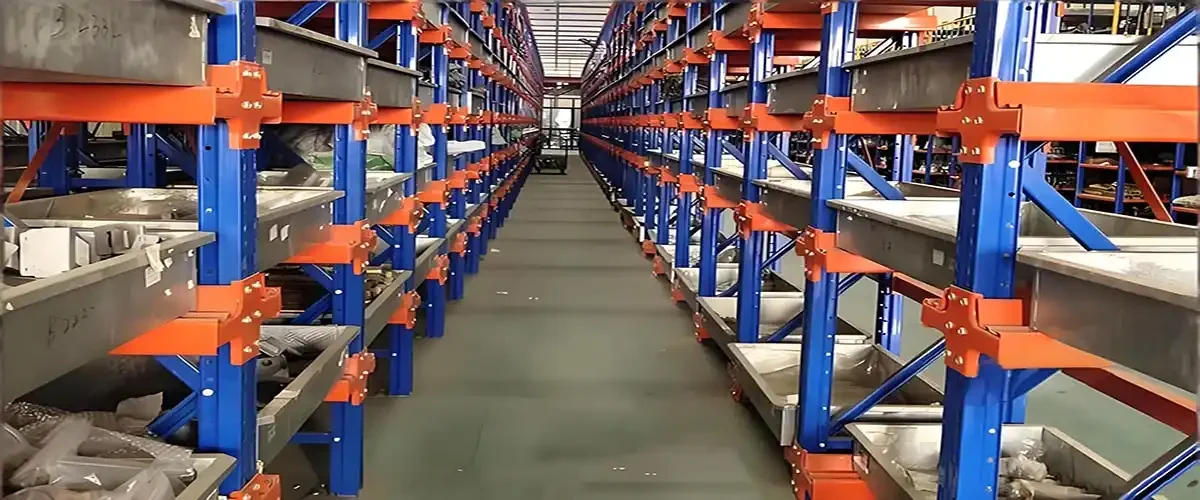
Investing in warehouse pallet racks is one of the most consequential capital expenditures a facility manager or logistics director will make. On paper, industrial pallet racking looks like a straightforward structural purchase—steel frames, horizontal beams, and wire decks assembled to hold inventory off the floor. In reality, specifying the wrong pallet racking system can quietly paralyze your order fulfillment, trigger catastrophic safety hazards, and waste up to forty percent of your usable vertical footprint.
As industrial real estate rates hover at historic highs, squeezing maximum storage density out of every square foot is no longer optional. However, rushing into a purchasing decision without evaluating load dynamics, forklift mobility, and long-term SKU velocity often leads to costly retrofits.
This comprehensive buyer’s playbook exposes the seven most frequent—and expensive—warehouse racking mistakes, providing actionable engineering frameworks to help you design a safer, higher-density storage environment that maximizes your operational ROI.
Pitfall #1: Selecting Racking Architecture Without Mapping SKU Velocity
The most common engineering oversight in warehouse layout design is choosing a racking system based solely on static capacity while ignoring inventory turnover speeds. A system optimized for sheer storage density is useless if it creates massive bottlenecks for your order picking staff.
Matching your racking architecture to your specific material flow protocol—whether First-In, First-Out (FIFO) or Last-In, First-Out (LIFO)—is essential to maintaining fast dock-to-stock cycle times.
| Racking System Type | Inventory Flow (FIFO/LIFO) | Storage Density Level | Best Operational Fit |
| Selective Pallet Racks | 100% FIFO | Baseline (Standard Aisle) | High-SKU diversity, fast picking access |
| Double-Deep Racks | LIFO | +30% vs. Selective | Homogeneous SKUs, medium throughput |
| Drive-In / Drive-Thru | LIFO (Drive-In) / FIFO (Drive-Thru) | +60% High Density | Bulk seasonal goods, low SKU movement |
| Push-Back Racks | LIFO | +75% High Density | High-density, fast pick face turnover |
| Pallet Flow Racks | 100% FIFO | Ultra-High Density | Perishables, fast-moving consumer goods |
For facilities handling hundreds of distinct SKUs with individual pallet access requirements, selective racking remains the industry gold standard. However, if your operation manages high volumes of uniform, multi-pallet inventory, adopting dynamic push-back or gravity-driven pallet flow racks reclaims valuable floor space by reducing aisle real estate.
Pitfall #2: Miscalculating Beam and Upright Load Dynamics
Overloading steel frames or failing to account for unbraced vertical length is a primary cause of industrial racking collapses. A common misconception among buyers is that pallet rack capacity is determined solely by the weight rating of individual horizontal beams. In engineering reality, total frame capacity depends heavily on the vertical spacing between beam levels.
As the distance between horizontal load beams increases, the unsupported length of the upright column grows, which mathematically reduces the upright’s structural weight threshold. Furthermore, buyers frequently overlook dynamic forces—such as the momentary kinetic energy exerted when a forklift operator violently drops a two-thousand-pound pallet onto a beam level.
To prevent structural failure, always request certified capacity engineering calculations that account for your maximum heavy duty pallet racking loads, unsupported vertical spans, and dynamic forklift impact safety margins.
Pitfall #3: Ignoring Forklift Aisle Width and Turning Radii Constraints
A perfectly engineered pallet racking installation becomes an operational nightmare if your warehouse material handling fleet cannot navigate the aisles efficiently. Specifying aisle dimensions without cross-referencing your forklift manufacturer’s right-angle stack turning radius is an expensive error.
Standard counterbalanced forklifts generally require wide aisles ranging from 12 to 13 feet to operate safely without scraping upright columns. Transitioning to reach trucks allows for narrow aisle configurations between 8.5 and 10 feet, immediately expanding your total bay count across the building envelope.
For facilities looking to unlock absolute maximum density, Very Narrow Aisle (VNA) turret trucks or articulated forklifts operate in spaces as tight as 5.5 feet. However, VNA setups require specialized floor flatness specifications or wire-guidance systems embedded directly into the concrete slab.
Pitfall #4: Overlooking Integrated Rack Safety Systems and OSHA Compliance
OSHA and the Rack Manufacturers Institute (RMI) maintain stringent standards regarding industrial steel storage rack safety. Failing to integrate physical impact protection into your initial installation budget creates immense liability and exposes your workforce to severe structural failure risks. Forklift collisions with upright columns account for over eighty percent of all rack damage in busy distribution hubs.
Rather than treating protective hardware as an aftermarket add-on, your storage layout should proactively incorporate built-in structural defenses at every vulnerable intersection.
Essential Rack Safety Components for OSHA Compliance:
Heavy-Duty Column Protectors: Steel shields anchored directly around front upright columns to absorb lower-level forklift impacts.
End-of-Aisle Structural Barriers: Floor-mounted steel guardrails designed to prevent turning forklifts from clipping exposed corner frames.
Heavy Gauge Wire Decking: Welded mesh panels that replace wood boards to prevent loose items from falling while meeting fire code sprinkler water clearance mandates.
Pallet Support Bars & Backstops: Structural steel safety ties that prevent misaligned pallets from tipping through the rear frame gap.
Pitfall #5: Confusing Roll-Formed Steel with Structural Steel Racks
Buyers comparing industrial pallet racking quotes often wonder at the drastic price differences in seemingly identical setups. It all comes down to the steel making method, roll-formed versus structural steel.
Roll-forming racking is made from cold-rolled sheet metal with teardrop connector mechanisms. The assembly is quick and the shipping weight is lighter, and so the price reflects it, making it a very cost-effective option for normal commercial warehousing. However, where forklifts are being operated continuously in a warehouse, roll-formed steel just may not stand up to constant heavy strikes and could become buckled, therefore.
In stark contrast, structural racking is made from thick, hot-rolled channel steel with high-strength fasteners used to join the elements. Impact-resistant, structural steel racking is unaffected by cold-temperature brittleness and that is why it is most preferred in heavy manufacturing, storage of chemicals, and distribution centers experiencing heavy traffic.
Pitfall #6: The Hidden Risks that come from Sourcing Uncertified Used Pallet Racks
Though obtaining secondhand or used pallet racking components can look like a great way to save money, particularly when you are rushing to get the job done during an emergency expansion, it usually ends up with hidden costs much bigger than savings.
Used or second-hand racks are a likely source of undetected structural weakening due to internal frame corrosion or the presence of very slight weld failures that cannot be detected with the eye only without inspection. More significantly, the use of different parts from different suppliers-even though the parts may fit into the same teardrop system- can be a factor that results in cancellation of certifications related to the structural load and a non-clearance of the building permit in the local inspection.
If your purchasing department is looking to get used warehouse storage racks, limit your vendors in such a case to those certified material handling service providers who conduct structural integrity testing without destruction, verify the authenticity of parts in the bill of sale, and produce stamped documentation of engineering.
Pitfall #7: Designing for Today Instead of Scalable Modular Expansion
Another mistake that a growing logistical company can make is setting up a floor layout that will meet only the current level of inventory, without the possibility of expansion, as they do not consider the changing requirements in the future. Putting up permanent structural obstructions and having incorrect location of staging areas, or using non-adjustable rack configurations can hinder your progress when business requirements change.
A warehouse that is designed with foresight will have modular and reconfigurable racking systems. Choosing the teardrop patterns that are the most popular will allow you to raise the beam at twoinch intervals as, for example, your product packaging height and pallet height change.
Also, the main thoroughfares should be planned in a way that future automatons, for instance, Autonomously Moving Robots (AMRs) or overhead belt conveyors, do not come across obstacles or get their movement impaired at the level of your physical infrastructure. That way, the next-step warehouse management technologies will work in harmony with and get full support of your infrastructure.
Design Your Higher-Density and Safer Warehouse System Today
Awareness of how different warehouse layouts affect warehouse operations, and therefore the ability to choose and implement a layout most suited to the particular warehouse operation of the business, is what enables warehouse professionals to manage the balance of maximum storage density with minimum operational delays. But the reality is you don’t just “build it” as it is “the result” of a very complex engineering process of matching equipment selection, layout design, warehouse workflow, and safety regulations. By dodging these seven typical purchasing errors, you can still keep the warehouse racking product very long productive and profitable.
Whether you need to build a new distribution center right from scratch, make a major transformation or enhancement to your existing facilities such as a cold-storage warehouse, or you are looking for improvements in your current arrangement of aisles, our material handling engineers will be glad to assist you.
Get in touch with us today and schedule a warehouse layout review, or request a 3D CAD design drawing of the facility, or ask for a quotation for high-performance pallet racks for industrial purposes.