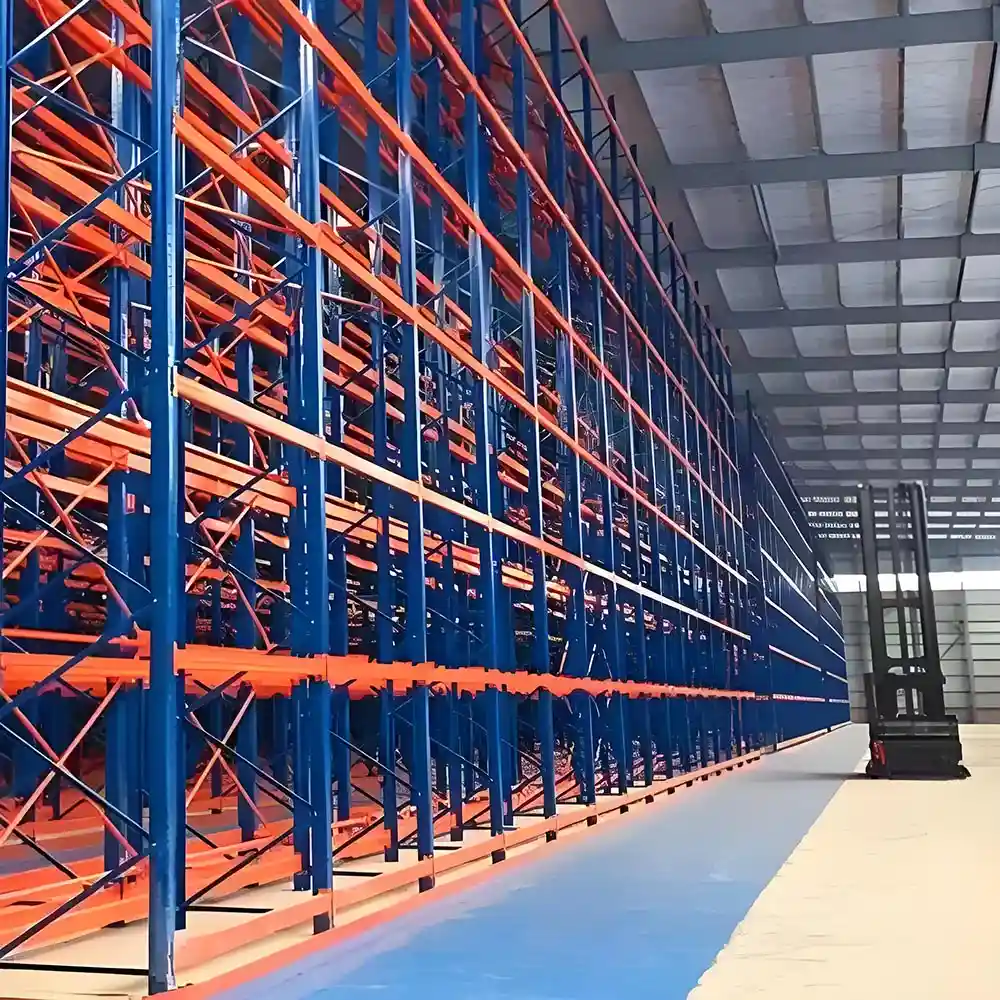
Description
In contemporary warehousing and logistics, effective use of space in the vertical and horizontal planes is essential to effective operation and cost savings. With rising real estate costs and supply chains becoming more complicated, companies are constantly on the lookout for more advanced storage systems that can provide high density with easy access to the stored items. Introducing new drive in pallet racking—an efficient, best-in-class storage system that will significantly change the way warehouses handle bulk stock.
Whether you are expanding a cold storage operation, streamlining a production warehouse, or enhancing a third-party logistics (3PL) distribution center, you need to know about the design, advantages and specifications of new drive in pallet racking. This all-inclusive guide discusses all that there is to know about this high-density storage system for making your facility more productive.
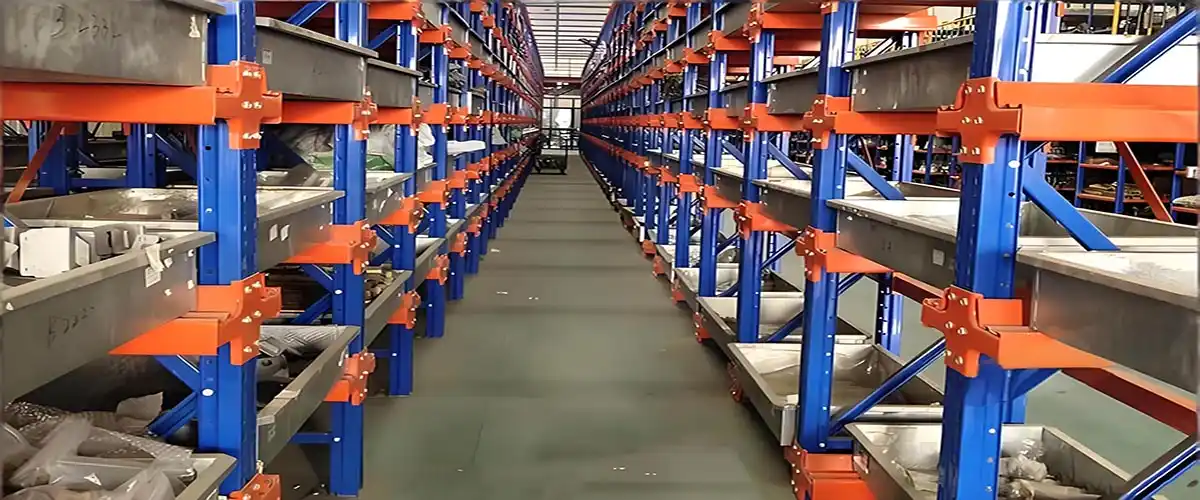
What is New Drive In Pallet Racking?
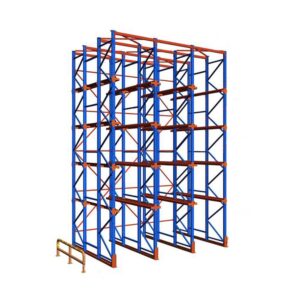
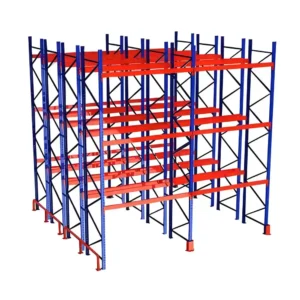
Deep-lane pallet storage is a high density storage system by its nature, that allows for the storage for a large number of pallets of the same SKU (Stock Keeping Unit) in a deep lane of storage. Instead of having an aisle between each individual rack row as required by conventional selective pallet racking, drive-in systems remove aisles by letting forklift trucks drive in the rack structure to pick up and deposit pallets.
This Last In, First Out (LIFO) inventory management method works very well for any company selling a homogeneous product that doesn’t demand that every individual pallet has to be moved right away. Non-selective block stacking systems such as drive in pallet racking offer an immediate and substantial increase in storage capacity for your existing warehouse.
Core Operating Principles
LIFO (Last-In, First-Out) Retrieval: Pallets are loaded and retrieved from the same side. The last pallet placed into the lane is the first one to be removed.
High-Density Block Storage: Eliminates multiple forklift aisles, transforming wasted aisle space into revenue-generating storage space.
Forklift Integration: Specially engineered uprights, guide rails, and safety guards allow forklifts to enter the rack lanes safely and efficiently.
Key Advantages of New Drive In Pallet Racking
Why should you consider new drive in pallet racking? Among the many strategic, operational, and financial benefits it brings to contemporary distribution centers; new drive in pallet rack will greatly increase storage density and enhance overall productivity.
Below are the main benefits to this system that help make it the industry favorite.
1 Space Utilization at Its Best
One of the greatest advantages of new drive in pallet racking is the utilization of the cubic space. Warehouses can now put away a whole lot more pallets in exactly the same square footage simply by taking up less space with them empty aisles. This is especially practical for expensive city-center warehouses or temperature-controlled space (i.e., cold storage and freezers) where high energy costs are associated with every single cubic metre of space.
2. Bulk Storage at a Lower Cost
As a result of having aisles, it generally uses less steel overall per pallet position than selective racking in high density applications. This results in a superior return on investment for organizations that handle vast amounts of the very same goods.
3. Ideal for Seasonal and Homogeneous Goods
Facilities handling bulk manufacturing output, seasonal retail inventory, or food and beverage items with long shelf-life consistency benefit immensely. New drive in pallet racking allows these operations to stage deep blocks of inventory securely and systematically.
4. Robust Structural Integrity
Modern manufacturing techniques ensure that new drive in pallet racking systems are built to withstand rigorous daily use. Reinforced uprights, heavy-duty base plates, and specialized rail entries minimize structural wear and tear caused by frequent forklift traffic.
Product Performance and Structural Engineering
To ensure long-term durability and safety, new drive in pallet racking is engineered using high-grade structural steel and subjected to rigorous quality control standards.
Load Capacity and Stability
Upright Frames: Designed to support immense vertical loads, manufactured from high-tensile cold-rolled steel.
Arm and Rail Configurations: Cantilever arms securely support the rail lines, ensuring smooth pallet entry and exit while distributing weight evenly across the upright frames.
Top Bracing and Back Bracing: Enhances lateral stability, preventing swaying and structural fatigue under maximum load conditions.
Safety Features
Operating forklifts inside a rack structure requires uncompromising safety measures. New drive in pallet racking incorporates several built-in protective elements:
Floor Guide Rails: Guide the forklift tires safely down the center of the lane, protecting the upright columns from accidental collisions.
Upright Protectors and Footplates: Heavy-duty steel guards absorb impact at vulnerable entry points.
Pallet Stops: Positioned at the end of the lanes to prevent pallets from being pushed out the back of the rack system.
Technical Specifications and Specifications Table
When planning a warehouse layout, engineers and facility managers rely on precise metrics. Below is a standard technical specification table for new drive in pallet racking systems.
| Technical Parameter | Specification Range / Detail |
| System Type | High-Density LIFO Storage System |
| Material Composition | High-Tensile Structural Steel (Q235B / Q355B) |
| Upright Height Range | 2,000 mm – 12,000 mm (Customizable) |
| Bay Width | 1,200 mm – 1,500 mm (Tailored to pallet size) |
| Depth / Lane Length | Designed for 3 to 10+ pallets deep |
| Maximum Load Capacity per Pallet | 500 kg – 1,500 kg |
| Surface Treatment | Electrostatic Epoxy Powder Coating (Custom colors available) |
| Compatible Pallet Types | Euro Pallets, GMA Pallets, Plastic Pallets, Wooden Block Pallets |
| Safety Compliance | RMI, FEM, and AS4084 certified engineering standards |
Industries and Applications Suitable for New Drive In Pallet Racking
While versatile, new drive in pallet racking thrives in specific industrial sectors where high-density, low-SKU variety storage is paramount.
1. Cold Storage and Freezer Warehouses
Operating a refrigerated warehouse is exceptionally expensive due to energy costs. Maximizing storage density with new drive in pallet racking minimizes the total volume of air that needs to be cooled, drastically lowering energy bills per stored pallet.
2. Food and Beverage Manufacturing
Bottling plants, breweries, and food processing facilities produce massive quantities of identical goods (e.g., pallets of bottled water, canned goods, or packaged snacks). These items are staged efficiently in deep lanes before distribution.
3. Chemical and Pharmaceutical Bulk Storage
Facilities handling raw materials, packaging supplies, or finished chemical products in uniform drums or palletized containers utilize new drive in pallet racking to secure large batches safely.
4. Paper and Packaging Industry
Paper rolls, corrugated boxes, and packaging materials that share standardized dimensions fit seamlessly into deep-lane drive-in configurations, optimizing floor space for heavy commercial output.
Comparative Analysis: Drive-In vs. Drive-Through Racking
To ensure you choose the best racking configuration for your facility, it helps to compare new drive in pallet racking with its close variant, drive-through racking.
| Feature | New Drive In Pallet Racking (LIFO) | Drive-Through Racking (FIFO) |
| Access Points | Single entry/exit point per lane | Two entry/exit points (front and back) |
| Inventory Flow | Last-In, First-Out (LIFO) | First-In, First-Out (FIFO) |
| Aisle Requirement | Requires only one operational aisle | Requires two operational aisles |
| Best Used For | Non-perishable, bulk, seasonal goods | Perishable goods with expiration dates |
| Space Efficiency | Maximum space utilization | Slightly lower density due to dual aisles |
Frequently Asked Questions (FAQ)
Q1: What is the primary difference between drive-in and selective pallet racking?
A: Selective pallet racking provides direct access to every single pallet but requires multiple aisles, resulting in lower storage density. New drive in pallet racking eliminates aisles to create deep storage lanes, trading direct accessibility for massive increases in storage capacity using a LIFO system.
Q2: Can standard forklifts be used with new drive in pallet racking?
A: Yes, standard counterbalanced or reach trucks can be used, provided their outer width is narrower than the clear bay entry width of the racking system. Many facilities also install mechanical or physical guide rails to assist operators safely navigate inside the lanes.
Q3: How long can a drive-in racking lane be?
A: Lane depth normally varies from 3 to 10+ pallets deep based on your warehouse dimensions, reach capabilities of your forklift, and the speed of your inventory turnover. But generally you want to keep lanes 4 to 8 pallets deep to achieve a suitable mix of density and retrieval ease.
Q4: Is new drive in pallet racking strong for seismic areas?
A: State-of-the-art new drive in pallet racking systems can be custom designed with heavy-duty bracing, special base plates and seismic considerations to comply with local building codes and seismographic requirements.
Q5: How should I care and inspect for drive-in racking system?
A: Check for loose bolts and damaged guide rails Monthly inspections should be performed regularly to inspect a variety of things including any loose bolts, damaged guide rails of the beams, or damage sustained from hubcaps. Repair or replace components immediately if an upright or cantilever arm demonstrates any indication of structural failure.